Meta AI taps publishers for real-time news
As Meta adds news publishers to its AI tool, marketers should prep for new distribution dynamics

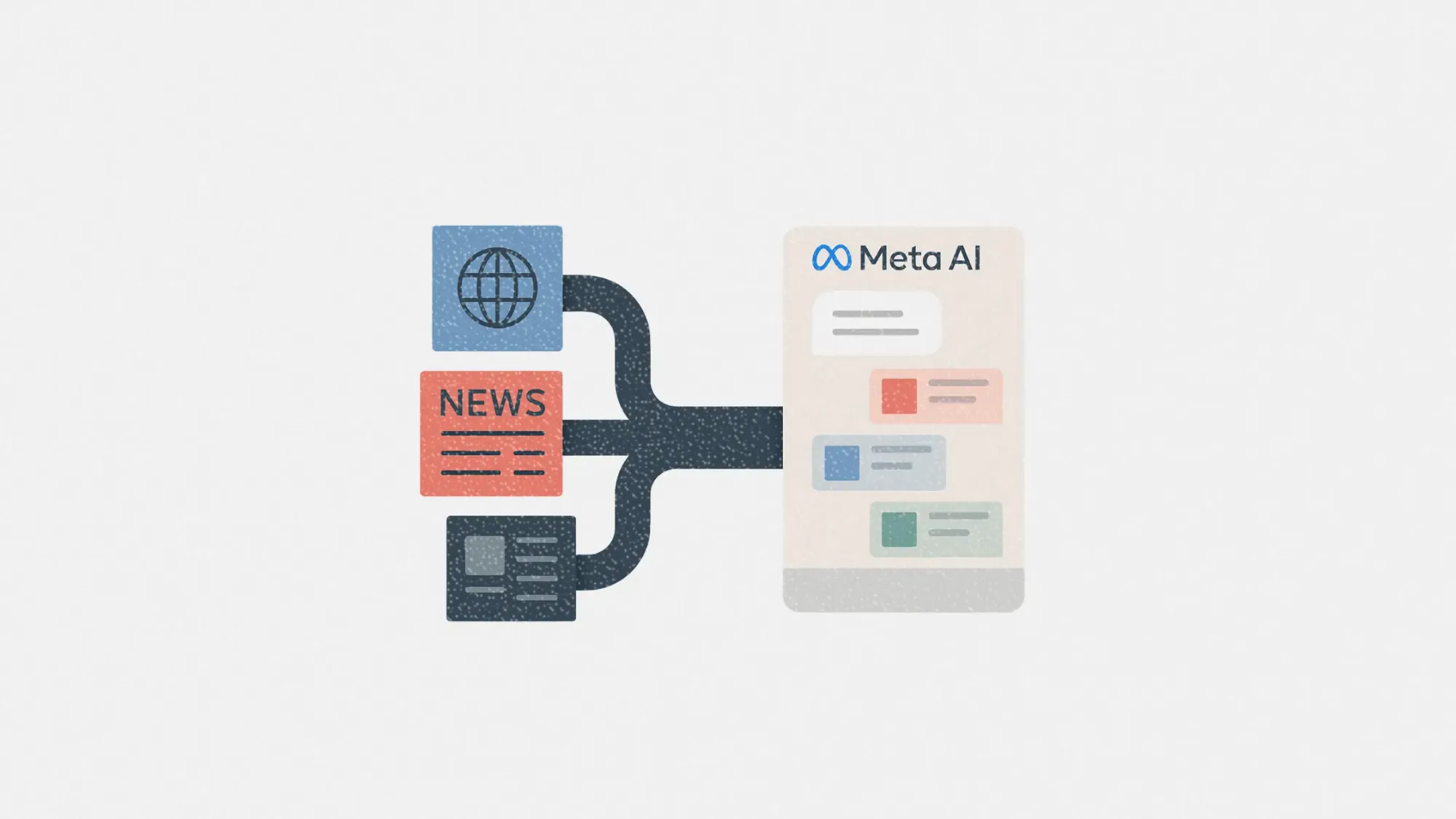
After years of sidelining news on its platforms, Meta is bringing it back. This time, through its AI assistant.
Meta has signed commercial agreements with several major publishers to surface real-time global, entertainment, and breaking news inside Meta AI, the company’s conversational chatbot. The move marks a clear shift from Meta’s earlier stance on news distribution. The company previously removed Facebook’s News tab in 2024 and stopped compensating publishers in 2022.
This article breaks down the new content partnerships, what they signal about Meta’s evolving strategy, and why marketers and PR pros should pay close attention.
Short on time?
Here’s a table of contents for quick access:
 Patrecia Meliana
What Meta is doing with publishers
Meta announced that users who ask Meta AI news-related questions will now receive responses pulled from a broader mix of content sources. These answers include links that take users directly to publisher websites, giving news brands more visibility and traffic potential.
The initial list of partners includes CNN, Fox News, Le Monde Group, Fox Sports, People Inc., The Daily Caller, The Washington Examiner, and USA Today. Meta said it plans to expand this lineup over time.
This rollout aligns with the company’s push to make Meta AI more responsive and accurate, particularly when it comes to fast-moving topics. Meta is betting that access to verified, real-time reporting will improve both user experience and AI reliability.
Why this pivot matters now
Meta’s new approach to news signals a few important shifts in the broader AI and content landscape:
- AI competition is intensifying
Meta is under pressure to make its AI tools more useful and relevant, especially after criticism of Llama 4’s performance. Adding live news makes Meta AI more competitive with offerings from OpenAI and Google, which are also leaning on partnerships to enhance information quality.
- News is now infrastructure, not content
Rather than creating a central place for news like it once did with Facebook News, Meta is treating publisher content as fuel for its AI. That means news is no longer a destination within Meta apps but a layer baked into the AI interface across WhatsApp, Instagram, Messenger, and Facebook.
- Meta wants its AI assistant to become the go-to for answers
Embedding live news is one way to draw users into Meta AI, keeping them within its ecosystem instead of sending them to Google or external apps. It also gives Meta more control over what users see when they search for current events inside its platforms.
What marketers should know
This shift in how Meta distributes news content could have downstream effects on visibility, search, and audience discovery. Here’s how marketers and communications leaders should respond:
1. Chat-based discovery is on the rise
Meta AI is now another place where users can discover brand-related news, product reviews, and industry updates. PR teams should start tracking what kind of queries surface relevant stories and whether their earned coverage appears in Meta AI responses.
2. Earned media may carry new weight
Since Meta is leaning on trusted publishers for AI responses, coverage in those outlets could reach more people indirectly through chatbot interactions. That makes media relations with top-tier publications even more strategic.
3. Optimize for clarity and recency
AI assistants prioritize content that is clear, recent, and reliable. Brands should review their press releases, blog content, and media kits to ensure they are easily digestible and kept up to date, especially if they want to be surfaced in AI tools.
4. Monitor for accuracy and context
As Meta AI begins citing and linking to more publisher content, brands should watch for how their mentions are summarized or paraphrased. Just because an article is technically accurate does not mean the AI will frame it that way. Setting up alerts and reviewing summaries is a smart new layer of brand monitoring.
Meta’s shift toward news-enabled AI signals a new phase in both its product strategy and the way audiences access information. For marketers and PR pros, this opens up a new content discovery path that blends SEO, media relations, and AI literacy.
Staying visible and accurate in these AI environments will be the next frontier for smart communication teams. Now is the time to align your media strategies with this evolving AI landscape.