Meta goes big on AI infrastructure with ‘Meta Compute’
Meta is building its own energy-intensive AI infrastructure. Here’s what that means for cloud competition and marketers

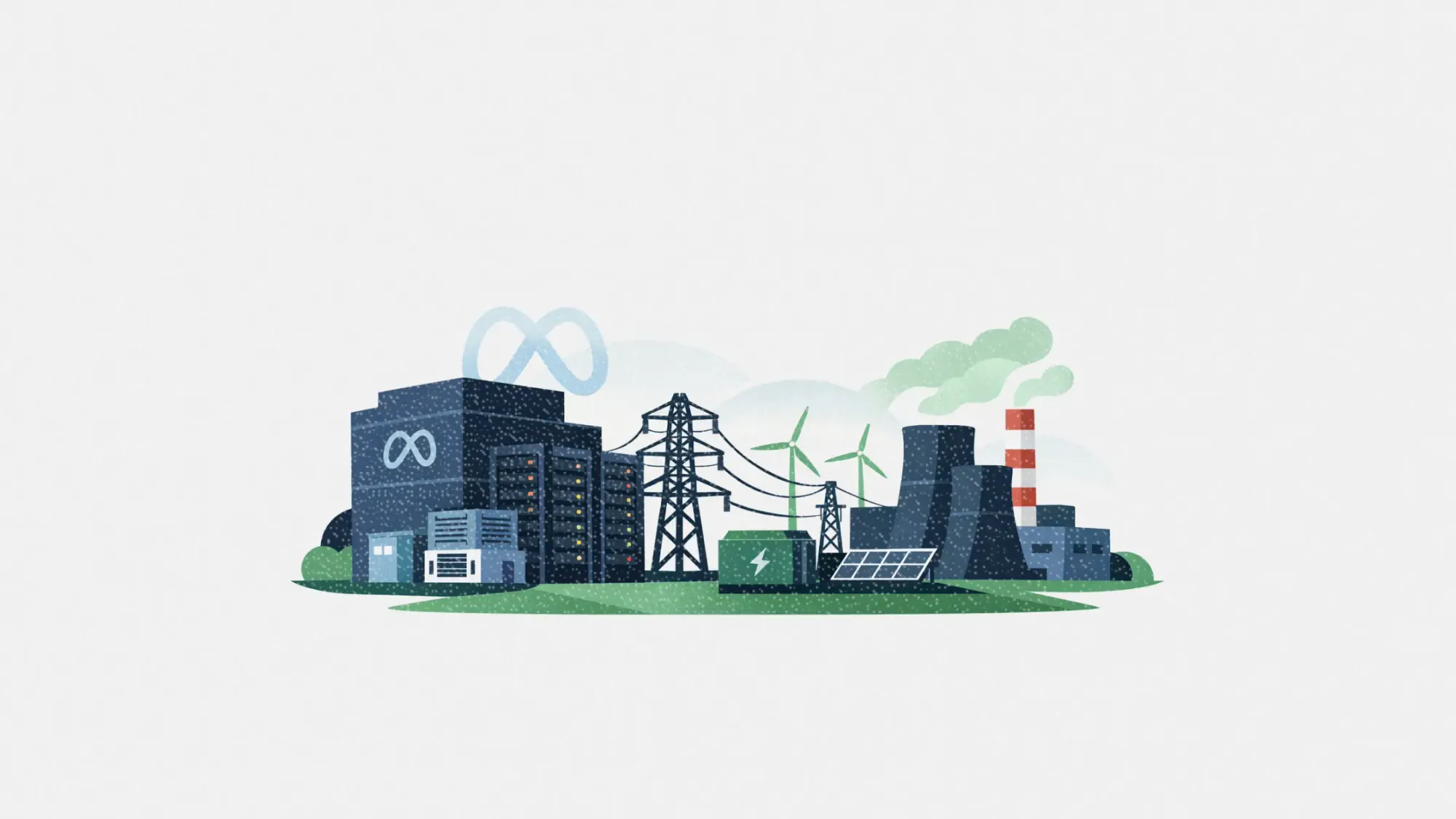
Meta is no longer just training AI models. It is building the power plants to run them. CEO Mark Zuckerberg has announced Meta Compute, a sweeping initiative to expand the company’s AI infrastructure footprint across energy, data centers, and silicon.
The move signals a deeper push into the hardware and capacity side of AI development. This is an area typically dominated by hyperscalers like Microsoft, Amazon, and Google. For marketers and tech strategists, the message is clear. Meta does not just want to offer AI tools. It wants to become a foundational AI cloud player.
This article explores what Meta Compute is, who is leading it, and what this energy-heavy infrastructure move means for AI competition and digital strategy.
Short on time?
Here is a table of content for quick access:
- What is Meta Compute?
- Who is leading the charge?
- Context: the AI power race is on
- What marketers should know
 Patrecia Meliana
What is Meta Compute?
Meta Compute is a new internal initiative focused on expanding Meta’s AI infrastructure at massive scale. Announced by Zuckerberg in a Threads post, the program will span everything from custom chips to data centers to partnerships with governments and energy providers.
“Meta is planning to build tens of gigawatts this decade, and hundreds of gigawatts or more over time,” Zuckerberg said in a Threads app post. For context, one gigawatt is enough to power roughly 750,000 homes. The implication? Meta is not just scaling data centers. It is building the energy backbone for AI.
Meta CFO Susan Li previously signaled this direction during an earnings call. She said that infrastructure investment would become a "core advantage" in building competitive AI products and experiences.
Who is leading the charge?
Zuckerberg named three key leaders for the Meta Compute initiative:
- Santosh Janardhan, Head of Global Infrastructure, will lead on technical architecture, software stack, silicon, developer tools, and operations across Meta’s global data center fleet.
- Daniel Gross, co-founder of Safe Superintelligence and former OpenAI executive, will oversee long-term capacity strategy, supplier relationships, and business planning.
- Dina Powell McCormick, Meta’s new President and Vice Chairman, will work with governments to coordinate infrastructure investment and financing.
Together, these leaders bring deep experience in systems engineering, AI development, and public-private collaboration. It shows Meta is treating infrastructure as a strategic business advantage.
Context: the AI power race is on
Meta is not alone in its pursuit of infrastructure dominance. Microsoft is aggressively investing in supercomputing partnerships with OpenAI. Alphabet acquired the data center firm Intersect in December to support its own growth in AI.
Generative AI is pushing energy demand through the roof. One estimate suggests that US data center energy needs could surge from 5 GW to 50 GW within a decade.
Meta wants to get ahead of that curve. Owning the physical capacity could protect it from supply chain bottlenecks and reduce dependence on outside vendors.
What marketers should know
While marketers will not be building servers or grid capacity, this shift still matters. It could shape the future of Meta’s AI tools, platform performance, and B2B offerings. Here is what to pay attention to:
1. Meta is aiming to own the full AI stack
If Meta controls the hardware, models, and delivery, it can design tools that are more efficient, more exclusive, and more deeply integrated across Facebook, Instagram, and WhatsApp.
2. Expect faster and more tailored AI features
Infrastructure control means Meta can roll out proprietary LLMs and services without relying on third-party clouds. This could result in more differentiated ad tech and creative tools for marketers.
3. Infrastructure-as-a-service could be next
Meta has not yet entered the cloud service market in the same way as Amazon or Microsoft. But Meta Compute suggests that internal AI capacity could eventually turn into B2B offerings.
4. The sustainability angle will come up
As AI energy use grows, ESG-conscious brands may start asking tough questions. Meta’s direct involvement in energy infrastructure may appeal to some and concern others. Brands will need to assess how this affects their own goals around sustainability and platform partnerships.
Zuckerberg’s announcement makes one thing clear. Meta no longer wants to just consume AI infrastructure. It wants to build it, control it, and potentially sell it. That places Meta in direct competition with other cloud giants, and it opens new questions about how marketers will engage with AI services in the years ahead.
For now, Meta Compute is about control and scale. But over time, it could become a pillar of Meta’s business—one that marketers may end up relying on just as much as they do its social platforms.