Italy stops Meta from banning rival AI chatbots on WhatsApp
Italy says Meta can’t block rival chatbots on WhatsApp while under investigation

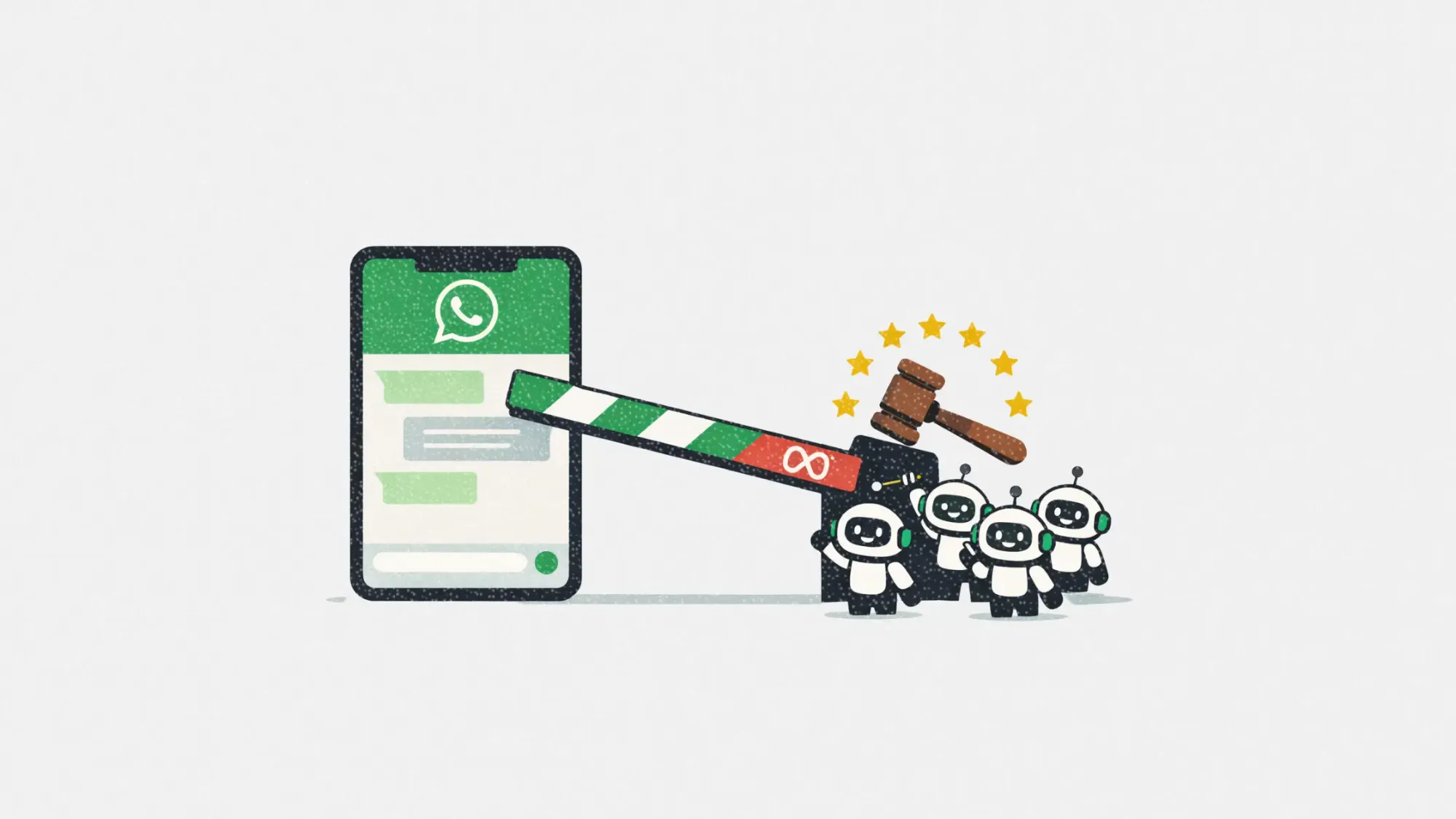
Meta’s attempt to restrict competitors from launching AI chatbots on WhatsApp has just hit a major roadblock in Europe. Italy’s antitrust authority has ordered the tech giant to suspend a policy that bans general-purpose AI bots (like those from OpenAI or Perplexity) from using WhatsApp’s Business API.
While the fight over API access might seem technical, it carries big implications for how AI products get to market and who controls that access.
This article explores the latest regulatory move, why Italy’s decision could reshape AI distribution on messaging platforms, and what it means for marketers and AI developers trying to reach users through WhatsApp.
Short on time?
Here is a table of content for quick access:
 Patrecia Meliana
What happened?
The Italian Competition Authority (AGCM) announced it is imposing interim measures on Meta over changes to WhatsApp’s Business Solution Terms, which were set to fully take effect by January 15, 2026.
The updated policy, introduced in October, effectively bars general-purpose chatbots (like ChatGPT or Claude) from being delivered via WhatsApp’s business tools. However, it still allows business-specific bots (like AI-powered customer service agents) to operate. Meta defended the change, saying the WhatsApp API was never intended to act as a distribution platform for AI bots.
But regulators disagreed. Italy's AGCM argued that Meta’s policy could harm competition by locking rivals out of a dominant platform while promoting its own Meta AI chatbot inside WhatsApp. The concern: if left unchecked, Meta’s move could stall technical progress, reduce market access, and hurt consumers.
“Meta’s conduct appears to constitute an abuse, since it may limit production, market access or technical developments in the AI Chatbot services market, to the detriment of consumers.”
Europe is watching too
Italy isn’t alone in pushing back. The European Commission has also launched its own investigation into Meta’s new policy, suggesting it may violate competition rules across the entire European Economic Area (EEA).
The broader case against Meta began in July 2025, when regulators first started probing whether integrating its proprietary Meta AI into WhatsApp, and giving it special visibility, created unfair market conditions. The expanded probe now includes scrutiny of how Meta’s API terms may actively exclude rival AI chatbots.
Meta’s response? In an emailed statement, the company rejected the accusation, calling the Italian order “fundamentally flawed.” It argued that AI companies already have many ways to reach users, and that WhatsApp is not a distribution channel on par with app stores or websites.
Still, the immediate effect is clear: Meta must suspend its policy in Italy, at least while the investigation continues.
What marketers and AI developers should know
This case isn’t just a regulatory tiff. It signals important shifts in how AI tools are treated on major platforms and who gets to control access to user channels like WhatsApp.
Here’s what to watch:
1. Platform access is the next battleground
Meta's policy change hints at a broader strategy: keep AI competitors off its core apps. But regulators are increasingly wary of platform lock-in. If Meta can decide who gets to launch AI bots on WhatsApp, it controls a critical channel to hundreds of millions of users.
For B2B AI startups and martech vendors, that’s a huge access risk. Any product strategy relying on WhatsApp distribution now needs contingency planning.
2. WhatsApp is no longer neutral ground
Until now, WhatsApp’s Business API has been viewed as a tool for customer service automation, not an ecosystem for general-purpose AI. Meta’s new terms clearly reflect an intent to keep it that way, protecting its own AI ambitions in the process.
Marketers and product teams need to re-evaluate whether WhatsApp can still support AI-driven engagement at scale, especially in regulated regions like the EU.
3. The regulatory heat is rising
Both Italy’s AGCM and the European Commission are taking a more aggressive stance toward AI competition and platform dominance. Expect more investigations, especially if other tech giants follow Meta’s lead in walling off their ecosystems.
This also reinforces the importance of regulatory monitoring as a core part of product go-to-market planning. Don’t assume access rights will stay static, especially in Europe.
Meta’s fight with Italian regulators is about more than just API terms. It is a preview of the next phase of AI platform politics. As tech giants integrate their own AI into communication channels, the gatekeeping risks will only grow.
For AI providers and B2B marketers alike, this is a moment to rethink how you reach audiences and to ensure you’re not building on a platform that could lock you out overnight.