
China’s Molly Tea vs Louis Vuitton is turning into a culture fight
Molly Tea’s $1.5M trademark loss to Louis Vuitton sparked backlash in China. A look at the heritage debate and what it signals for brands.


It is not every day that a milk tea logo becomes a national-level comment section event. But in China, the Molly Tea and Louis Vuitton trademark dispute has turned into something bigger than design similarity. It has become a proxy argument about cultural ownership, foreign brands, and who gets to “own” motifs that feel historically familiar.
Molly Tea was ordered by the Suzhou Intermediate People’s Court to pay 10.3 million yuan ($1.5 million) in damages for trademark infringement tied to a four-petalled floral mark that the court found too close to Louis Vuitton’s monogram flower. The company said it plans to appeal, and the debate has already spread widely across Chinese social platforms, with hashtags framing it as “lost the case, won the hearts.” The backlash has also been amplified through a widely shared video segment on the topic.
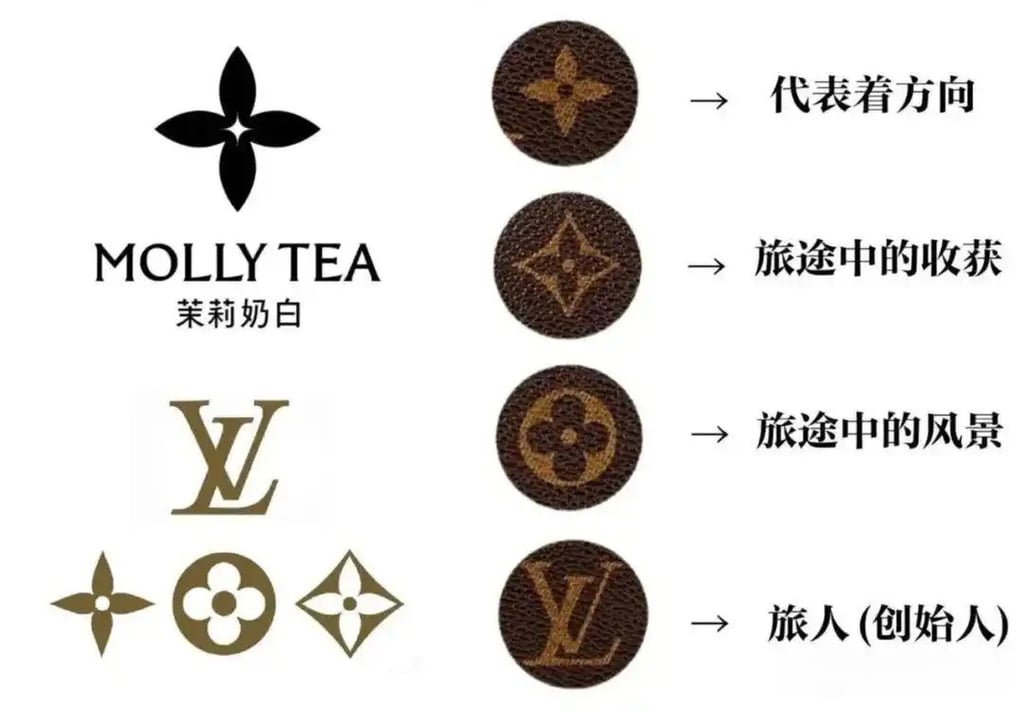
Table of contents
Jump to each section:
- What happened in the Molly Tea vs Louis Vuitton trademark case
- Why Chinese netizens are rallying behind Molly Tea
- The heritage argument and why it is spreading
- What this means for marketers
 Zoe Park
What happened in the Molly Tea vs Louis Vuitton trademark case
The Suzhou Intermediate People's Court ruled in Louis Vuitton's favour in a first-instance decision, ordering Molly Tea and a franchise store to pay 10.3 million yuan (US$1.5 million) in damages after finding that the tea chain's four-petalled logo too closely resembled Louis Vuitton's registered monogram flower. The court said LV's trademark enjoys a high level of recognition and distinctiveness globally, and ordered Molly Tea to change its logo, issue public apologies across its official channels, and pay the damages within 10 days.
Molly Tea said it intends to appeal, and the decision had not taken effect at the time the dispute was escalating online.
A key point in the court’s reasoning was the level of recognition and distinctiveness associated with Louis Vuitton’s monogram trademark. In parallel, Molly Tea had attempted to register multiple trademarks: since 2022, it submitted 17 applications including the disputed monogram pattern, and they were rejected by China’s intellectual property authority.
The timeline matters to how the public is reading intent. Molly Tea launched in 2021 with a softer look, using Chinese characters and a jasmine bud. The black four-petal design at the centre of the lawsuit only appeared after a rebrand in the second half of 2024. Earlier in 2024, Molly Tea attempted to register versions of the same design, most were rejected, and the brand still rolled it out across stores.
 ContentGrip
Why Chinese netizens are rallying behind Molly Tea
This story is landing as identity, not just IP. The reaction has been substantial. News of the verdict generated more than 400 million views on Weibo, while the hashtag "Molly Tea lost the lawsuit but won the public's heart" attracted over 30 million views, illustrating how quickly the dispute evolved beyond a trademark case into a broader cultural conversation.
Many commenters also framed the case as an imbalance of power rather than a legal dispute. One widely liked Weibo comment asked, "Why does LV bother to sue Molly Tea, which sells a cup of milk tea for only 15 yuan (US$2.20)?" Another described it as "a classic case of the big bullying the small." While these comments do not reflect the legal merits of the case, they help explain why public sympathy tilted heavily toward Molly Tea. Supporters have circulated a few simple, highly shareable arguments:
- The four-petal shape feels too generic for any single company to own.
- A milk tea chain and a French luxury brand are unlikely to be confused in real life.
- If a design resembles cultural heritage, it can feel wrong for a company to claim exclusive commercial rights.
That last point is the one that seems to stick because it is easy to visualize, easy to meme, and easy to turn into a moral claim. It also blends neatly into platform dynamics: hashtags, short-form videos, and screenshotable comparisons that compress a complex trademark concept into a single emotional takeaway.
Not everyone is siding with Molly Tea. Some commentary has pushed back by saying the court’s logic is sound and that Molly Tea is not a strong test case for cultural-heritage arguments because it tried and failed to register similar marks, then proceeded to use the design anyway.
The dispute has also broadened beyond the two brands. Criticism initially aimed at Louis Vuitton expanded to the court itself and then to China’s intellectual property authorities, including questions about how trademarks that resemble long-standing motifs are approved and protected in the first place.
Molly Tea also appeared to benefit from the wave of public goodwill. On 6 July, shortly after the verdict became a national discussion, the company announced a 1 million yuan (approximately US$150,000) donation to Hengzhou in Guangxi following a destructive typhoon. While the donation was unrelated to the lawsuit, the announcement was widely shared alongside discussions of the case, reinforcing the perception among supporters that the brand was acting responsibly despite the legal setback.
The heritage argument and why it is spreading
The most viral framing is not “is the logo similar,” it is “who owns culture.”
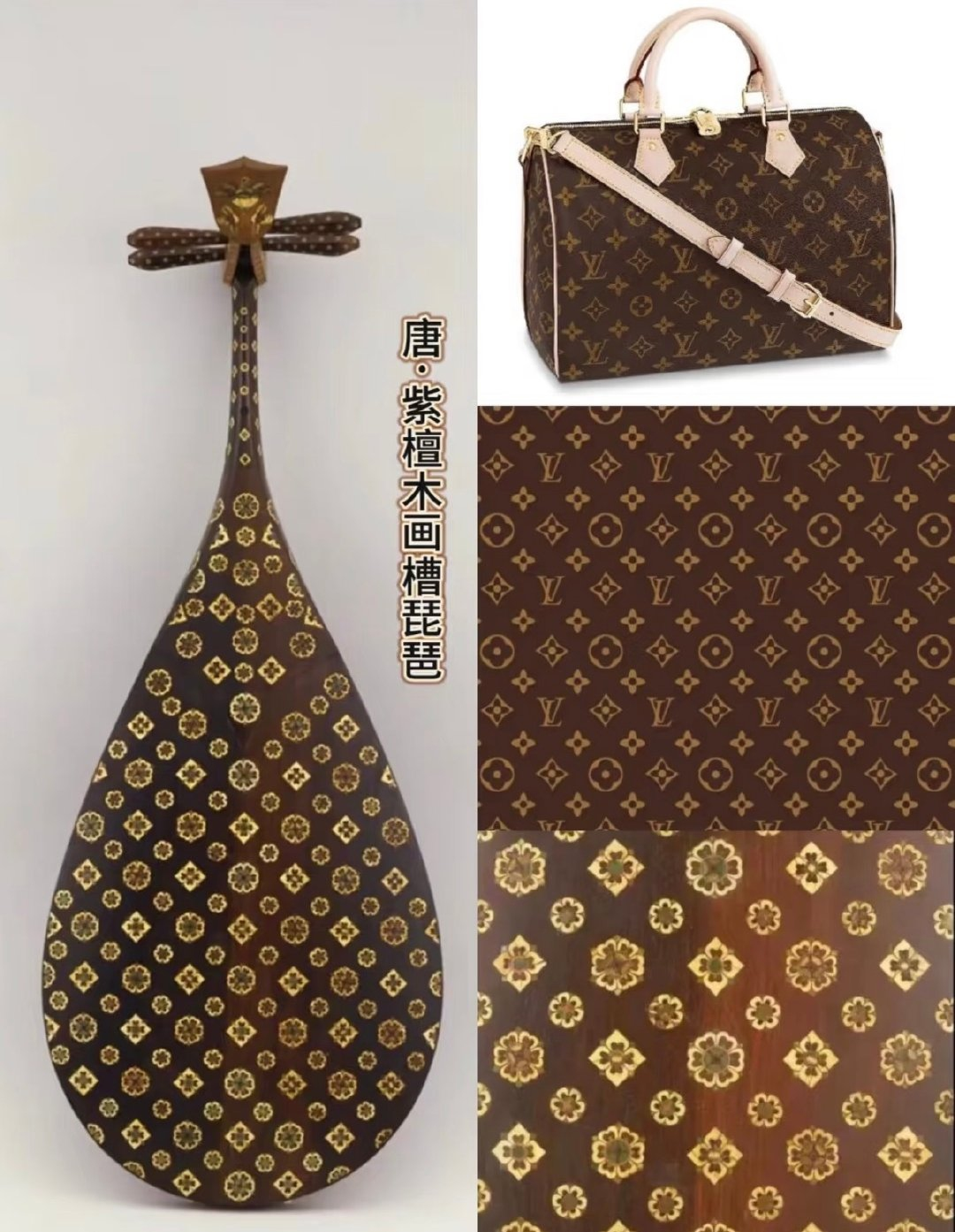
Comparisons have circulated between Louis Vuitton’s monogram elements and motifs associated with China’s Tang dynasty era, including references to a rosewood pipa (around 1,300 years old) and the baoxiang flower motif. The emotional charge comes from the feeling that something visually linked to heritage is being treated like private property, and then used against a domestic brand.
At the same time, legal reasoning described by experts and Chinese publications has focused less on whether traditional motifs can be used, and more on whether Molly Tea’s specific design is too close to an already-registered mark. This is where “first to file” becomes the core concept: trademark law is about distinctiveness and brand identification, not proving who originated an idea. Louis Vuitton’s monogram has been registered in China for decades, and it reportedly secured protection in the food and beverage category in 2021, before Molly Tea attempted (and failed) to register similar designs.
So the argument online is not only about legality. It is also about legitimacy. People can accept that a luxury house owns a full monogram system, but reject the idea that a single standalone element inside it, like a four-petal flower, should be enforceable in isolation. That nuance is exactly why the debate keeps splitting into two camps: legal correctness versus cultural fairness.
What this means for marketers
This is a reminder that brand identity is not just a logo file, it is a social claim. When a design dispute becomes a story about heritage and power, the public often treats it like a values test before it treats it like a trademark case.
1. Do not assume “legally right” will feel “socially right.”
Even if a brand is fully within its rights, enforcement can still trigger backlash when the public reads it as bullying or cultural extraction. That reaction can form fast, especially on platforms that reward moral clarity over nuance.
2. Rebrands need cultural due diligence, not just design due diligence.
Molly Tea’s timeline, including attempted registrations and then a rollout after rejection, became part of how people judged intent. For marketers, this is the risk: a rebrand is not only aesthetic, it creates an audit trail that the internet can weaponize.
3. Heritage-adjacent design has a different risk profile.
If a mark can be interpreted as rooted in traditional motifs, people will debate ownership at the level of identity, not category confusion. That changes what “brand safety” means, especially for global brands operating in markets with strong cultural pride dynamics.
4. Category distance is not a shield in public opinion.
A common defence online is “no one would confuse these two brands.” That may or may not matter legally, but it does matter socially because it shapes whether consumers see enforcement as reasonable or petty.
5. Expect disputes to escalate to institutions, not just companies.
In this case, frustration expanded from a luxury brand to the court and IP authorities. When that happens, a brand is no longer managing a single narrative about itself. It is participating in a wider argument about the system, and it cannot control where the anger goes.
What makes this situation sticky is that both sides can sound plausible depending on what audiences prioritize: the stability of trademark protection, or the belief that heritage should not be privately locked down. For marketing teams, the larger signal is that consumers are increasingly fluent in “power reading.” They interpret brand actions through status, nationalism, and cultural ownership, not just product and price.
That means brand identity decisions, especially anything involving motifs that can be read as traditional, should be treated as community-facing choices. The creative is the first draft, but the comment section is where the meaning gets negotiated.

