Chinese animated film ‘Niu Lai’ turns “so bad it’s good” into a global meme
Niu Lai crossed 45M yuan ($6.7M) after going viral for rough animation. The meme spread into merch, institutions, and overseas screenings.


Chinese animated film Niu Lai didn’t win attention by looking polished. It pulled people in the way cult internet moments usually do: clips shared for shock value, jokes that spiral into inside references, and the irresistible need to see “how bad it could be” with your own eyes.
That curiosity has translated into real-world demand. Niu Lai has passed 45 million yuan (US$6.7 million) at the box office after initially earning just 342 yuan (US$50) on opening day, with screenings and ticket sales surging from mid-August as ridicule and meme momentum spread across platforms.

Table of contents
Jump to each section:
- How Niu Lai became a “you have to see it” movie
- What the fandom behaviour says about taste, irony, and identity
- From meme to merch to institutions using the image
- What this means for marketers watching internet-led hits
How Niu Lai became a “you have to see it” movie
The Niu Lai story starts like a flop. After opening in Chinese theatres on August 5, it reportedly made just 342 yuan (US$50) on day one and around 7,700 yuan (US$1,100) across its first 10 days. Then something very internet happened: the film’s rough animation and unusual plot became the product.
Instead of killing interest, the ridicule created a shared challenge. People weren’t going to be moved by a trailer or a star name. They were going to be moved by the social energy of participation: watching it so you can reference it, quote the jokes, and be part of the conversation.
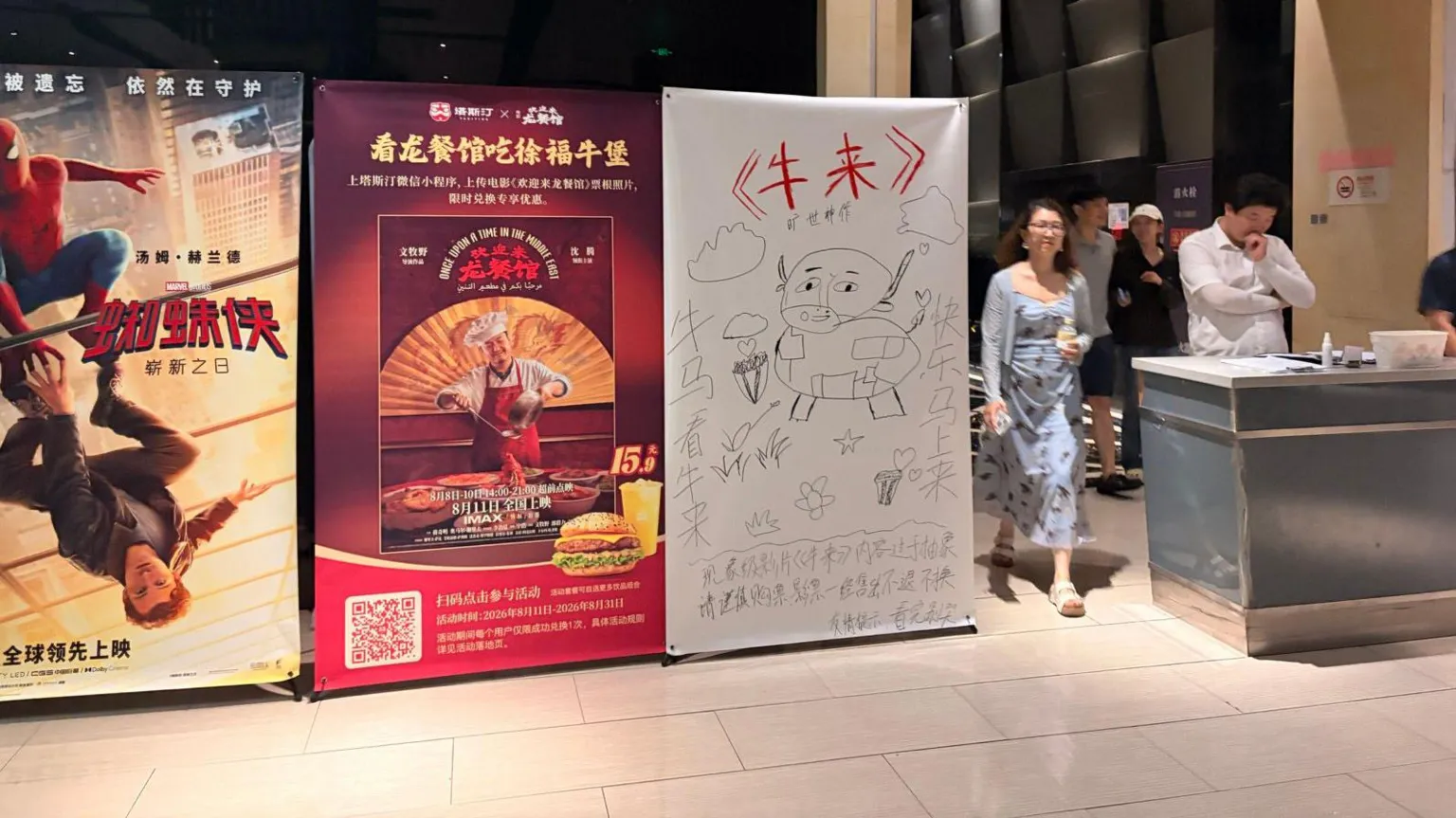
That momentum pushed cinemas to add screenings as demand rose. And because the production company had not released an official poster, moviegoers and cinema staff reportedly drew their own, turning the film’s low-budget reality into part of the spectacle.
 ContentGrip
What the fandom behaviour says about taste, irony, and identity
To non-fans, “so bad it’s good” can sound like a punchline. In practice, it’s a type of community building. People bond over the same flawed object, and the flaws become the point: they give everyone the same references to remix, mock, and repeat.
With Niu Lai, the jokes were not just about animation quality. The title itself became a meme engine. “Niu Lai” can literally mean “the bull is coming” in Chinese, which opened the door to wordplay about a bull market arriving, and even stock-market themed comments about going to the cinema to “support” the movie if the index hit a target.
There’s also a second layer that’s very 2026: audiences framing the film’s clunky visuals as the antidote to “AI slop.” Some social posts described it as “hand-crafted,” treating imperfect production as proof it wasn’t AI-made. That is not a traditional quality argument. It’s a values signal: authenticity and human effort, even when messy, still carries social currency online.
From meme to merch to institutions using the image
Once a film becomes a template, it stops belonging only to the film. Merchants have started selling plush toys modelled on characters, while fans have created memes, posters, and unofficial merchandise. On Douyin, users have produced fan-made clips, and some have used AI tools to create new variations of the meme.
The moment also spread beyond typical fan circles. Police in Hefei used an image from the film in a traffic-safety notice on Douyin. Outside China, organizations have joined in too, including a Malaysian blood donation centre using Niu Lai in a humorous post encouraging donations, and Dutch railway operator Nederlandse Spoorwegen posting with the meme on TikTok.
Even without a broad official overseas release, two independently organized screenings in San Francisco reportedly sold out. And the film has drawn interest from overseas distributors, including Singapore distributors considering bringing it to local theatres.
What this means for marketers watching internet-led hits
Internet-led hits don’t behave like planned campaigns. They behave like group behaviour that marketing teams can either respect, misread, or try too hard to control.
- The “product” can be participation, not polish
Niu Lai’s appeal came from the social experience of watching and reacting, not from production values. For brand teams, this is a reminder that shareability can come from being a conversation object, not just a “premium” asset. - Irony is still a form of genuine attachment
People can mock something and still show up for it. That doesn’t mean they are insincere. It means the bonding happens through humour, inside jokes, and the feeling of being in on it together. - Low-budget aesthetics can read as human in an AI-saturated feed
The “hand-crafted” framing around Niu Lai shows a growing cultural split: audiences are learning to spot synthetic sameness, and some are emotionally rewarding visible effort, even when imperfect. - Memes travel when institutions use them like locals, not tourists
The examples from public services and transport operators suggest a pattern: recognizable imagery can be repurposed when the tone fits the platform and the community’s humour. Forced “hello fellow kids” use risks backlash, but light-touch participation can earn attention. - Demand signals can appear before distribution does
Sold-out independent screenings and overseas discussion show that community momentum can precede formal rollout. For marketers, that means monitoring cultural demand is not just “social listening,” it can influence when and where to invest.
The bigger signal here is that global culture is increasingly connected by shared online behaviour, not by traditional marketing pipelines. Niu Lai didn’t take the classic route of being exported as a polished cultural product. It travelled because people couldn’t stop talking about it, remixing it, and bringing friends into the joke.
For marketing teams, the lesson is less “copy this” and more “understand this.” When a moment is powered by community humour and collective curiosity, the smartest move is usually to support the behaviour people already want, without trying to re-script it into a brand narrative.