
OpenAI gives brands ChatGPT profiles and business agents
OpenAI adds business profiles, native discovery metrics and branded agents to ChatGPT. What changes for GEO, analytics and marketers?


OpenAI is making business information and brand engagement more visible inside ChatGPT. Its new Businesses in ChatGPT beta lets eligible companies claim profiles, update details and see aggregated signals about how people encounter them. For marketers, the significant change is not another conversational tool. It is a first-party place to manage how a business is represented where customers already research options.
In its November 10 announcement, OpenAI also introduced Business Agents for eligible U.S. ecommerce and online service companies. These branded conversations sit apart from ChatGPT's independent answers and can be sponsored through ChatGPT Ads. Taken together, the additions give marketers new ways to supply information, observe discovery and participate in subsequent customer questions. They do not establish that ChatGPT visibility translates directly into sales.
Table of contents
- A business profile becomes part of AI discovery
- Visibility data gets closer to the source
- Business Agents separate organic and paid conversations
- What marketers should know about ChatGPT business profiles
A business profile becomes part of AI discovery
Business Hub gives eligible companies a route to claim and verify their information in ChatGPT, rather than depending entirely on what the platform retrieves elsewhere. Verified companies can update key details and submit product feeds with pricing and availability. The option is available to eligible businesses in markets where ChatGPT operates, although eligibility and verification still apply.
This is a change in what maintaining an accurate brand presence may involve. Search teams are accustomed to keeping websites, merchant listings and product data consistent. A managed ChatGPT profile introduces another information surface that may matter when a customer asks a model for product comparisons or company details.
The distinction is between supplying facts and controlling recommendations. Business information can help ChatGPT understand what a company offers, but OpenAI has not promised a ranking boost for a claimed profile. More complete data is useful precisely because it can reduce ambiguity, not because it buys preferential treatment.
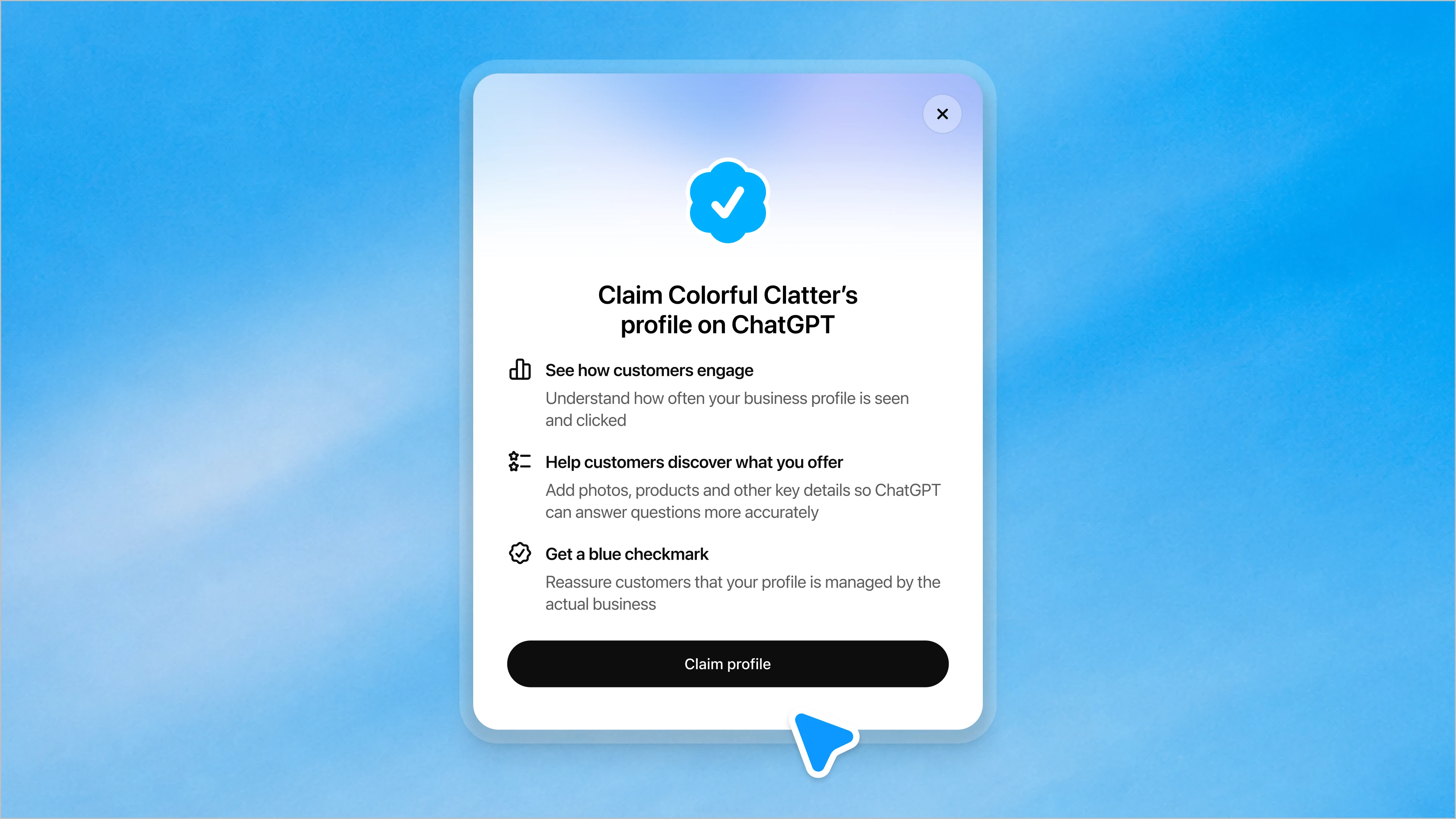
Shopify merchants have a streamlined route through Business Hub or their Shopify admin. Eligible Shopify products are already integrated through Shopify Catalog, giving participating merchants a path to share catalog details without treating a brand profile as a substitute for an ecommerce storefront.
A practical consequence is that accuracy becomes a marketing operation. If a product is out of stock or its price changes, the usefulness of the conversation depends in part on whether the source information is current.

Visibility data gets closer to the source
The more consequential addition for GEO and AI-search teams may be measurement. Business Hub displays aggregated business mentions, website clicks and discovery topics, meaning common themes in conversations where the company's website is cited. These are native signals from the platform where the interaction happens.
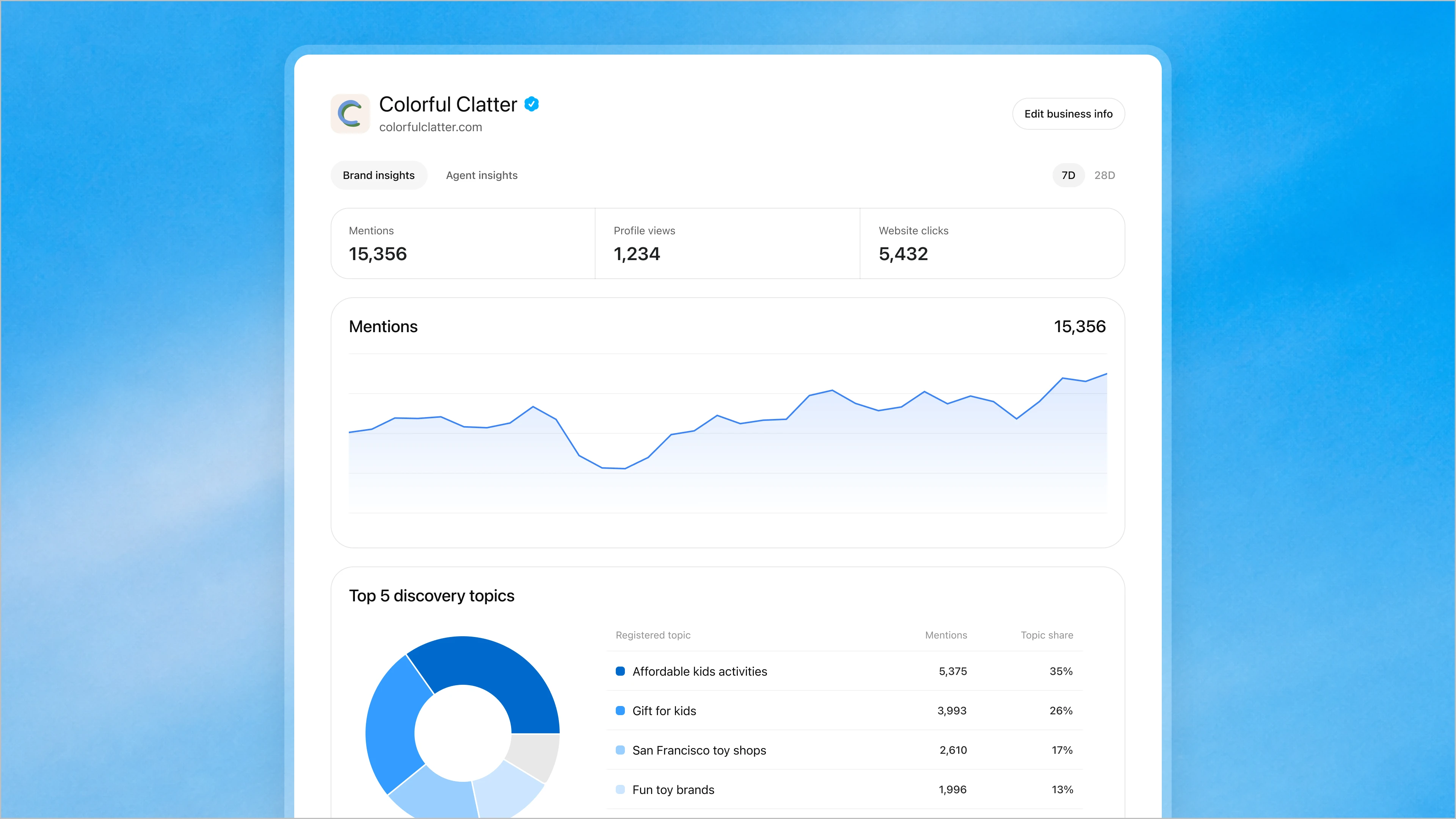
That matters because marketers have often relied on third-party services to estimate how frequently AI systems mention their brands. GEO monitoring products such as Peec.AI, Otterly.AI and Semrush offer ways to study AI visibility across prompts and platforms. OpenAI's own reporting introduces a different reference point, although it does not replace the cross-platform view those services aim to provide.
Native visibility is not the same as full attribution.
OpenAI says its insights are aggregated and only appear when interactions meet privacy thresholds. The company does not share individual customer conversations or Business Agent chat transcripts. Its monetization leadership also clarified that share of voice is not part of the initial beta. Website clicks indicate interaction with supported links, not verified purchases or completed visits.
That limits how the numbers should be interpreted. A rise in mentions might justify investigating what customer questions the brand is associated with. It cannot, by itself, prove improved consideration or a higher conversion rate. The next challenge for marketers is connecting these early discovery indicators with the outcomes their own analytics can reliably measure.
Business Agents separate organic and paid conversations
Business Agents add a customer-facing layer after discovery. When a company appears in a ChatGPT response, a person can open its business profile and, when the option exists, begin a separate conversation to learn more about products or services. OpenAI says participating companies can set information and guidance for these agents, while the original assistant answer remains independent.
The commercial distinction is important. A Business Agent can be available organically, while a business may also sponsor an agent and use it as a destination for a ChatGPT ad. Benji Shomair, OpenAI's vice president of monetization, characterized the difference by saying, "The sponsored agent is the paid experience, but the agent that sits behind it should be the same."
The beta builds on OpenAI's September 2026 sponsored-agent tests, which framed conversations as an alternative to sending every interested customer directly to an advertiser's website. The current release places a business-managed conversation alongside a business profile, with sponsorship as an additional route to that same type of experience.
| ChatGPT surface | Primary business role | Customer interaction |
|---|---|---|
| Business Hub profile | Maintain company and product information | See details about a discovered business |
| Organic Business Agent | Answer follow-up questions about offerings | Start a separate, labeled brand conversation |
| Sponsored Business Agent | Provide an ad destination for a brand conversation | Choose a clearly labeled sponsored experience |
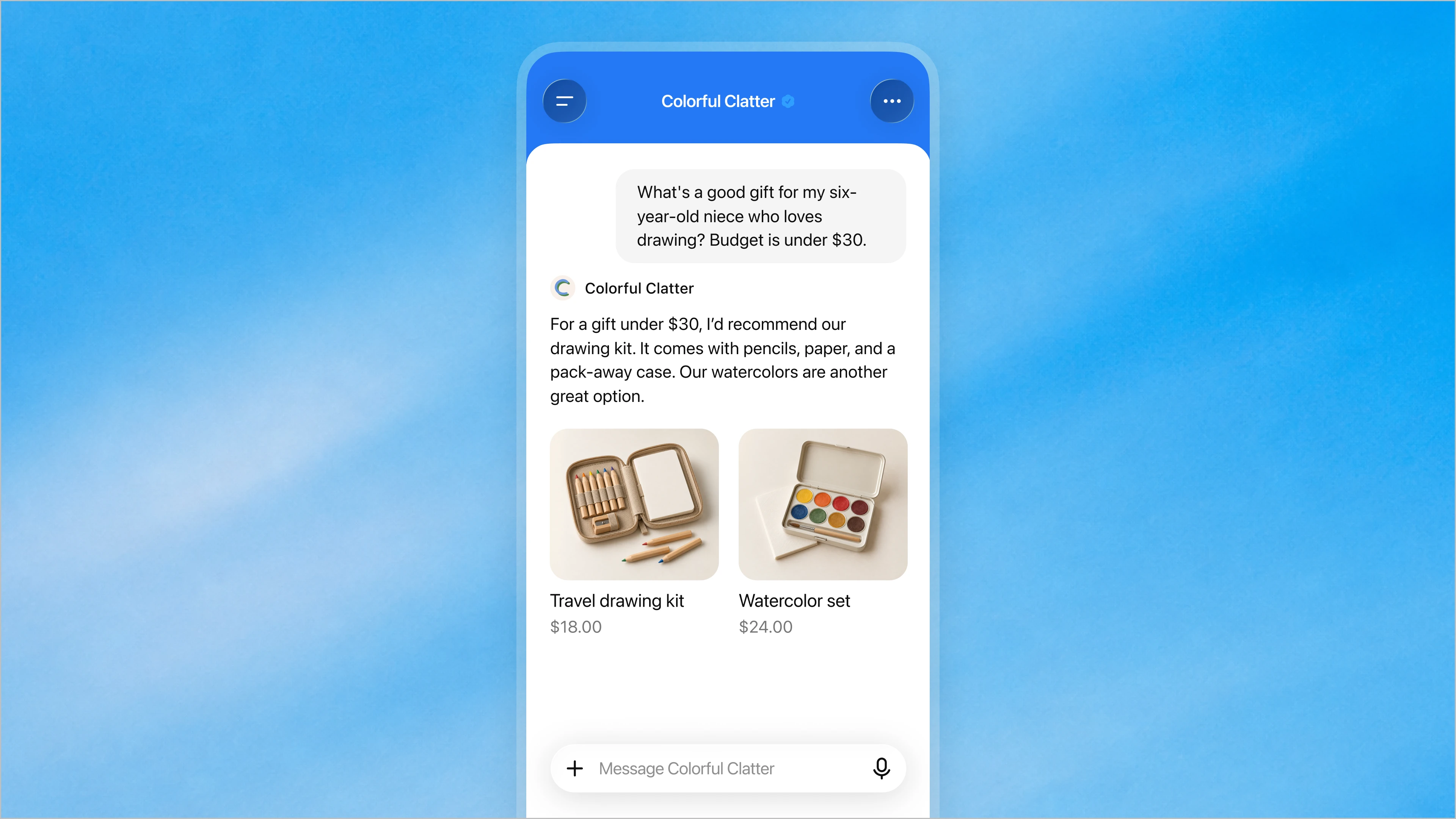
These agents are not open to every business yet. The initial launch is limited to eligible ecommerce and online service companies in the United States. OpenAI's Business Agents policy also requires business representation to be honest and product information to remain accurate. Verification of a business does not automatically make it eligible to publish an agent.
The usual instinct might be to regard a conversational ad destination as another way to maximize time spent with a brand. The more useful question is whether the conversation helps a prospective customer make a decision that a static landing page would leave unresolved. At launch, OpenAI has not published broadly applicable conversion results for the new Business Agents offering.
What marketers should know about ChatGPT business profiles
For marketing teams, Businesses in ChatGPT creates a new set of decisions about information ownership, measurement and the boundary between helpful conversations and paid promotion.
Treat profile data as product data. Names, descriptions, pricing and availability have to reflect what a company can actually deliver. A claimed profile is not a shortcut around inaccurate source information.
Interpret mentions carefully. Native ChatGPT data can illuminate topics where a business is cited, but privacy thresholds, narrow metric definitions and the absence of user-level transcripts make it an incomplete view of performance.
Separate visibility from preference. Being accurately represented in an AI response is not proof that a platform prefers the company. Organic recommendations, business-controlled agent chats and sponsored placements have different roles.
Measure the next customer action. A useful Business Agent should help people resolve specific questions about products or services. Marketers will still need evidence outside the agent's reported conversation themes to judge commercial impact.
The broader question is how marketing organizations adapt when discovery platforms begin to provide some of their own listing controls and analytics. Third-party GEO tools still have a role in comparing different systems, but a native view can make some assumptions about a single platform easier to test.
Brand presence in AI is becoming less like a single search ranking and more like a sequence of information handoffs. Each handoff has a different owner: the company supplying facts, the assistant generating an independent answer, the customer choosing to engage and the brand responding through a labeled agent. Understanding those boundaries may matter as much as measuring the visibility itself.
