
Pizza Hut leans into ’80s–2000s nostalgia to get fans back into rewards
Back to the Hut adds trivia-style challenges, early merch access, and throwback pricing, showing how loyalty can be built around identity.


Pizza Hut is betting that the fastest way back into people’s group chats is through memory, not messaging. If you grew up with the red roof, the buffet era, or BOOK IT! nights, Pizza Hut’s latest push is built to feel like you’re revisiting a specific time, not just ordering a pizza.
The brand outlined the details in an official announcement, tying together an in-app “Back to the Hut” experience for Hut Rewards members, a limited-time Throwback Value Menu, and a streetwear collaboration with Dinner Service NY.
Table of contents
Jump to each section:
- What “Back to the Hut” is actually asking fans to do
- How the Throwback Value Menu turns value into a cultural cue
- Why Pizza Hut’s streetwear drop is part of the loyalty story
- What brand teams can learn from Pizza Hut’s nostalgia play
What “Back to the Hut” is actually asking fans to do
Instead of treating loyalty like a points ledger, Pizza Hut is treating it like a fandom quiz. “Back to the Hut” lives inside the Hut Rewards app and asks members to prove their Pizza Hut knowledge through trivia and challenges, with rewards ranging from collectibles to experiences.
That’s an important shift in what the consumer is “buying” with participation. The hook is not just a discount. It’s the feeling of being a real one, the kind of fan who remembers the details. That emotional framing matters because nostalgia works best when it’s specific, and Pizza Hut is leaning into the idea that its history is something people can claim.
 ContentGrip
How the Throwback Value Menu turns value into a cultural cue
The Throwback Value Menu is positioned like a buffet throwback: familiar items, low prices, and a mix of old and new. At participating locations, the lineup includes (pricing cited in the announcement and campaign details): $10 stuffed-crust pizzas, $4 cinnamon sticks, $3 Pepsi, and $3 personal pan pizzas. Two new items, Triple Cheese Mac and S’mores Sticks, are priced at $6.
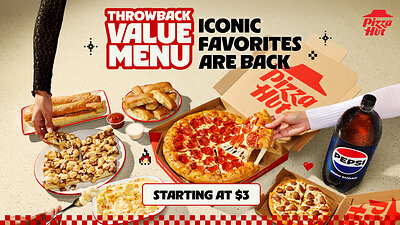
In quick-service marketing right now, “value” can read like a pure economics message. Pizza Hut’s twist is that value is being delivered through a throwback lens, which makes the purchase feel like participating in a shared memory, not just responding to a price drop.
Why Pizza Hut’s streetwear drop is part of the loyalty story
Pizza Hut is also releasing a limited streetwear collection with Dinner Service NY, built around the brand’s old-school uniforms and BOOK IT! nostalgia. The collection includes items like rugby shirts, sweaters, totes, and socks, and Hut Rewards members get early access (two hours early, per the campaign details).
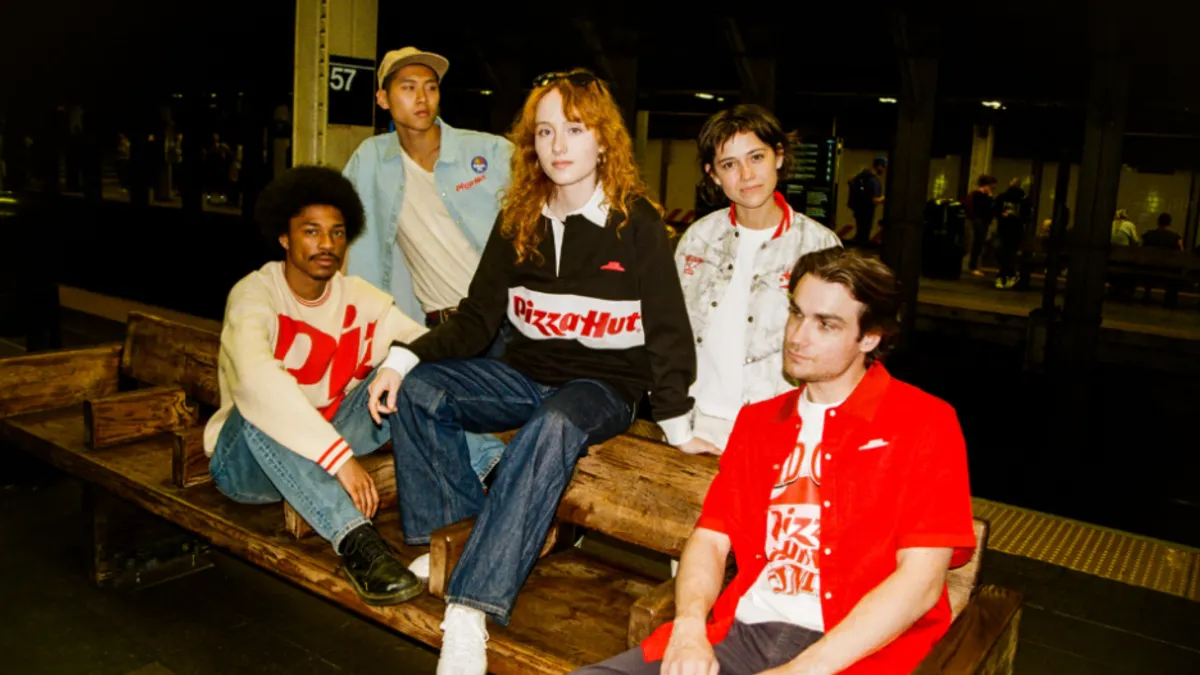
This is loyalty as identity, not just habit. Streetwear collaborations are a way to let fans wear the reference, which is basically the most literal form of “brand affiliation” you can buy. And because access is gated through the rewards program, the merch drop becomes a membership benefit, not a separate brand stunt.
For Pizza Hut, this also lands at a moment when the business is in transition: Yum agreed to sell the chain in a $2.7 billion deal (with Pizza Hut, excluding China, purchased by LongRange Capital for $1.5 billion, and the China business purchased by Yum China Holdings for $1.2 billion). That backdrop makes the loyalty push feel less like a one-off seasonal idea and more like a signal that the brand wants durable, app-based relationships with customers.
What brand teams can learn from Pizza Hut’s nostalgia play
Nostalgia marketing only works when it feels like fans are in on the reference. Pizza Hut is turning that “in on it” feeling into a loyalty mechanic, then reinforcing it with value and collectibles.
- Make loyalty feel like belonging, not bookkeeping
Trivia and challenges change the tone of a rewards program. It becomes a space to perform identity, not just accumulate points. - Use value as a reassurance, not the whole personality
The Throwback Value Menu is still a price story, but framed through comfort and familiarity, which can be more emotionally sticky than discounts alone. - Treat merch as an extension of memory, not just a revenue add-on
Uniform-inspired pieces and BOOK IT! cues work because they’re culturally legible to people who lived that era. The product is the reference. - Gate the best “fan perks” through the app
Early access to the streetwear drop is a simple but clear incentive: if you want to be first, you need to be a member. - Connect multiple moments into one platform narrative
By putting “Back to the Hut,” the menu, and the streetwear under “Hut Originals,” Pizza Hut is packaging separate tactics into a coherent story people can recognize and return to.
The bigger signal here is that loyalty programs are being pushed to do more than drive repeat orders. They’re being asked to carry brand meaning, especially for legacy brands trying to stay emotionally relevant with adults who remember them from childhood.
For marketers, the takeaway is not “do nostalgia.” It’s to notice how nostalgia behaves online: people don’t just remember, they collect, they reference, and they prove they were there. Pizza Hut is designing its loyalty experience around that behavior, which is why it reads more like community choreography than a coupon strategy.