Perplexity hit with lawsuits from major publishers
As The New York Times and Chicago Tribune sue Perplexity for copyright infringement, marketers should brace for shifts in content access and legal norms

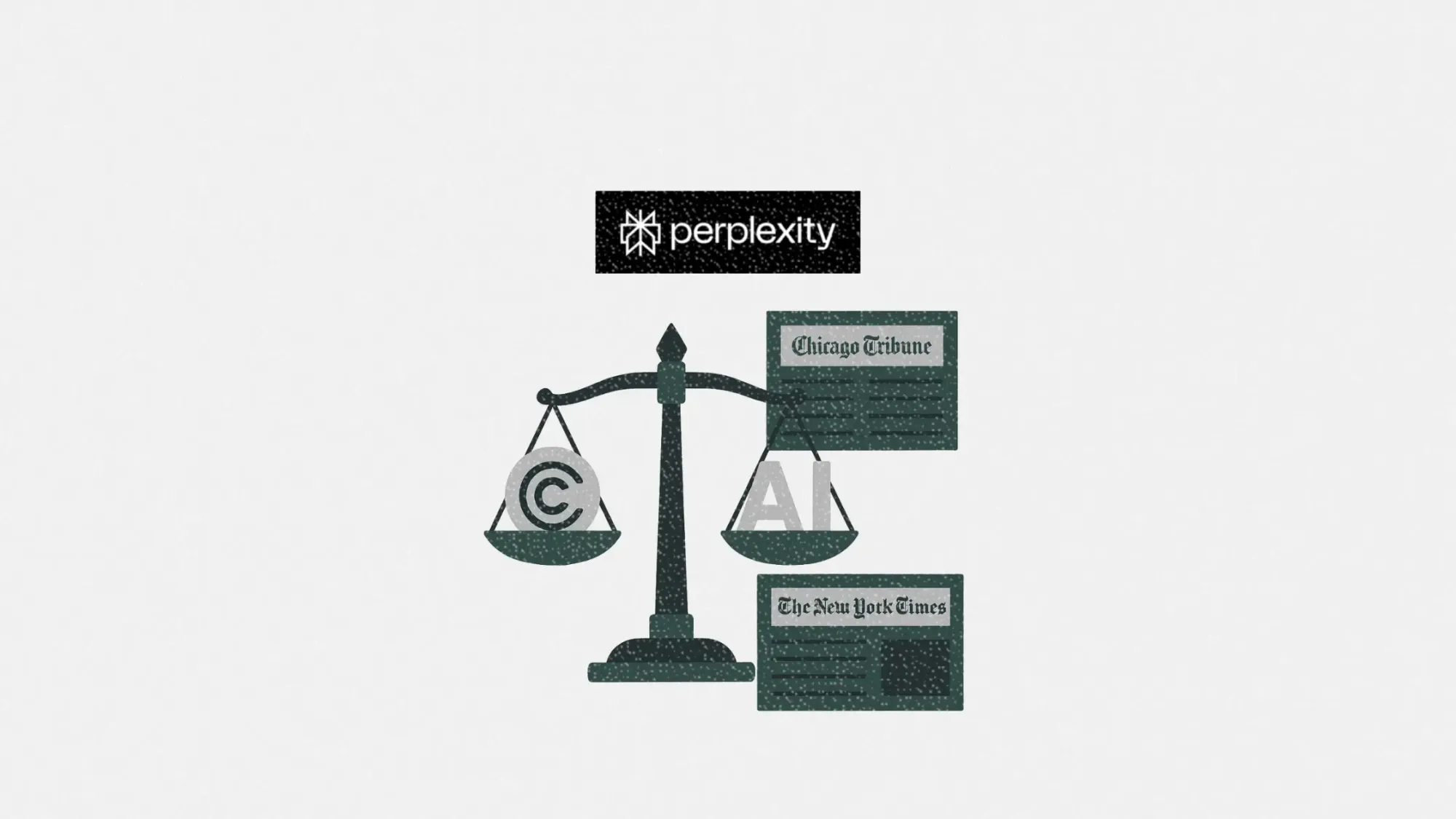
Two of the United States' most prominent media organizations — the Chicago Tribune and The New York Times — filed lawsuits last week against AI search startup Perplexity, accusing it of large-scale copyright infringement.
These legal actions are the latest in a growing movement by media companies to push back against generative AI tools that use or display their content without permission. For marketers who rely on AI-enhanced search and content tools, the lawsuits raise real questions about data ethics, platform stability, and long-term compliance risk.
This article unpacks the key claims against Perplexity, explains what retrieval-augmented generation (RAG) has to do with it, and outlines what marketers should prepare for as the legal landscape evolves.
Short on time?
Here is a table of content for quick access:
 Patrecia Meliana
What happened?
On Thursday December 4, the Chicago Tribune filed a federal lawsuit in New York, claiming Perplexity is scraping and reproducing its paywalled articles without authorization. According to the complaint, Perplexity displays content nearly word-for-word and uses it within its retrieval-augmented generation (RAG) system — a technique meant to reduce hallucinations by pulling directly from trusted sources.
The lawsuit also alleges that Perplexity’s Comet browser bypasses the Tribune’s paywall to generate detailed article summaries, undermining the value of its subscription model.
Just a day later, The New York Times filed a similar suit in the same federal district. The Times claims that Perplexity has scraped and reused its stories, videos, podcasts, and other content at scale, with AI-generated outputs often “identical or substantially similar” to the originals. The complaint also cites trademark misuse under the Lanham Act, arguing that hallucinated content is being falsely attributed to The Times.
Perplexity and the publisher pushback
Perplexity, founded in 2022, has raised more than US$1.5 billion from investors including Nvidia, Jeff Bezos, and IVP. The startup is aggressively positioning itself as a next-gen search platform, offering AI-generated answers pulled from multiple sources.
But that growth has triggered serious backlash.
Perplexity is now the target of multiple lawsuits. Dow Jones, Reddit, Encyclopedia Britannica, and Merriam-Webster have all filed similar claims accusing the company of scraping and distributing copyrighted material. Amazon, while not suing yet, recently issued a cease-and-desist letter over similar concerns about AI-powered shopping.
While earlier lawsuits in the generative AI space focused on model training data, these new filings shift the focus to how AI tools deliver content in real time — and whether that delivery constitutes infringement.
What marketers should know
If your content strategy leans on AI tools for research, search enhancement, or automated copywriting, this legal battle should be a wake-up call. Here’s what to watch out for:
1. RAG systems may soon face tighter scrutiny
Perplexity’s RAG-based model is designed to reduce inaccuracies by drawing on existing content, but that same structure could make it more vulnerable to copyright claims. If courts rule that using scraped publisher content in RAG systems requires licensing, marketers could see major AI tools forced to rethink how they source and deliver information.
2. Paywalled data is off-limits, even to AI
Both The Times and the Tribune allege Perplexity accessed subscriber-only content without permission. Marketers using AI research tools need to check whether those platforms are sourcing content ethically. Tools that offer full-article summaries without showing the original source or bypassing paywalls could expose your brand to secondary risk.
3. Tool transparency is now a trust issue
If the AI tools you use can’t clearly explain where their information comes from, that’s a red flag. Brands need to push vendors for more transparency and better content attribution. This is not just a legal issue — it’s also a credibility issue with your audience.
4. Expect new licensing models to emerge
These lawsuits could accelerate the push for publisher licensing deals with AI platforms. That might benefit marketers in the long run by improving data reliability and supporting higher-quality sources, but it could also lead to new fees or access restrictions on AI tools you currently use for free.
The lawsuits against Perplexity mark a turning point in the debate over AI and content ownership. This is no longer just about what goes into model training. It’s about how AI tools serve content to users, who owns that information, and who gets paid.
Marketers need to stay alert. The next generation of AI platforms will be shaped by these legal precedents. Make sure your stack is built on tools that respect publisher rights and can evolve as the rules get rewritten.