PubMatic’s AgenticOS wants to redefine AI-native programmatic
The ad-tech firm’s new operating system puts AI agents in charge of programmatic execution. Here’s what it means for marketers.

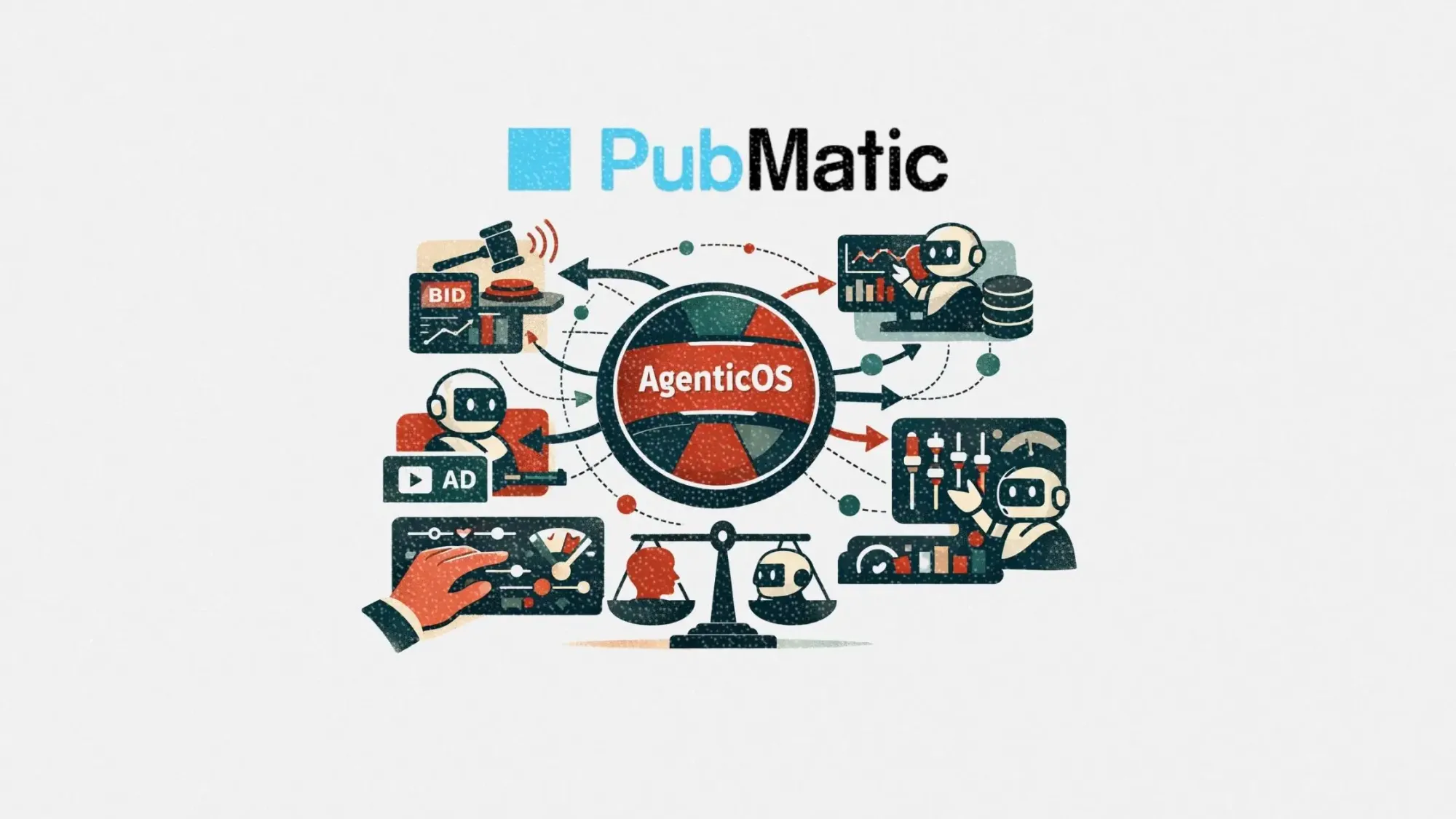
Advertisers chasing the promise of autonomous campaigns now have a new tool to test: AgenticOS, a full-stack operating system from PubMatic designed to execute ad campaigns using intelligent agents instead of manual workflows.
This article explores what AgenticOS brings to the table, how it fits into the current AI-advertising landscape, and what marketers should watch as generative AI continues to seep deeper into the programmatic stack.
While the dream of AI-led advertising has been hyped for years, the execution has often lagged behind. Fragmented systems, manual troubleshooting, and black-box optimization tools have left many marketing teams frustrated. With AgenticOS, PubMatic is offering a unified solution that automates key campaign functions—without fully removing human oversight.
Short on time?
Here’s a table of contents for quick access:
- What is AgenticOS?
- How it works: three layers of intelligent automation
- Launch partners and use cases
- What marketers should know
What is AgenticOS?
AgenticOS is PubMatic’s new operating system built for agent-to-agent advertising execution. In simple terms, it lets advertisers define campaign objectives, creative rules, and brand-safety guidelines in a natural language interface—then deploys AI agents to handle everything from planning and media buying to real-time optimization.
It’s being marketed as a next-generation layer that works across premium digital environments and helps advertisers cut down on the busywork typically associated with programmatic setups.
Early users include WPP Media, Butler/Till, Wpromote, and MiQ—all of whom have been testing AgenticOS in real-world campaigns.
How it works: three layers of intelligent automation
AgenticOS runs on Nvidia-accelerated infrastructure, powering sub-millisecond inference and data processing across tens of millions of auctions per second. The system is structured across three integrated layers:
- Infrastructure layer
Built for speed and scale, this layer handles real-time data ingestion and auction participation with up to 5x faster decisioning than standard platforms. - Application layer
This is where the intelligence kicks in. PubMatic embeds agentic functions like pacing, forecasting, and yield management—interpreting advertiser intent through protocols like Ad Context Protocol (AdCP) and Model Context Protocol (MCP). - Transaction layer
Directly connects to PubMatic’s Activate platform, enabling real-time bidding and integration with private marketplaces and programmatic guaranteed deals. It ensures agent-led decisions are directly linked to ad delivery and optimization.
Launch partners and use cases
One notable early use case comes from Butler/Till, who partnered with Clubtails for a December 2025 campaign. Using Anthropic’s Claude LLM to input campaign goals, AgenticOS handled media buying and optimization within set parameters, allowing the agency to focus on strategy and creative work.
WPP Media is using the system to support its WPP Open platform, citing AgenticOS as a key enabler of scalable autonomous advertising. According to PubMatic, early tests showed an 87% reduction in setup time and 70% faster issue resolution.
Other partners like MiQ and Foxtel Media are exploring use cases in CTV and live event advertising, citing the ability to optimize yield and engagement in real time.
What marketers should know
This isn’t just another automation tool. AgenticOS represents a shift in how marketers may work with AI—not just to analyze results but to run campaigns on their behalf. Here’s what to consider:
1. AI-native doesn't mean AI-only
AgenticOS enables full autonomy, but marketers still define the inputs—objectives, creative direction, and safety parameters. It's about augmenting strategy, not replacing it.
2. Faster, smarter, but not cheaper (yet)
Agent-led campaigns can move faster and potentially improve performance, but the need for advanced integrations and protocols means marketers may need to invest in training and infrastructure to fully leverage it.
3. Transparency is improving
By building interoperability into the transaction layer, PubMatic is trying to avoid the "black box" critique. Marketers can trace decisions, see in-flight performance, and adjust strategies as needed.
4. It could change how teams are structured
If campaign setup and optimization become automated, marketers may shift more resources to creative, measurement, and innovation. This could impact hiring, agency roles, and internal workflows.
5. Adoption will be fast-tracked in 2026
Through its Agentic AI Acceleration Program, PubMatic aims to help brands and publishers get agentic workflows live in a matter of weeks.
Conclusion
AgenticOS marks a new chapter in AI-led media execution—one where human-defined intent is translated into continuous, adaptive action through intelligent agents. For B2B marketers and ad strategists, this could mean faster campaign cycles, leaner operations, and a rethink of how programmatic is planned and measured.
As more agencies test and refine the tech, the real question is: Will agentic workflows stay hype, or finally deliver on AI’s promise in advertising?