
Ray-Ban taps BLACKPINK’s Jennie as global brand ambassador
A strategic move as global brands double down on K-pop influence and Asian market relevance


Ray-Ban has named BLACKPINK’s Jennie as its newest global brand ambassador, reinforcing a growing pattern: global brands are doubling down on Asian cultural influence to stay relevant.
@rayban A global cultural force. @JENNIE joins the Ray-Ban family in 2026.
♬ original sound - Ray-Ban - Ray-Ban
This article explores what’s behind the move, how it fits into broader fashion and marketing trends, and what B2B marketers and brand leaders should take away from the continued rise of K-pop-driven brand power.
Short on time?
Here’s a table of contents for quick access:
- Why Ray-Ban chose Jennie as a global ambassador
- How this fits into the rise of Asian celebrity influence in global marketing
- What marketers should know about fandom-driven brand strategy
 Patrecia Meliana
Why Ray-Ban chose Jennie as a global ambassador
Ray-Ban has officially appointed Jennie, a member of BLACKPINK, as its newest global brand ambassador. Known for her work as a singer, rapper, songwriter, and actress, Jennie has built a reputation as both a pop icon and a global cultural force.
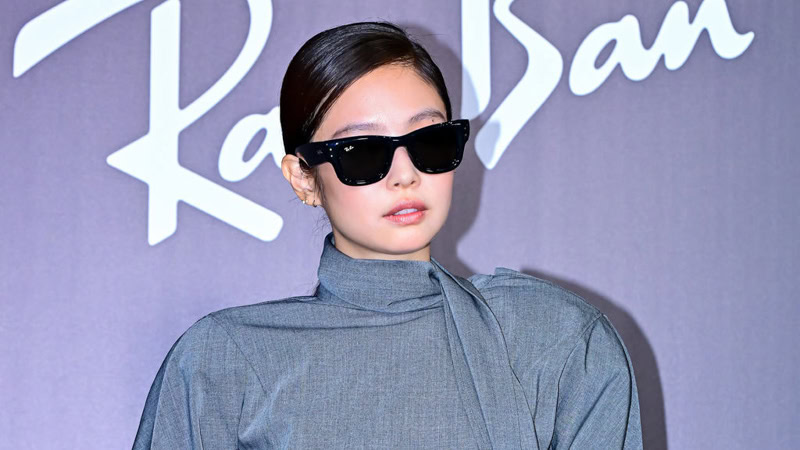
According to the brand, Jennie embodies Ray-Ban’s DNA of expression and innovation. The partnership aims to highlight individuality and encourage consumers to express their true selves, aligning with the brand’s long-standing positioning around identity and style.
Jennie herself framed the collaboration around authenticity and ease, noting that confidence comes from being comfortable and expressing oneself quietly. She also emphasized that Ray-Ban products fit naturally into everyday life, becoming part of a person’s mood and identity.
This is not Ray-Ban’s first move in this direction. The brand has previously worked with several high-profile Asian celebrities, including Takuya Kimura, Jackson Wang, Cheng Yi, and Jeff Satur, as part of its broader regional expansion strategy.
Patrecia Meliana
How this fits into the rise of Asian celebrity influence in global marketing
Ray-Ban’s decision comes at a time when Asian celebrities, particularly from the K-pop ecosystem, are playing an increasingly central role in global brand marketing.
Jennie’s appointment reflects two converging trends. First, the growing global influence of K-pop and Asian entertainment. Artists like Jennie are no longer regional figures but global tastemakers with massive cross-market appeal.
Second, the intensifying competition from Asian-born brands such as Gentle Monster and Blue Elephant. These brands are not just competing on product but on cultural relevance, design identity, and proximity to younger audiences.
At the same time, international fashion and lifestyle brands are actively building portfolios of Asian ambassadors:
Jennie’s broader brand portfolio, including partnerships with Chanel, Adidas, Calvin Klein, Jacquemus, Visa, and MINISO, further underscores her value as a multi-market, multi-category influencer.
For Ray-Ban, this is not just a celebrity endorsement. It is a strategic move to remain culturally relevant in a market where influence is increasingly shaped outside traditional Western hubs.
Patrecia Meliana
What marketers should know about fandom-driven brand strategy
For marketers, this partnership highlights a shift from traditional celebrity marketing to fandom-driven ecosystems.
Here are the key takeaways:
1. Influence is now community-driven, not just individual-driven
Jennie’s value lies not only in her personal brand but in the global BLACKPINK fandom. These communities are highly engaged, digitally native, and quick to amplify brand collaborations.
2. Cultural relevance is becoming a competitive advantage
Brands like Ray-Ban are responding to competition from culturally embedded players by aligning with figures who shape trends, not just follow them.
3. Consistency across collaborations matters
Jennie’s partnerships span fashion, finance, retail, and lifestyle. For brands, this means competing not just for attention but for contextual fit within a broader personal brand narrative.
4. Regional strategy is now global strategy
What starts as an APAC-focused move can quickly scale globally. Campaigns featuring K-pop stars often resonate across the US, Europe, and beyond.
5. Experience-driven activations amplify impact
Recent collaborations, such as MINISO’s pop-up tied to Jennie’s album, show how physical and digital experiences can extend the life and reach of ambassador partnerships.
Patrecia Meliana
Ray-Ban’s partnership with Jennie reflects a deeper shift in how global brands think about influence, culture, and market expansion.
As Asian artists continue to shape global consumer behavior, brands that fail to integrate this cultural momentum risk losing relevance. For marketers, the takeaway is clear: influence is no longer just about reach, but about resonance within tightly connected, highly engaged communities.