
Sabrina Carpenter stars in Damien Chazelle's Johnnie Walker film
A new brand film draws on Carpenter's persona and French New Wave style, continuing a music-led whisky partnership that began in 2025.


For pop stars, an aesthetic can be as recognizable as a chorus. Sabrina Carpenter has built a public persona around sharp humor, old-Hollywood styling and the ability to turn a familiar scene into something unmistakably hers. That makes a cinematic role more natural than a conventional celebrity endorsement, particularly when the director is known for films in which music and movement do the storytelling.
That is the idea behind a new film pairing Carpenter with Academy Award-winning filmmaker Damien Chazelle for Johnnie Walker. In a November 10 announcement, the Scotch whisky brand described the film as the latest chapter of its existing global partnership with the singer. It is a new creative release, not the first announcement of their relationship.
Table of contents
Jump to each section:
- Why Sabrina Carpenter fits the Keep Walking idea
- How Damien Chazelle turns an ad into a film
- From tour cocktails to a longer partnership
- What marketers should know about celebrity-led brand films
Why Sabrina Carpenter fits the Keep Walking idea
The appeal of a singer-led campaign does not have to come from a product mention. For someone who follows Carpenter's music and performances, a new visual setting can be another way of experiencing the personality behind the songs. This film gives her a stylized world to occupy, while the brand's own long-running phrase, Keep Walking, supplies the story's organizing idea.
Carpenter is a Grammy-winning pop musician whose Short n' Sweet tour and Man's Best Friend album were already part of her relationship with Johnnie Walker. The brand initially teamed up with her in August 2025, timing the partnership to the album release and the final stretch of the tour. That history matters: the new film follows an existing creative association instead of introducing the singer without context.
Keep Walking has generally been Johnnie Walker's shorthand for forward movement and personal progress. In Carpenter's version, progress is expressed through the confidence to change the scene around her. The brand's announcement places her in a shifting series of celebrations and unexpected encounters, rather than building a narrative around how a bottle is made.
There is a useful distinction here between audience interest and proof of response. The film draws on a recognizable performer and her established visual style, but neither the brand's announcement nor the available reporting provides measured views, sales uplift or specific fan reactions to this release. The creative rationale is visible; the audience outcome is not yet documented.
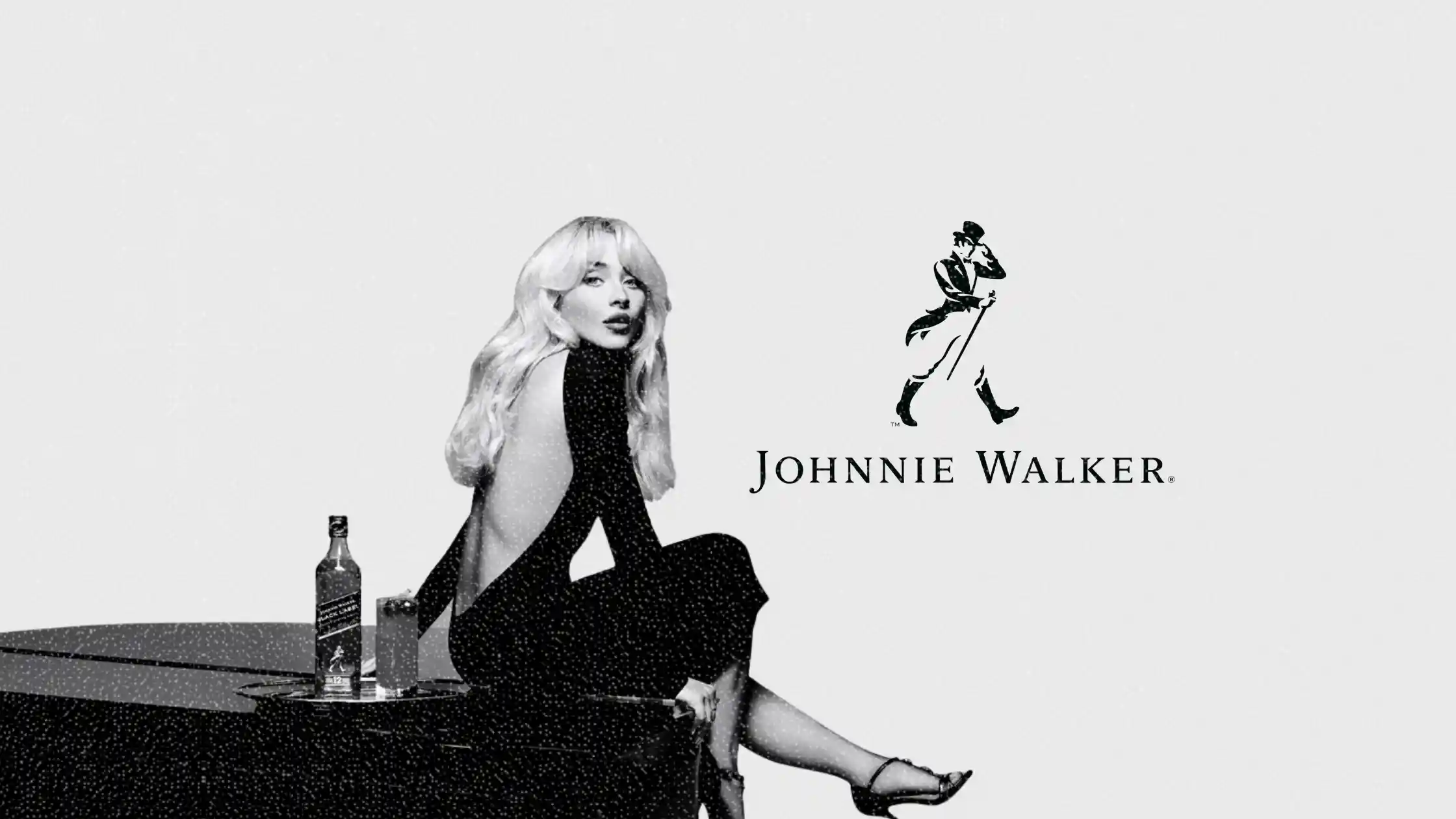
How Damien Chazelle turns an ad into a film
Damien Chazelle's involvement changes how the film is framed. The director of La La Land and Whiplash is closely associated with stories driven by performance, rhythm and ambition. For this commission, his film vocabulary becomes a bridge between Carpenter's persona and a Scotch whisky brand's familiar slogan.
The creative takes inspiration from French New Wave cinema, a movement often associated with playful storytelling and a willingness to break formal rules. Johnnie Walker describes a mix of polished visuals, spontaneous moments and a world that keeps shifting around its star. Produced by Superprime Films, the piece places Carpenter in what the brand calls a main-character role.
Carpenter described the assignment in the official release: "We wanted to create a true cinematic experience that was playful, unexpected, and full of personality." Her comment is revealing because she describes the brief in terms of the viewing experience, not the product.
A campaign can borrow a director's reputation without meaningfully using the director's strengths. Here, the deliberate choice of a film-inspired aesthetic gives the collaboration a creative structure beyond celebrity recognition. Chazelle's association with music-centered cinema also helps explain why this particular artist-director pairing fits the concept.
From tour cocktails to a longer partnership
The new film is another piece of a partnership that began with Carpenter's music. When Diageo introduced the relationship in August 2025, it connected her album and tour with advertising content and whisky experiences for fans of legal drinking age at selected concert stops.
Since then, Johnnie Walker has introduced the Go Go Highball associated with Carpenter and a limited-edition Black Label bottle inspired by her style. The company says those products are rolling out across Europe, Australia and North America, with additional markets planned. The film gives these separate elements a common story rather than presenting each release as a standalone novelty.
That continuity is different from a celebrity appearing in an isolated spot. One creative idea can appear as a tour-era moment, a product design and a director-led film without insisting that audiences experience all three. The campaign can feel familiar to someone who recognizes Carpenter, while still making sense to someone encountering the partnership for the first time.
Celebrity-led spirits marketing is not confined to this brand. The category has also seen Chivas Regal team with Formula 1 driver Charles Leclerc and Buchanan's work with musician Rauw Alejandro. Those partnerships connect labels with personalities and activities beyond the whisky shelf. Johnnie Walker's difference in this chapter is its emphasis on an artist's cinematic character arc.
The commercial implications remain open. A branded film can provide content for a longer campaign, but a recognizable cast does not on its own establish conversion or brand lift. What is confirmed is the creative progression from the original partnership toward a more ambitious piece of storytelling.
What marketers should know about celebrity-led brand films
The interesting part of this collaboration is not that a whisky label hired a pop star. It is how the brand is trying to make the partnership resemble an extension of her creative world. For marketers, that shifts attention from celebrity reach to the fit between audience expectations, creative partners and a brand's established identity.
- Start with the identity audiences already recognize.Carpenter's humor and stylized performance persona give the film its starting point. A recognizable celebrity aesthetic can be an asset when the creative uses it thoughtfully rather than treating a famous face as interchangeable.
- Give the collaborator a meaningful creative role.Bringing Chazelle into the project is more than a credit on a press release. His track record in music-driven storytelling offers a reason for the film's cinematic approach, even though there is no published evidence yet about whether viewers respond more strongly because of his involvement.
- Make each chapter add something new.The 2025 partnership, the limited-edition bottle and this new film do different jobs. A longer relationship gives the brand room to build a storyline through repeated encounters without announcing the same collaboration as if it were new each time.
- Separate cultural relevance from results.Familiar talent, a strong visual concept and a recognizable slogan are creative inputs. Views, sentiment, incremental sales and brand consideration would be outcomes to evaluate when credible measurement becomes available.
More broadly, the film illustrates how a consumer brand can participate in an artist's visual world without trying to mimic an entire fandom. The goal is not necessarily to insert the product into every scene; it can be to make the brand association coherent enough that viewers understand why the people and the idea appear together.
That coherence still demands restraint. Because this is an alcohol campaign, its audience and placement need to remain appropriate for people of legal drinking age, regardless of the artist's wider fan base. Cultural relevance is not a substitute for responsible targeting.
For Johnnie Walker, the latest chapter gives Keep Walking a recognizable voice and a specific director's visual language. Whether that leads to stronger brand preference remains unproven, but the campaign offers a clear example of turning a celebrity agreement into a continuing piece of creative storytelling.
