The Salvation Army brings thrifting to Roblox with “Thrift Score”
“Thrift Score” blends gaming, creator culture, and social impact for Gen Z and Gen Alpha

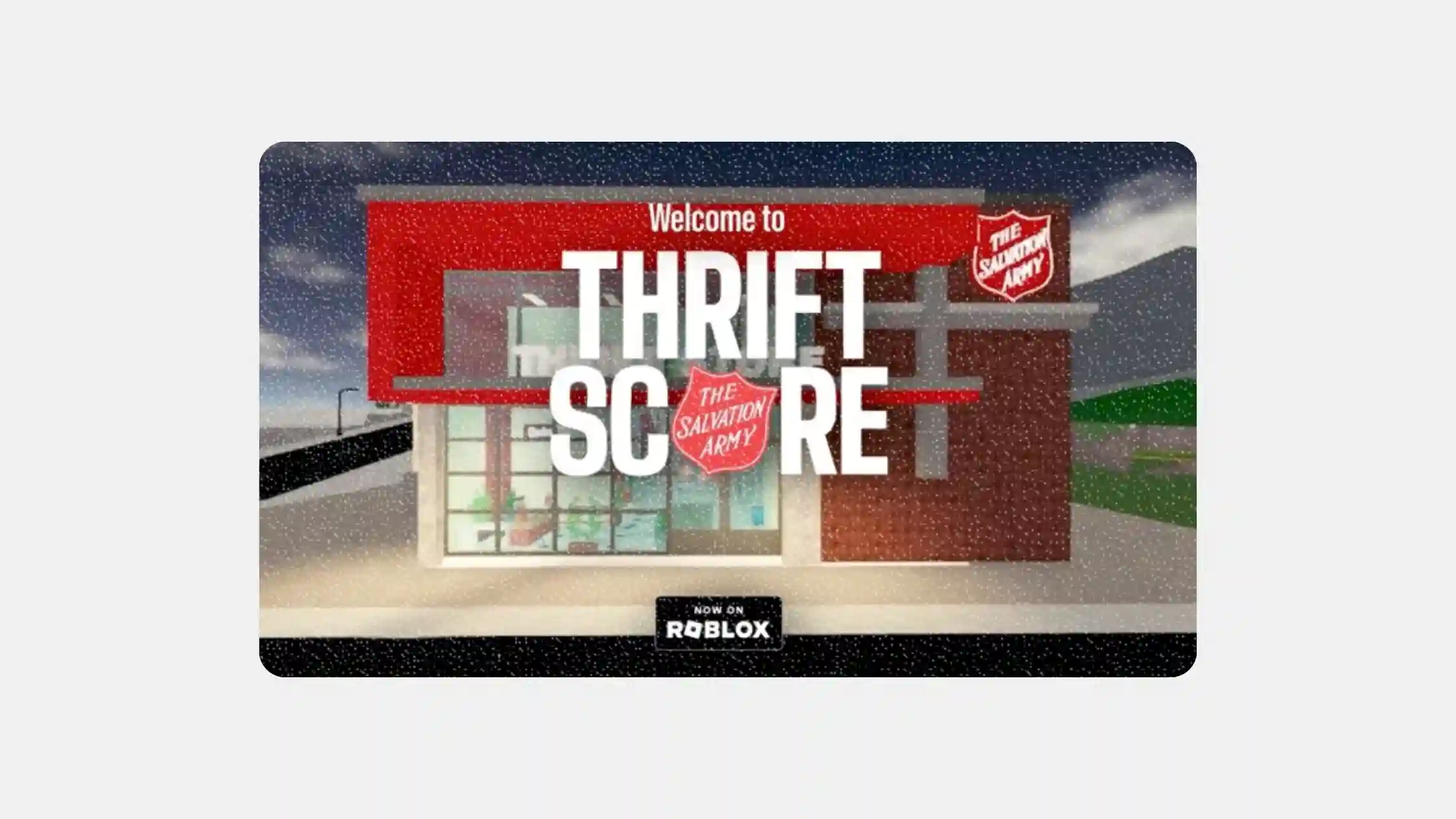
The Salvation Army is stepping into the metaverse with the launch of “Thrift Score,” billed as the world’s first digital thrift store on Roblox. The experience, which went live on Feb. 19, is designed to engage Gen Z and Gen Alpha audiences where they already play, shop, and express themselves.
This article explores what “Thrift Score” actually is, how it integrates into popular Roblox games, and what it signals for brands and nonprofit marketers looking to merge commerce, community, and cultural relevance inside immersive platforms.
Short on time?
Here’s a table of contents for quick access:
- What is The Salvation Army’s “Thrift Score” on Roblox?
- How “Thrift Score” blends gaming, creator culture, and commerce
- Why Roblox is becoming a serious channel for brand and nonprofit marketing
- What marketers should know about immersive thrift and cause-driven commerce
 Patrecia Meliana
What is The Salvation Army's "Thrift Score" on Roblox?
“Thrift Score” reimagines a traditional Salvation Army Thrift Store as a fully explorable digital environment inside Roblox. Developed in collaboration with immersive game studio The Gang and led by independent agency BarkleyOKRP, the experience allows players to browse racks of digital fashion items for their avatars.
The virtual store includes creator collaborations, player donations, and digital replicas of real Salvation Army products. Items range from rare to limited edition pieces, all priced to encourage broad participation across Roblox’s community.
According to Lt. Colonel Mark Nelson, ARC Commander at The Salvation Army, the goal is to translate the spirit of thrifting into a format that feels native to younger audiences.
“Thrifting has always been about more than price, it’s about creativity, individuality and purpose,” Nelson said. “By bringing our thrift store into Roblox, we’re introducing a new generation to the spirit of thrifting at Salvation Army in a way that feels natural to how they explore, play, and express themselves today.”
Just like in the real world, proceeds from “Thrift Score” support The Salvation Army’s rehabilitation, recovery, and community programs nationwide.
How "Thrift Score" blends gaming, creator culture, and commerce
Rather than launching as a standalone branded world, “Thrift Score” is embedded directly into popular Roblox games such as Seaboard City and Daycare Party. This approach places the thrift experience inside virtual environments players already frequent.
Influential Roblox creators including @PrestonPlayz, @BriannaPlayz, and @RussoPlays contributed limited edition user-generated items. Select designs are spotlighted throughout the store, merging creator fandom with cause-driven commerce.
“For me, everything starts with play,” said Preston Arsement, known as @PrestonPlayz. “When you combine play with heart, you can make a real impact.”
Tim McCracken, SVP, Creative and AI at BarkleyOKRP, framed the strategy around behavior, not storefronts. “Gen Z doesn’t think in terms of storefronts and shopping carts. They discover through play, culture, and exploration. Roblox gave us the opportunity to rethink what a thrift store could be in a digital-first world.”
The Gang, known for building immersive brand experiences on platforms such as Roblox, translated the physical look and feel of a Salvation Army thrift store into a dynamic digital space tailored to Gen Z and Gen Alpha norms.
Why Roblox is becoming a serious channel for brand and nonprofit marketing
The Salvation Army’s move echoes similar initiatives from commercial brands. In August last year, AirAsia launched AirAsia World on Roblox, inviting players to explore ASEAN-inspired destinations, complete gamified challenges, and earn in-game rewards.
These activations point to a broader shift. Gaming platforms are no longer experimental side projects. They are emerging as full-fledged marketing ecosystems where entertainment, commerce, and community intersect.
For marketers, Roblox offers:
- Persistent environments where brands can live beyond campaign cycles
- Built-in creator ecosystems that amplify reach organically
- Native monetization through digital goods and avatar customization
- Cultural proximity to Gen Z and Gen Alpha audiences
The key is execution. Experiences must feel native to gameplay and culture, not like intrusive ads disguised as worlds.
What marketers should know about immersive thrift and cause-driven commerce
For Brand Strategists and Marketing Directors, “Thrift Score” highlights several actionable insights:
- Embed, don’t interrupt
Instead of pulling users into a separate branded destination, The Salvation Army integrated its thrift store into existing games. Marketers should think about distribution inside ecosystems, not just building standalone hubs.
- Co-create with creators
Limited edition user-generated items from top Roblox creators add authenticity and built-in reach. Creator collaboration is not an add-on, it is infrastructure.
- Translate mission into mechanics
The thrift concept is not just visual. It is interactive. Players browse, discover rare finds, and participate at accessible price points. The mission is expressed through gameplay mechanics, not static messaging.
- Tie virtual goods to real-world impact
Proceeds from digital purchases support real-world rehabilitation and community programs. For nonprofits and purpose-driven brands, this bridges digital engagement with tangible outcomes.
- Design for discovery, not conversion funnels
As BarkleyOKRP’s SVP noted, younger audiences discover through play. Marketers should rethink linear funnels in favor of exploratory, culture-led engagement.
“Thrift Score” is more than a novelty activation. It signals how even legacy nonprofit brands can rethink distribution, commerce, and cultural relevance inside gaming platforms like Roblox.
For marketers, the message is clear: immersive platforms are not just for product drops or hype campaigns. They can also carry mission, community, and measurable impact if executed with cultural fluency.
As gaming ecosystems mature, the brands that win will be those that treat them as living environments, not digital billboards.