
Sephora gives Seth Rogen a 'Sethphora' holiday storefront
Sephora uses Seth Rogen's gift shopping and a Los Angeles 'Sethphora' storefront to make beauty gifting feel approachable.


Holiday gift shopping can be surprisingly awkward when the recipient knows more about skincare or fragrance than the person buying it. The uncertainty is easy to recognize: a full shelf of options, a name on a gift list, and no idea what counts as a thoughtful choice. That is exactly the kind of shopper Seth Rogen gets to play.
In a new US and Canada holiday campaign, Sephora casts the comedian as someone who needs a little guidance, not as a beauty expert. The film's joke extends into real life, where a Sephora storefront in Los Angeles temporarily became 'Sethphora.' The result is celebrity advertising built around an ordinary shopping predicament, rather than the idea that the celebrity knows everything.
Table of contents
Jump to each section:
- The Sethphora joke starts outside the store
- Inside the ad, an unlikely shopper gets help
- From Mariah Carey to Seth Rogen
- What marketers should know about beauty gifting
he Sethphora joke starts outside the store
At The Grove in Los Angeles, Sephora replaced its familiar name on the store facade with 'Sethphora,' a pun that made the actor's involvement visible before the wider holiday campaign appeared. The retailer described the takeover as a teaser for its partnership in an October 26 announcement. It did not report how many people visited or interacted with the installation.
The stunt gives a familiar storefront an unexpectedly personal touch. A shopper who recognizes the name can understand the joke without having seen the commercial. It is a simple piece of celebrity casting turned into a place-based invitation, with the name of the star functioning as the hook rather than a product claim.
The campaign's full media rollout is set for October 29 across connected television, linear television, streaming and social channels. Sephora also plans to make Rogen's curated holiday gift picks available through its website and app. In other words, the odd shop sign is the opening act, while shopping advice and product discovery form the rest of the story.
nside the ad, an unlikely shopper gets help
In the film, Rogen walks into Sephora looking for gifts for people in his life. A beauty advisor helps him navigate his choices, including setting spray for his producer and a fragrance for his cousin. The comedy depends on the contrast between his recognizable screen persona and the detail-oriented task of choosing someone else's beauty products.
Director Jason Woliner worked on the commercial, which was created with GUT New York. Instead of using the actor merely to introduce a shopping list, the story gives him a problem that the store's staff can help solve. That makes the advisor part of the creative idea, not just a background employee.
Rogen put the premise simply: "Holiday gifting can be stressful, so anything that makes it easier is a win in my book." It is a line from the brand's announcement, but it also captures why the casting works. A person can be funny and famous while still needing practical guidance in an unfamiliar aisle.
Sephora has also shared a campaign video through its official Facebook account:
https://www.facebook.com/sephora/videos/this-holiday-season-we-can-all-gift-beauty-even-seth/810456412162529
The campaign does not yet provide evidence of incremental sales, ad reach or gift-guide conversions. Its visible mechanism is clearer than its commercial outcome: turn a common purchasing doubt into an approachable encounter with a beauty advisor, then connect that scene to curated gift options.
rom Mariah Carey to Seth Rogen
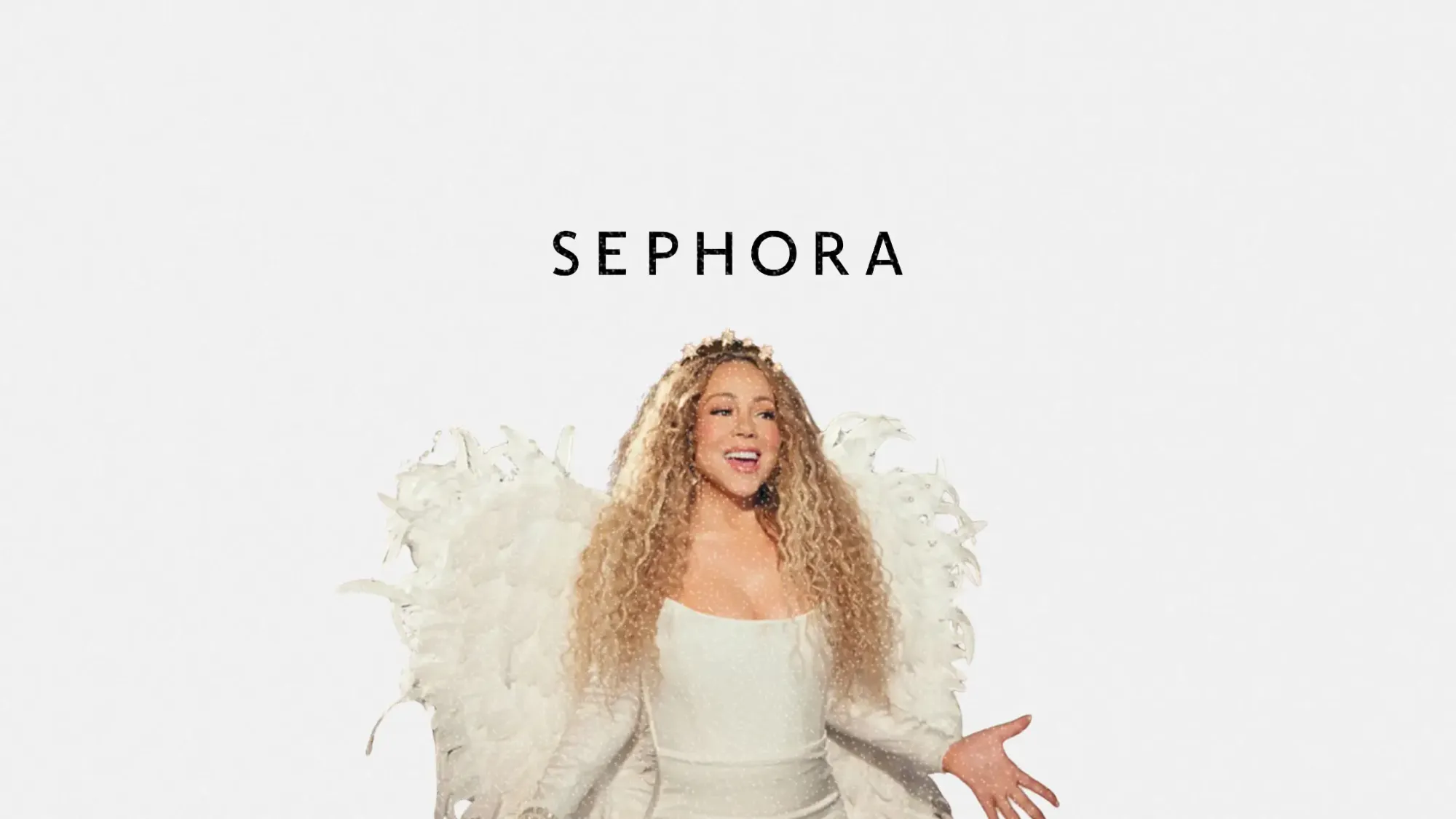
Sephora's latest celebrity choice is easier to appreciate alongside its previous holiday work. In 2025, the retailer tapped Mariah Carey and the singer's familiar 'It's time!' seasonal ritual. That campaign leaned into a widely recognized pop-cultural signal for the start of Christmas shopping, complete with a highly theatrical premise.
This year, Sephora has chosen a different kind of recognizable personality. Rogen is not playing the person who announces the holiday season. He is playing the person who still has gifts to buy after the season has begun. The contrast shows how celebrity can give a retail campaign either a cultural starting gun or a recognizable customer character.
| Holiday campaign | Celebrity role | Creative entry point |
|---|---|---|
| 2025: Sephora with Mariah Carey | Seasonal pop-culture figure | The familiar 'It's time!' Christmas cue |
| 2026: We All Sephora with Seth Rogen | Relatable, uncertain gift shopper | Getting help finding thoughtful beauty presents |
Both ideas use a well-known personality to make holiday retail more conversational, but they are not interchangeable. Carey's established connection to the season puts nostalgia at the center. Rogen's comic uncertainty creates room for Sephora to demonstrate its own staff expertise. A strong celebrity choice is not only about recognition; it is also about the part that person can credibly play.
hat marketers should know about beauty gifting
The interesting part of 'We All Sephora' is not that a famous comedian shops for presents. It is how the campaign makes the anxiety of choosing for someone else feel both funny and solvable. Four lessons stand out.
- Start with a recognizable hesitation. People shopping outside their own interests may be unsure about a category's language and products. Rogen's character gives the brand a way to acknowledge that hesitation rather than pretending every visitor is already confident.
- Give the employee a meaningful role. The Sephora beauty advisor is central to solving the gift-shopping problem. The creative connects a service the retailer provides with the joke the audience sees, making the brand useful inside the story.
- Make an out-of-home touchpoint understandable on sight. The 'Sethphora' facade works as a short visual pun. It can communicate the collaboration to a passerby without requiring the full ad, while the film and curated selection supply more context elsewhere.
- Choose a celebrity for the story, not just the audience. The contrast with Mariah Carey's 2025 holiday campaign is telling. A seasonal icon can signal celebration; a comedian playing an uncertain shopper can make buying a gift feel less intimidating. The useful question is what role the talent makes possible.
For a beauty retailer, there is value in making unfamiliar products less forbidding. A customer may not remember every product on a holiday gift list, but the feeling of being helped through a choice can be easier to understand. That is the experience Sephora is dramatizing, even before any commercial results are available.
The campaign also shows how one small retail intervention can connect a celebrity film to a physical location. A sign outside the store, an advisor inside the story and curated gifts online all reinforce the same premise. The pieces differ in format, but each answers the question that brought Rogen through the door.
Whether 'We All Sephora' ultimately moves product will require evidence beyond the announcement. Its immediate editorial lesson is more modest and more useful: celebrity humor becomes stronger when the joke reveals a real customer need that the brand can credibly address.
