Spotify’s devs haven’t touched code in weeks, thanks to AI
Spotify says its top developers haven’t written a single line of code since December 2025. That’s not burnout or budget cuts—it’s AI.

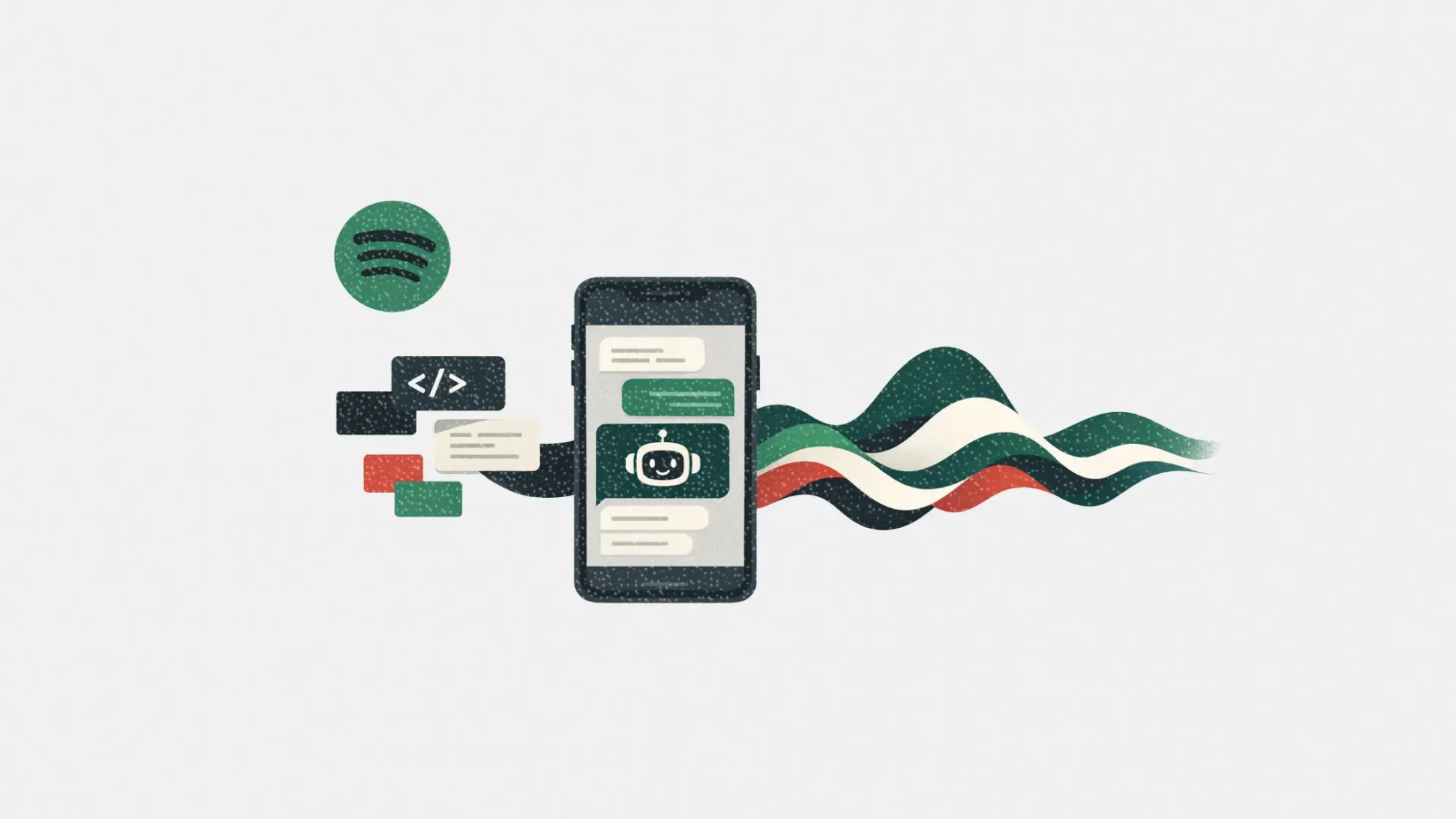
In its Q4 2025 earnings call, Spotify co-CEO Gustav Söderström revealed that internal devs are increasingly relying on generative AI, specifically Claude Code, to ship production-ready updates with minimal human input.
The company even built its own internal deployment system, Honk, enabling engineers to fix bugs or add features from Slack on their phones—no laptop needed.
This article explores Spotify’s AI-powered shift in engineering workflows, the implications for product velocity, and what it all means for marketers navigating the same tech curve.
Short on time?
Here’s a table of contents for quick access:
- Spotify is quietly changing developer workflows
- What makes Honk different from generic AI tools
- What marketers should know about Spotify’s AI strategy
 Patrecia Meliana
Spotify is quietly changing developer workflows
Spotify says its most effective engineers haven’t written any manual code since December, thanks to its internal AI deployment tool, Honk .
This system, which interfaces directly with Claude Code, lets engineers deploy fixes or features remotely and in real time—from their phones, using Slack. Söderström gave an example: a developer commuting to work can request a bug fix via Slack, review the changes generated by Claude, and push them live—all before arriving at the office.
Despite the hands-off approach, the company isn’t slowing down. Spotify claims to have shipped over 50 updates to its app in 2025 alone, including new features like:
- Prompted Playlists: AI-generated playlists based on user descriptions
- Page Match: A discovery tool for audiobooks
- About This Song: A contextual metadata feature for tracks
The implication? AI is already operating at a scale and reliability that matches—or exceeds—traditional dev workflows, at least within Spotify’s product ecosystem.
What makes Honk different from generic AI tools
While AI-powered coding assistants like GitHub Copilot or Amazon CodeWhisperer are gaining traction, Spotify’s Honk system reflects a deeper integration with its product and deployment stack.
Instead of simply assisting with code, Honk completes a full feedback loop: prompting, coding, deploying, and surfacing the results—all within the company’s communication environment (Slack). The system builds atop Claude Code, Anthropic’s large language model tuned for software development, and is optimized for Spotify’s internal infrastructure and release protocols.
In other words, Honk isn’t just helping developers write code—it’s helping them skip writing code altogether.
Söderström emphasized this system as part of Spotify’s larger ambition: to become the R&D lab for the audio industry. He also highlighted Spotify’s AI differentiator—a proprietary dataset rooted in behavioral insights around music preference that traditional LLMs can’t easily replicate .
What marketers should know about Spotify's AI strategy
Marketers might assume Spotify’s dev ops transformation is a back-end technicality. It’s not. Here’s why it matters:
- Product experimentation velocity is going up
More features, faster A/B testing, and shorter feedback loops mean Spotify can test audience-facing experiences at scale. Marketers working with Spotify—from branded playlists to interactive campaigns—may see faster rollouts and evolving formats.
- First-party behavioral data remains king
As Söderström noted, “What is workout music?” doesn’t have a single answer. Spotify is doubling down on training its own AI models using unique user data—like regional genre preferences or playlist engagement—offering targeting insights that can’t be scraped from the open web.
- Signals a shift in martech expectations
If dev teams can go weeks without coding thanks to AI, marketers may soon be expected to orchestrate campaigns, creative, or even audience segmentation without waiting on engineering support. It raises the bar for what marketing teams can—and should—automate.
For marketing leaders navigating tech investment, Spotify’s AI stack isn’t just a case study in automation. It’s a preview of how internal tools, custom datasets, and generative AI can converge to drive market differentiation.