Tavus' AI Santa returns with emotional upgrades and heavy engagement
AI Santa 2.0 is more lifelike and emotionally intelligent, but is that a good thing?

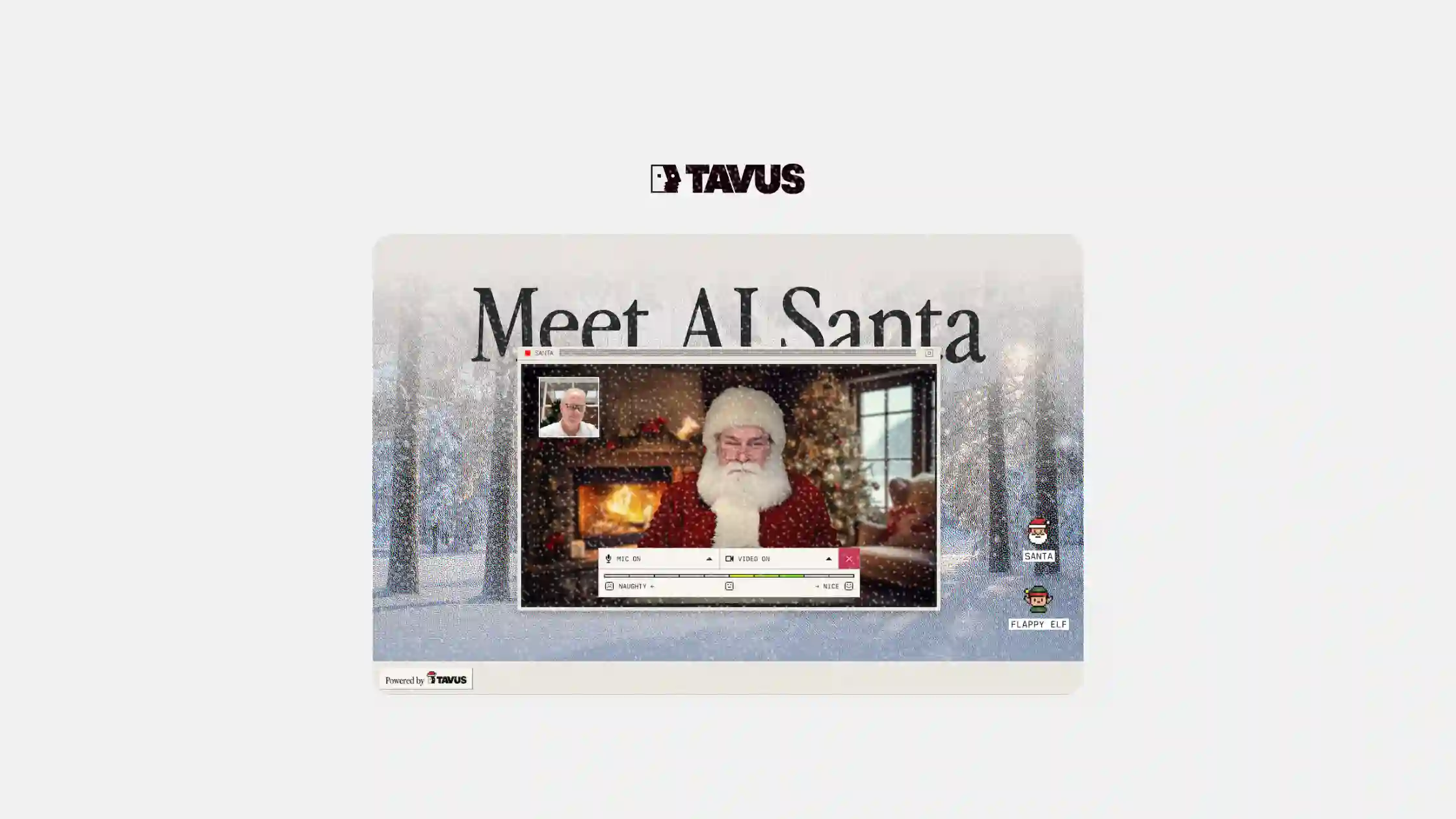
AI startup Tavus has relaunched its AI-powered Santa Claus avatar, an interactive, video-enabled chatbot designed to simulate conversations with Saint Nick. Powered by Tavus’ proprietary PAL (Personalized AI Loop) technology, the 2025 edition of AI Santa brings notable improvements in emotional intelligence, facial recognition, and memory.

But what starts as a novel family interaction may be evolving into something more complex. Tavus CEO Hassaan Raza says users are spending hours chatting with AI Santa every day, a stat that raises both opportunity and concern for marketers and parents alike.
This article explores what’s new with AI Santa, what’s driving user engagement, and why it matters for brands shaping family-facing experiences.
Short on time?
Here is a table of content for quick access:
- What’s new with Tavus’ AI Santa?
- Context: The appeal and risk of emotionally intelligent AI
- What marketers should know
 Patrecia Meliana
What's new with Tavus' AI Santa?
The AI Santa offering allows children and parents to talk to a synthetic version of Santa Claus via text, phone, or video chat. This year’s version introduces several upgrades designed to make interactions feel more lifelike.
Dubbed a Tavus PAL, the new Santa agent uses real-time voice and facial cloning to mirror human responses. It can now read facial expressions, respond with corresponding emotional cues like smiling back, and remember details from past conversations to create a more personalized, persistent experience. The agent can also search the web, provide gift suggestions, and even draft emails, blending novelty characters with practical assistants.

During testing, the AI agent showed awareness of trending games like Baldur’s Gate 3 when users requested a PlayStation, and even mirrored users' gestures. While the engagement feels slick, Tavus acknowledges that AI Santa is not fully human-like yet, citing subtle cues such as flat voice tones and delayed responses.
The appeal and risk of emotionally intelligent AI
The technology driving AI Santa is impressive, but the level of user interaction is arguably the bigger story. Tavus reports that people are spending hours daily with the avatar, frequently hitting the platform’s usage limits.
That’s a signal of stickiness for any brand leveraging AI avatars, but it’s also a red flag. Research has already linked prolonged AI chatbot interaction with emotional dependency and social isolation in adults. For children, who may believe they’re actually speaking with Santa Claus, the psychological effects are even less understood.
Tavus isn’t alone in this space. Character.AI recently restricted under-18 access after concerns that chatbot interactions may have contributed to teen suicides. While Tavus insists the experience is meant to be family-friendly, it highlights a broader industry challenge: how to build emotionally engaging AI without triggering ethical or developmental consequences.
What marketers should know
The rise of emotionally intelligent AI agents like Tavus’ AI Santa signals more than just a fun seasonal gimmick. It reflects a shift in how brands might soon engage consumers—through avatars that can read emotions, remember past interactions, and hold lifelike conversations. For marketers, this opens up new opportunities but also demands careful consideration around safety, transparency, and impact.
1. Emotionally responsive avatars are entering consumer spaces
Tavus’ PALs represent a shift from basic chatbots to emotionally aware digital personas. The AI Santa example may seem seasonal, but the same architecture could be applied to shopping assistants, healthcare agents, or branded spokespeople. For brands seeking deeper engagement, emotionally intelligent AI can offer a new kind of stickiness if used responsibly.
2. Prolonged usage can indicate both success and risk
High engagement metrics are tempting KPIs, especially during seasonal campaigns. But marketers should balance engagement with well-being, especially when targeting families. Adding optional time limits, parental controls, or nudges toward offline activities could mitigate negative effects without sacrificing brand connection.
3. Safety features matter and need to be visible
Tavus says it has implemented safeguards like content filtering, session termination, and mental health redirects. Marketers looking to deploy similar AI should prioritize transparency around data collection, moderation policies, and opt-out processes. With AI entering more personal domains, privacy and ethical design should be non-negotiables.
Tavus’ upgraded AI Santa shows how far emotionally responsive AI has come and how far it might go. For marketers, it’s a signal that interactive avatars are no longer future tech. They’re already here, capturing attention, shaping behaviors, and redefining how brands engage across age groups.
Used wisely, emotionally aware AI can open doors to more personal, memorable experiences. But brands need to tread carefully, especially when young users are involved. When the lines between magic and machine blur, ethical clarity becomes your strongest differentiator.