TikTok launches local content feed
TikTok expands its geo-targeting tool with the Nearby Feed. Here’s what brands should know

TikTok’s latest feature rollout isn’t about filters, viral sounds, or creator tools. It’s about physical proximity.
The platform has officially launched a “Nearby Feed” in four European markets: the U.K., France, Italy, and Germany. The feature displays posts based on the user's location, signaling TikTok’s deeper move into local discovery. With this launch, TikTok starts competing not just with Instagram or YouTube, but with platforms like Google Maps and Yelp.
This article explores what the Nearby Feed does, why it matters for marketers, and how brands — especially small businesses and location-based services — can tap into this geo-powered content shift.
Short on time?
Here is a table of content for quick access:
 Patrecia Meliana
What is TikTok's Nearby Feed?
TikTok's Nearby Feed is a location-based content tab that shows videos relevant to a user's current geographic area. The tab name reflects your location, such as “Berlin” or “Paris,” and appears directly on the home screen.
The feed is personalized based on three inputs: where you are, what the content is about, and when it was posted. So, users might see a mix of restaurant reviews, city walk-throughs, or event promos tied to their surroundings.
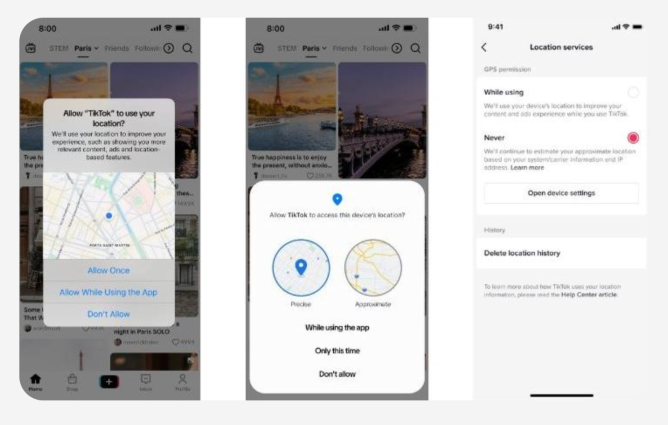
Location sharing is optional and only available to users aged 18 and older. Users can also manually change their location to browse posts from other areas. Content won’t show up in the feed if it comes from underage users, private accounts, or posts limited to “Friends” or “Only You.”
TikTok says the feature aligns with local privacy laws and iOS users will see a visible indicator when their location is accessed.
 Patrecia Meliana
Why this matters now
TikTok has been experimenting with the Nearby Feed since 2022 in Southeast Asia. Its broader European release suggests the platform is doubling down on real-world utility and local relevance.
TikTok reports that 46 percent of users in the U.K. have visited a local shop, restaurant, or attraction they saw on the platform. The Nearby Feed turns this behavior into a discoverability tool, giving local content and businesses a better shot at visibility without needing to buy ads.
More importantly, it positions TikTok to compete in the local discovery and search category. Instead of users turning to Google to find a brunch spot, TikTok wants them to scroll their Nearby Feed instead.
What marketers should know
TikTok's Nearby Feed introduces new opportunities for geo-targeted marketing and offline conversions. Here’s how to make the most of it:
1. Geo-tagged content should be standard
If your business operates in a physical location, make location tagging a regular part of your content strategy. Videos with relevant tags and local context are more likely to appear in the feed and drive foot traffic.
2. Small businesses gain more visibility
Independent brands and shops now have a low-cost path to discoverability. By posting creative, on-trend content and tagging their location, small businesses can increase reach in their immediate communities.
3. Shift influencer campaigns to local micro-creators
Instead of focusing on national creators, consider tapping into regionally relevant influencers. Micro-creators who post in specific cities can organically surface in the Nearby Feed, adding trust and local appeal to brand content.
4. Use it as a trend research tool
Brands can use the feature themselves to observe content trends in different cities or neighborhoods. This insight is useful for campaign localization, influencer scouting, or just better understanding audience behavior across markets.
TikTok’s Nearby Feed isn’t just another tab. It’s a deliberate push into local discovery and real-world impact.
Marketers who act early can capitalize on organic exposure, increased foot traffic, and new types of location-based storytelling. Whether you’re running campaigns for a coffee shop, cultural space, or travel brand, this feature opens the door to hyperlocal engagement that doesn’t rely solely on paid media.
As the platform continues evolving beyond viral trends into utility-driven content, brands that adapt now will have a serious advantage later.