TikTok quietly launches PineDrama to test the waters in microdrama streaming
TikTok is expanding into serialized microdramas. Here’s what this new experiment means for marketers

TikTok is taking another stab at reshaping short-form entertainment, but this time, it’s not doing it on TikTok. The company has quietly released a new app called PineDrama in the US and Brazil, signaling a strategic shift into the growing category of serialized microdramas.
Billed as a standalone platform for bite-sized TV, PineDrama offers one-minute fictional episodes across genres like romance, thriller, and family drama. The launch signals TikTok’s growing interest in capturing attention beyond viral dances and creator clips.
This article explores what PineDrama offers, why TikTok launched it outside its main app, and what marketers can learn from its direction.
Short on time?
Here’s a table of contents for quick access:
- What is PineDrama?
- Why TikTok is betting on microdramas
- How PineDrama compares to ReelShort and DramaBox
- What marketers should know
 Atikah Amalia
What is PineDrama?
PineDrama is TikTok’s new standalone app built entirely around one-minute episodic dramas. Available on iOS and Android in the US and Brazil, the app mimics TikTok’s infinite vertical scroll but replaces creator content with fictional series.
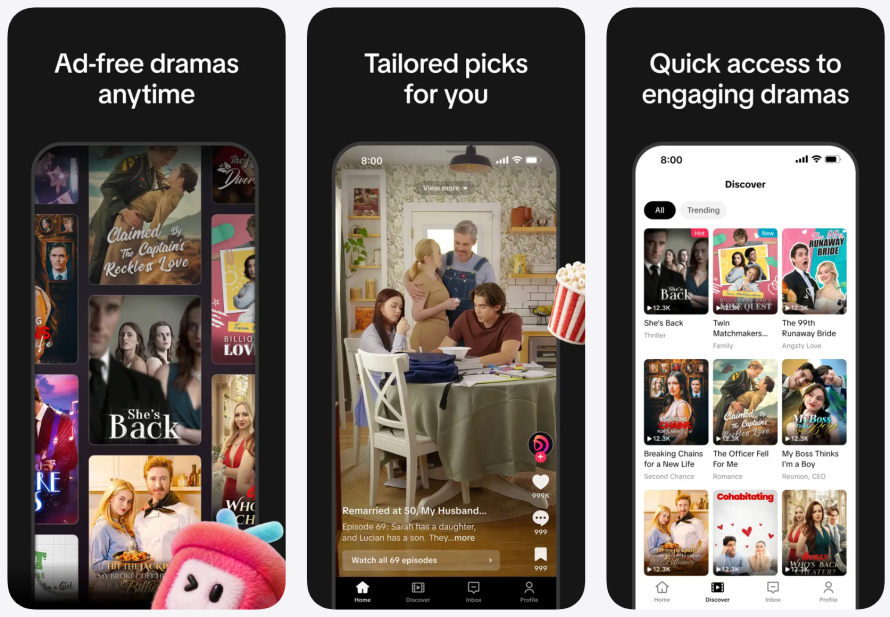
There are no ads, no subscriptions, and no obvious monetization yet. Users can log in with their TikTok accounts and watch shows like Love at First Bite or My Unwanted Billionaire Ex for free.
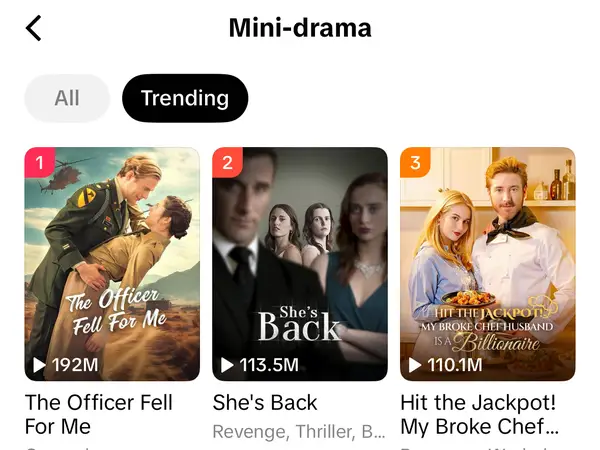
A Discover tab lets users explore trending content, while Favorites and Watch History make it easier to follow multiple series. Viewers can also comment and toggle into full-screen mode for a distraction-free experience.
 Atikah Amalia
Why TikTok is betting on microdramas
This is not TikTok’s first test in serialized content. In late 2025, it added a TikTok Minis section inside the main app to surface microdrama content from suppliers like Dreame, Stardust TV, and ShortMax. PineDrama extends that effort into a dedicated space where content and user behavior can be tested without the noise of the broader TikTok ecosystem.
TikTok’s parent company, ByteDance, has already pushed into microdramas in Asia with platforms like Melolo and Red Fruit. With PineDrama, ByteDance is applying lessons from Douyin and other regional experiments to Western markets. According to streaming consultant Hernan Lopez, PineDrama appears to be a strategic testbed. It is currently ad-free and has no paywall, but that is likely to change as the platform matures.
The model is already proven. Rival platforms like ReelShort and DramaBox have found success with serialized mobile-first shows that draw users in with dramatic hooks, cliffhangers, and low-budget productions. These apps often allow a few episodes for free, then charge weekly rates of up to US$20 to unlock the rest.
How PineDrama compares to ReelShort and DramaBox
Microdramas work because they combine the structure of traditional TV with the engagement mechanics of social video. Unlike Quibi, which tried to miniaturize Hollywood-style content, apps like DramaBox and ReelShort focus on speed, volume, and virality. They use non-union talent, lean into soapy plotlines, and craft each episode to drive the next click.
PineDrama follows that playbook. The shows are low-friction, emotionally charged, and built for mobile consumption. Titles like The Officer Fell for Me and The Return of Divorced Heiress are not trying to win Emmys. They are designed to win attention, fast.
Right now, PineDrama offers everything for free, but ByteDance is unlikely to keep it that way. Owl & Co. estimates that the microdrama format generated US$1.3 billion in 2025 in the US alone. Globally, the category could hit US$26 billion in annual revenue by 2030. TikTok wants a share of that.
What marketers should know
TikTok’s latest move signals more than just a new app. It points to a bigger shift in how vertical storytelling is evolving. Here are a few takeaways for marketers:
1. Microdramas could unlock new storytelling formats
Marketers already using short-form video may want to test serialized narrative content. Microdramas are a way to build loyalty over multiple touchpoints rather than chasing one-off engagement. Branded stories or sponsorships could become viable, especially once monetization kicks in.
2. PineDrama may create new inventory and partnerships
The app’s creators include the same studios active on TikTok Minis. Marketers should watch who breaks out on PineDrama and consider partnerships early. Studios like Dreame or Stardust TV may be open to co-creation or licensing deals.
3. Ad-free now, but not forever
PineDrama is an experiment. TikTok may introduce subscriptions, sponsorships, or pre-roll formats once user behavior solidifies. Brands can use this window to test without heavy competition.
4. Global rollout could follow
If PineDrama succeeds in the US and Brazil, other markets are likely next. ByteDance has shown it will scale fast once it sees traction. Regional marketers should keep an eye out for local versions or pilots.
PineDrama is not just another content experiment. It is TikTok’s bid to capture attention in a category that blends video, fiction, and mobile addiction. As vertical video matures, TikTok is creating formats that do more than entertain. They engage, retain, and—eventually—monetize.
For marketers, it is an opportunity to get in early on a format that could redefine binge-worthy content for mobile-first audiences.