TikTok sparks fear over ‘sensitive data’ clause as users misread privacy update
TikTok users are panicking over its data policy. Marketers should be looking at the legal and platform implications.


A single clause in TikTok’s updated U.S. privacy policy has sent users into a tailspin. The app now explicitly states that it may collect “citizenship or immigration status” alongside other categories of sensitive personal information. The reaction was immediate. Viral posts flooded social media warning of surveillance and calling for boycotts.
But here’s the reality. That clause has been in place for months.
This article breaks down what actually changed, why users are reacting now, and what marketers should be watching as privacy rules evolve and user trust becomes more fragile.
Short on time?
Here’s a table of contents for quick access:
 Atikah Amalia
What changed in TikTok's privacy policy
Not much, legally speaking.
The controversial clause that references “citizenship or immigration status” is not new. It also appeared in TikTok’s August 2024 privacy policy. Its inclusion is not about expanding data collection but about complying with stricter U.S. privacy laws, especially in states like California.
California’s Consumer Privacy Rights Act (CPRA) and its predecessor, the California Consumer Privacy Act (CCPA), require companies to disclose if they collect any categories defined as “sensitive personal information.” This includes data on sexual orientation, religious beliefs, health, ethnicity, and now, due to AB-947 passed in 2023, immigration status.
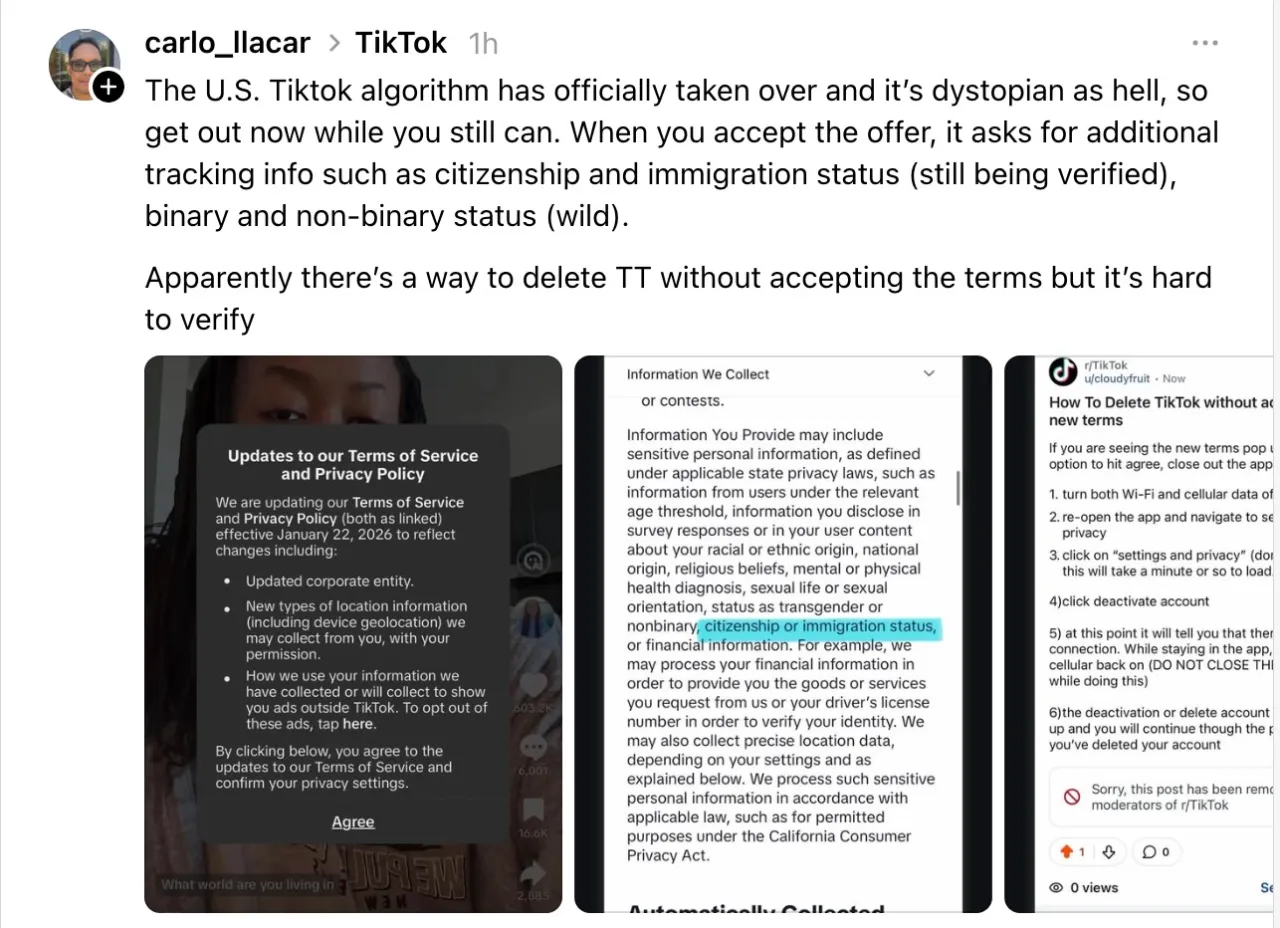
In short, TikTok is listing this data to stay compliant. Not because it suddenly started harvesting it.
So why the renewed outrage? TikTok recently sent out an in-app alert requiring users to accept the updated terms, triggered by the company's ownership restructuring in the U.S. For many users, this was their first time reading the policy in full. The language felt intrusive, and the political climate around immigration enforcement only amplified that fear.
 Patrecia Meliana
Why users are panicking
The blunt legal phrasing is triggering emotional reactions, but it serves a regulatory purpose. TikTok is not saying it will ask for your immigration status. It is saying that if you post about it or mention it in a survey, that information becomes part of the content the platform technically processes.
According to Jennifer Daniels, a partner at law firm Blank Rome, TikTok is required to state this due to California law. It also helps the company defend itself from lawsuits related to misuse of racial, ethnic, or immigration-related data.
Other platforms do this too. Meta’s privacy policies reference similar categories but use softer language. TikTok’s more explicit approach is likely meant to prevent future legal challenges by being as clear as possible.
As Ashlee Difuntorum of KHIKS puts it, “This policy was written for lawyers and regulators, not for the average user. It feels more intrusive than it actually is.”
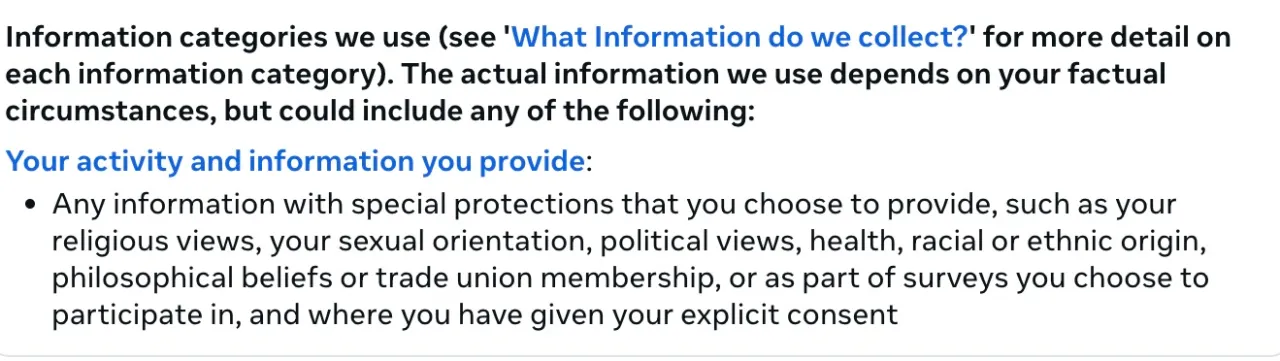
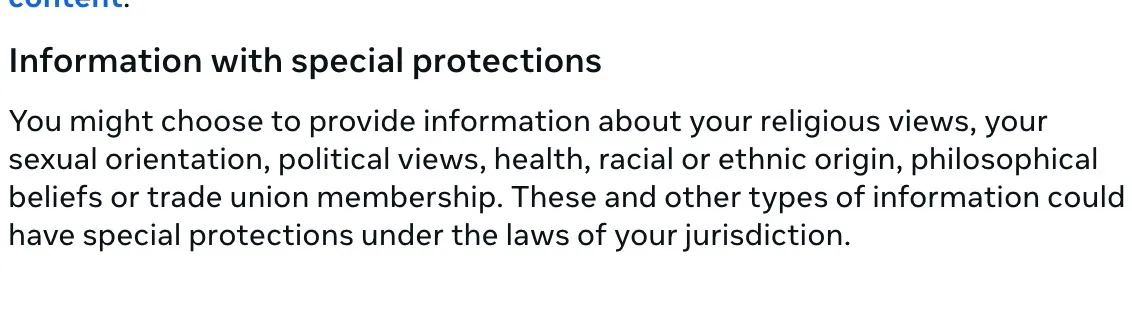
The result? Users see a scary-sounding list without the legal context behind it. And in a country where immigration enforcement has become increasingly aggressive, especially in states like Minnesota, that fear feels very real.
What marketers should know
The real takeaway here is not about immigration data. It is about how privacy language, timing, and public trust intersect. For marketers, this should be a signal to look closer at platform risk and policy transparency.
1. Read the fine print before your audience does
Policy updates are no longer background noise. Users are reading them and reacting. Brands that operate on TikTok need to understand how these updates might be interpreted and prepare communication plans for any backlash.
2. Don’t mistake legal disclosure for actual practice
Just because a platform discloses a type of data it may collect does not mean it actively does so. But public perception is powerful, and marketers should be ready to clarify the difference when needed.
3. Watch what your creators are posting
TikTok’s policy makes clear that if users voluntarily share sensitive personal information in content, it becomes subject to processing. Brands running campaigns or surveys on the platform should audit for any disclosures that could be misinterpreted under privacy law.
4. Location data is evolving too
Under the new policy, TikTok will soon allow users to opt in to GPS-based location tracking in the U.S. Previously, the app relied on SIM card and IP data. This opens new targeting options, but also adds compliance complexity. Marketers should tread carefully here.
TikTok’s privacy policy did not suddenly get more invasive. It just got more visible. The backlash is less about data practices and more about fear, timing, and blunt legal language. For marketers, this is a cue to stay ahead of policy updates, anticipate public reactions, and keep trust at the center of every campaign.