TikTok teases Shared Feeds, launches Shared Collections for collaborative content discovery
TikTok adds new tools for shared content curation and interest-based discovery. What this means for your brand strategy


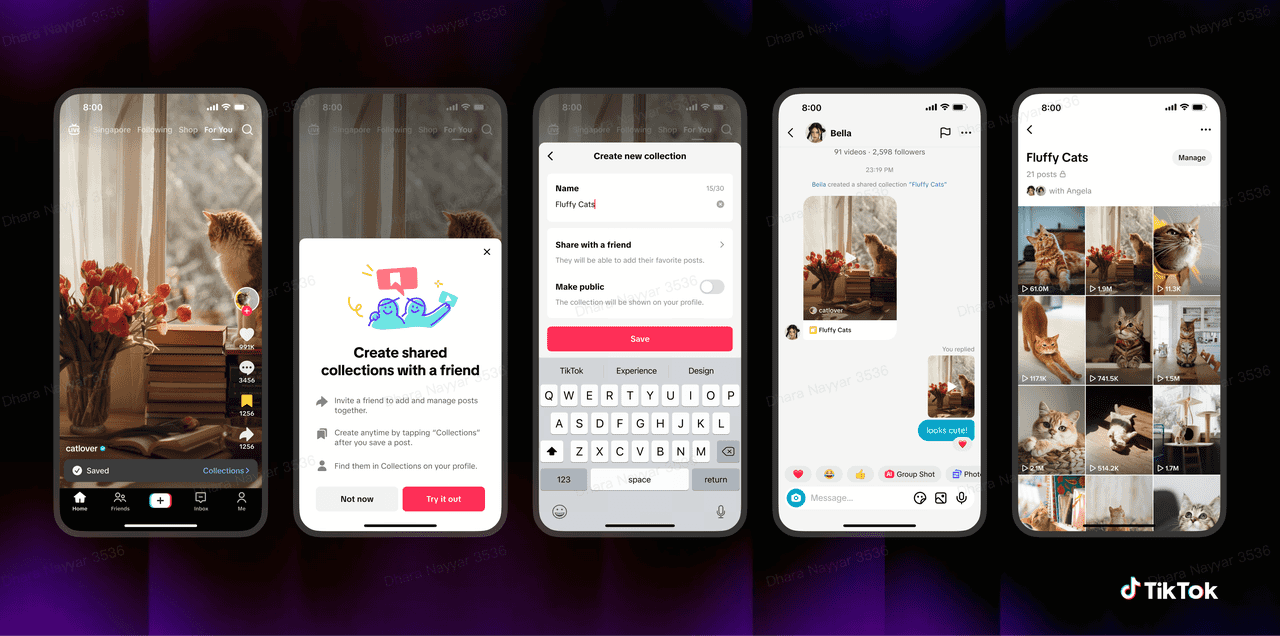
TikTok is giving its users more ways to connect, collaborate, and co-curate content, just in time for the holiday season. The platform officially launched Shared Collections, a feature that lets people save TikTok videos into folders they can access and organize with friends or family. It also previewed Shared Feeds, a new experience that surfaces 15 interest-based videos daily for any two users to explore together via direct message.
These changes highlight TikTok’s continued evolution from a solo content discovery engine into a more collaborative, interest-driven network. For marketers and brand strategists, they open the door to new use cases. Think peer-powered discovery, group planning, or micro-community engagement.
This article explores what these features are, how they work, and what they mean for your marketing strategy.
Short on time?
Here is a table of content for quick access:
- What are Shared Collections and how do they work?
- Shared Feeds turn DMs into curated discovery zones
- Holiday-ready feature: TikTok introduces festive greeting cards
- What marketers should know
 Patrecia Meliana
What are Shared Collections and how do they work?
Shared Collections expand TikTok’s existing save-and-organize functionality by allowing two users to jointly curate and manage saved videos. As long as both users follow each other, they can start a Shared Collection, rename it, and add TikToks around any topic. This could include Secret Santa ideas, travel planning, or creator inspiration.
These collections are available globally for users over age 16. They can remain private between friends or be shared publicly with the broader TikTok community. The interface builds on a behavior users already rely on, which is saving posts to revisit later. Now, it adds a collaborative layer that taps into shared goals or interests.
For marketers, the implications are clear. This is TikTok leaning into intent-based engagement. Where users once passively browsed, Shared Collections encourage them to actively group content with a purpose. This offers a new lens for product discovery, brand storytelling, or creator collaborations.
Shared Feeds turn DMs into curated discovery zones
Coming in the next few months, TikTok’s Shared Feeds will allow two users to view a mini daily feed of 15 videos, custom-tailored to their combined preferences. The feed is generated by each person’s activity, including what they like, watch, and comment on, and is delivered directly in their private messages.
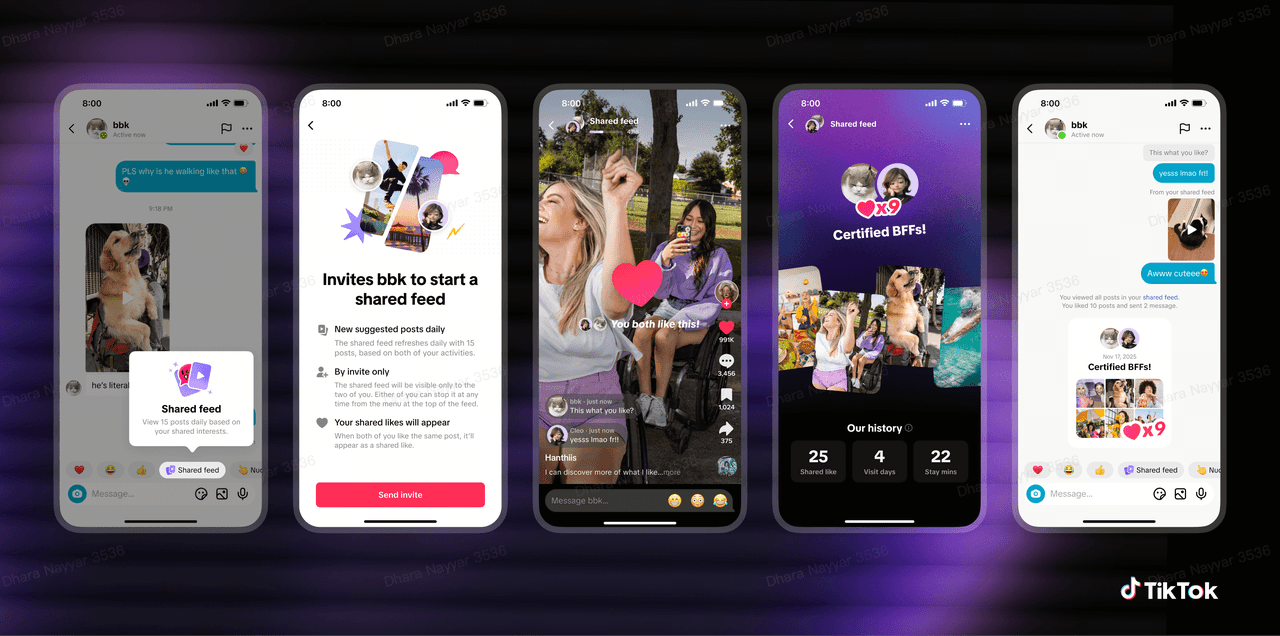
This feature draws comparisons to Instagram Reels’ Blend. However, TikTok adds a messaging and analytics layer. Users can chat about the videos and see which ones they both liked via a Shared Likes history. This moves TikTok further into the realm of co-viewing and co-discovery, emphasizing personal connection over passive consumption.
For brands, this is a glimpse into TikTok’s next phase. It signals a shift toward algorithmic intimacy at scale. By surfacing content based on two users’ overlapping interests, TikTok is positioning itself as a facilitator of not just personal entertainment but shared experience. This could change how marketers think about content seeding and niche targeting, especially for campaigns that benefit from word-of-mouth and group influence.
TikTok introduces festive greeting cards
In a smaller update, TikTok also rolled out greeting cards for direct messages. Users can now select a card, write a message, and send it with a festive animation. The feature is light in functionality but adds emotional texture to the platform. It reinforces TikTok’s growing role in personal messaging and sentiment sharing.
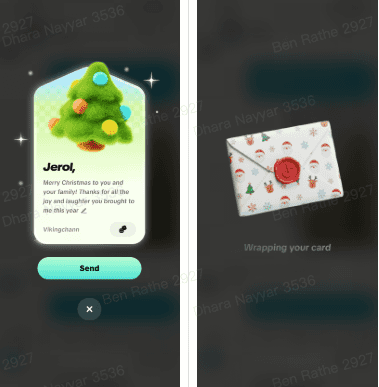
This is less about brand utility and more about signaling that TikTok is more than a short-form video app. The platform wants to become a go-to space for connection, planning, and shared meaning.
What marketers should know
These features signal a clear shift in TikTok’s UX. The platform is moving from solo scrolling to collaborative curation. For brands, that unlocks new engagement models. Here are three key takeaways:
1. Plan content for peer-sharing moments
Shared Collections are essentially digital mood boards. Think recipes, gift guides, fashion inspiration, or travel ideas. These are categories where people already gather content to act on. Brands in lifestyle, beauty, home, or travel should experiment with content that naturally fits into Shared Collection behavior.
Action tip: Create thematic content series designed to be saved and shared. Examples include "holiday hacks," "budget travel finds," or "gifts under US$20."
2. Design for duo discovery
With Shared Feeds, your content may now be evaluated by two people at once. The algorithm will favor content with broad or overlapping appeal, and reactions may influence future delivery. This makes it even more important to optimize for clarity, entertainment value, and emotional resonance.
Action tip: Reassess your CTA placements. If content sparks conversation, make sure it invites the viewer to act. This could include commenting, sharing, or clicking.
3. Experiment with intimacy-driven campaigns
These updates suggest TikTok is becoming a more relationship-based platform, especially through direct messaging. That could open new territory for DM-based brand activations, micro-influencer partnerships, or co-viewing campaigns built around dual engagement.
Action tip: Watch how creators use Shared Feeds and Collections. Grassroots behaviors often lead to brand opportunities.
TikTok’s new Shared Collections and upcoming Shared Feeds show the platform is prioritizing collaborative discovery and private interaction. This is a natural next step for a maturing social space. For marketers, it means shifting strategies to align with co-curation behaviors, group planning dynamics, and algorithm-driven connection.
As these features roll out globally, early movers can test formats that inspire sharing and spark shared interests. This positions their content at the heart of TikTok’s next wave of social engagement.