
Toyota passes NFL fandom to the next generation
Toyota pairs NFL stars with youth flag football players to frame its season-long campaign around how fandom gets passed forward.


Football fandom is built on handoffs. Parents pass teams down to their kids. Young players copy the quarterbacks they watch on Sundays. Local fields turn into the first place where a sport becomes part of someone’s identity. Toyota is leaning into that familiar rhythm for the new NFL season, making the idea of passing the game forward the emotional center of its latest football campaign.
The company’s wider 2026 NFL program brings together Team Toyota athletes, NFL FLAG youth players, national advertising and fan-facing moments. The new creative stars Brock Purdy, Jordan Love and Eli Manning, but the message is less about celebrity endorsement than what happens when recognizable players share the frame with the next generation.
Table of contents
Jump to each section:
- Why Toyota is framing football as something people inherit
- How the campaign makes NFL stars part of a bigger story
- Why NFL FLAG matters to the campaign idea
- What marketers can learn from Toyota’s football handoff
Why Toyota is framing football as something people inherit
The strongest part of this campaign is not the presence of three quarterbacks. It is the decision to make football feel like something that moves between people. The creative starts from a behavior that already exists around the sport: fans teach other fans how to care.
That gives Toyota a role that is easier to understand than a standard automotive sponsorship. Instead of asking viewers to connect football directly with a vehicle feature, the brand puts its cars around a shared football moment and lets the sport carry most of the emotion.
In “The Game Won’t Stop,” Brock Purdy and Eli Manning appear alongside young NFL FLAG athletes as a game continues from day into night. Toyota vehicles illuminate the field as play carries on, turning the vehicles into part of the setting rather than the reason for the scene.
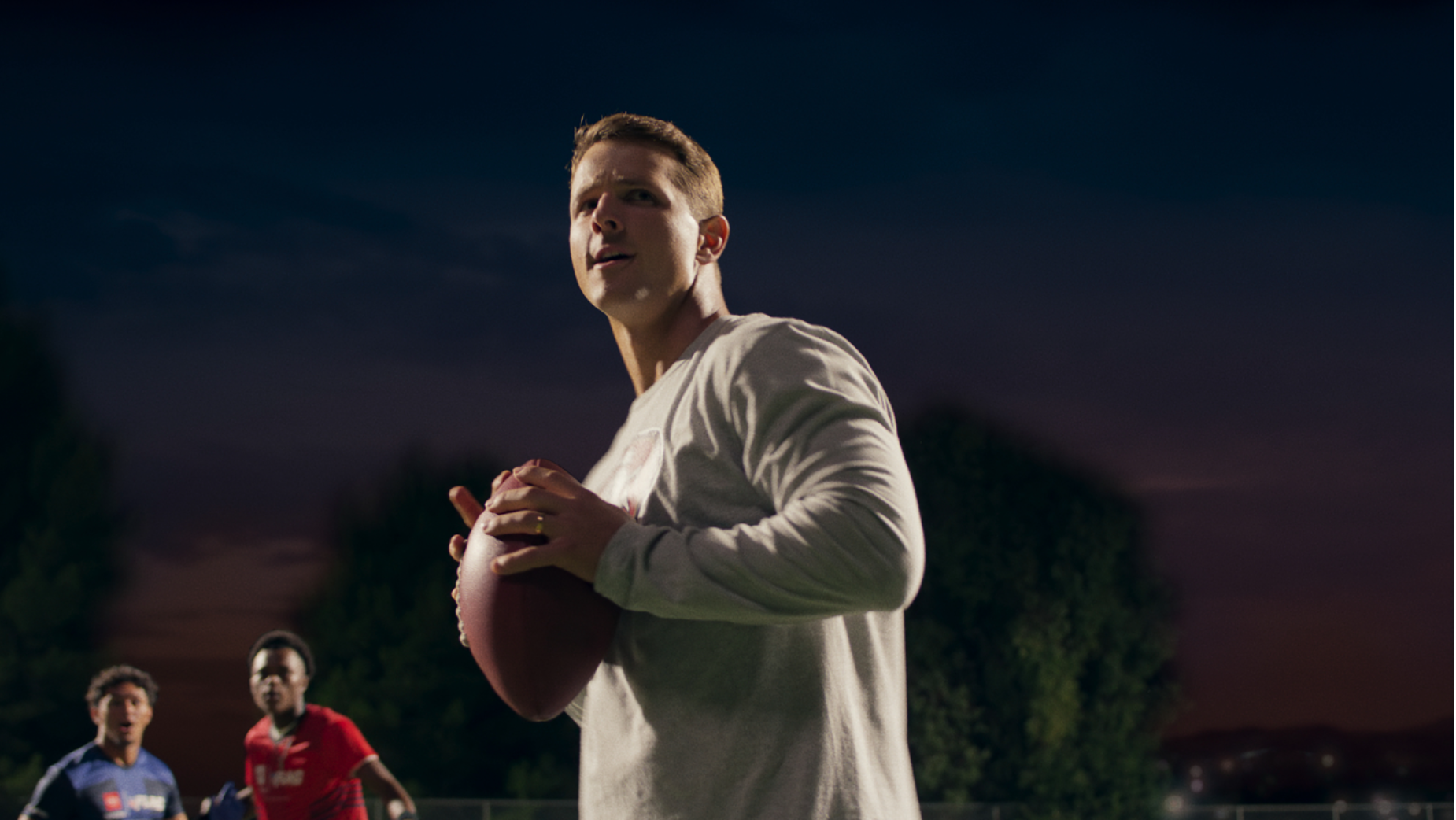
That distinction matters. Sports audiences are used to seeing brands around the games they love. The harder task is making a sponsor feel like it belongs inside the story without interrupting it.
How the campaign makes NFL stars part of a bigger story
Star power still matters here. Brock Purdy remains a highly visible active quarterback, while Eli Manning brings the recognition of a retired two-time Super Bowl champion. Jordan Love extends the campaign across another current NFL fan base.
But Toyota does not position the athletes as isolated celebrity faces. The creative uses them as people who can symbolically pass football culture forward. That is a more flexible role for athletes because it gives the campaign room to include younger players, families and community programs without making every piece of content depend on one personality.
The Instagram post tied to the campaign reinforces that structure by centering Purdy and Manning together inside the new Toyota football creative. The social asset works as an extension of the campaign rather than a separate influencer-style endorsement.
For marketers, this is the difference between renting fame and giving talent a function inside the idea. A familiar face may earn the first look, but the campaign still needs a story that can survive when that face is not on screen.
Why NFL FLAG matters to the campaign idea
Youth participation gives the “next generation” language something concrete to attach to. Toyota’s broader NFL platform includes NFL FLAG as part of its community emphasis, so the young players in the campaign are not simply background casting. They connect the national advertising to a wider participation theme.
That makes the campaign easier to stretch across a season. A single celebrity spot can peak quickly. A platform built around athletes, youth football and fan communities has more places to go, from broadcast creative to social content and local moments.
It also changes the emotional balance of the work. The stars represent the level fans already know. The young players represent who might be watching, learning and imagining themselves in the game next.
This kind of structure is useful in sports marketing because fandom is rarely only about the current match. It also lives in rituals, family habits, local participation and the idea that the sport will still matter after today’s roster has changed.
What marketers can learn from Toyota’s football handoff
Toyota’s campaign shows how a sponsorship can feel more coherent when the brand starts with a cultural behavior and builds the marketing around it. Here, the behavior is simple: football gets passed from one generation to another.
- Give celebrity talent a role inside the ideaPurdy, Love and Manning are not just recognizable names attached to a logo. They represent different parts of football’s present and legacy, which lets their presence support the campaign’s generational theme.
- Build around something fans already doThe campaign does not need to invent a new ritual. It borrows from an existing one: people introducing other people to the sport. That makes the creative easier to understand before any brand message needs explaining.
- Connect national media with participationNFL FLAG gives the platform a community layer beyond broadcast advertising. For brands with major sports rights, participation programs can give a campaign more depth than repeated logo exposure alone.
- Let the product support the scene instead of dominating itThe vehicles are visible, but they serve the football story. That restraint helps the brand stay present without making the audience leave the cultural moment to process a product pitch.
The wider lesson is not that every sports sponsor needs youth athletes or a generational message. It is that the most durable sports campaigns often understand what people are emotionally doing with the sport before deciding what the brand should say.
Football is already full of inherited loyalties, shared rituals and people teaching other people how to love the game. Toyota’s creative works because it enters that existing behavior rather than trying to replace it with a branded one.