
True Religion and Baby Phat bring Love Island stars into Y2K revival
Two Y2K fashion brands pair reality-TV talent with a behind-the-scenes campaign and an October 27 drop of low-rise denim and pink styles.


Low-rise denim, crystals and hot pink are the visual language that True Religion and Baby Phat helped make famous in the early 2000s. The clothes return with an added twist: a campaign that looks like the making of an old-school music video, starring two faces from reality television.
In the brands' first joint collection, announced on October 20, 2026, Love Island USA personalities Aniya Harvey and Kayda Bosse wear denim and statement pieces built around those recognisable Y2K details. The limited-edition assortment arrives online on October 27. For shoppers who remember the brands' first era, the designs recall a familiar aesthetic; for newer viewers, the campaign gives that aesthetic faces and a story.
Table of contents
Jump to each section:
- Why the Y2K pairing feels familiar
- What shoppers get in the October 27 drop
- How Making the Campaign borrows reality TV
- What marketers can learn from this crossover
Why the Y2K pairing feels familiar
True Religion began in 2002 and became closely associated with conspicuous denim stitching and horseshoe branding. Baby Phat, founded by Kimora Lee in 1999 and relaunched under her direction in 2019, built a contrasting but compatible identity around its cat motif, glamour and women's streetwear. The collaboration combines recognizable design signatures rather than asking either label to abandon its own look.
The appeal of this fashion period is partly how immediately it reads. A low waistline, a little crystal shine and hot pink hardware can evoke an entire pop-culture setting without a long explanation. Here, those signals appear in clothes intended for wear rather than in a simple retrospective ad.
There is also an audience connection beyond the garments. In an October 20 discussion among Love Island USA viewers, several commenters compared the styling to Bratz dolls, while others expressed surprise that Baby Phat was still active. These are individual reactions in one community, not a representative measure of the launch's reception, but they illustrate why casting reality-TV personalities offers a different route into nostalgia.
What shoppers get in the October 27 drop
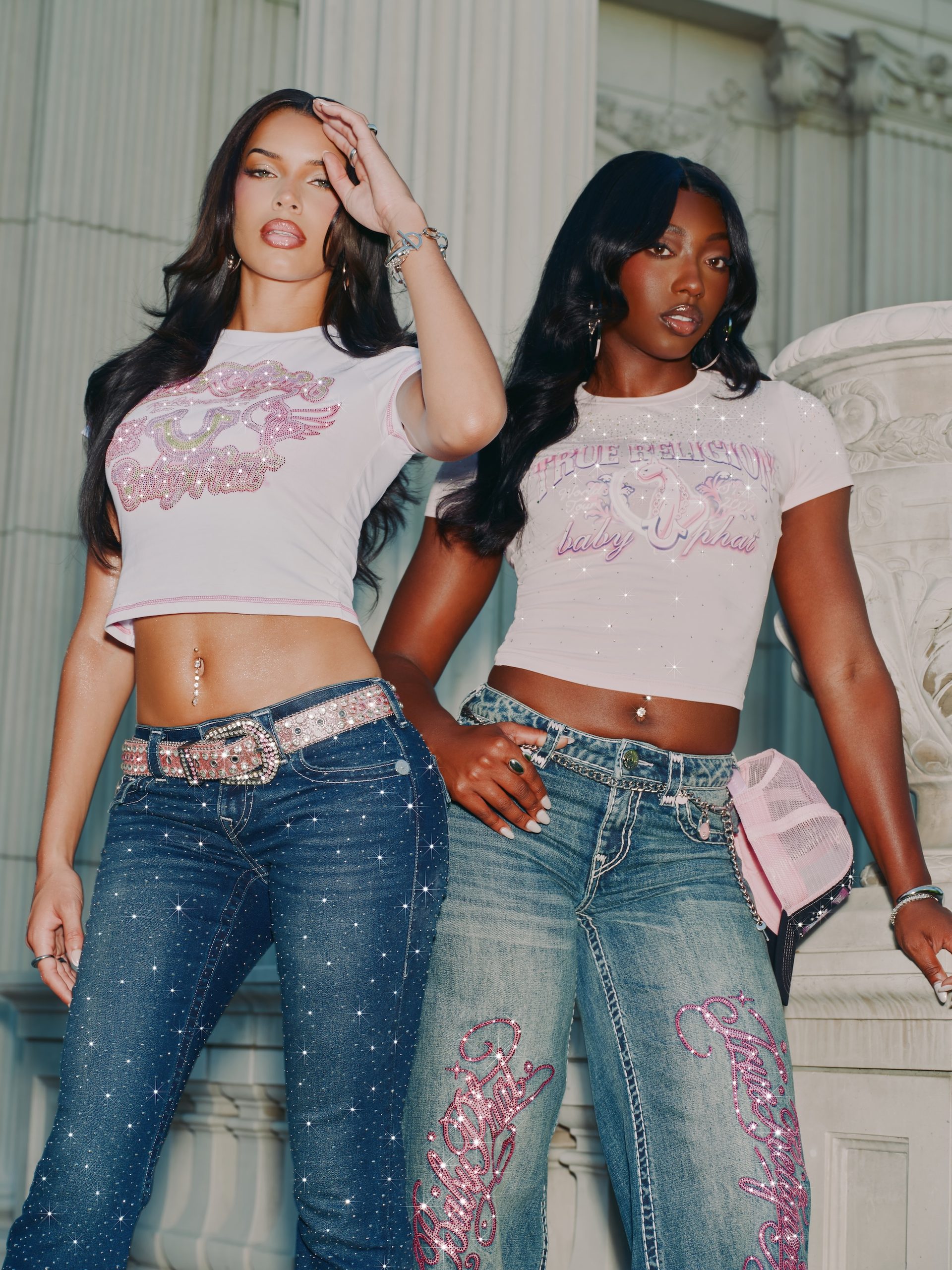
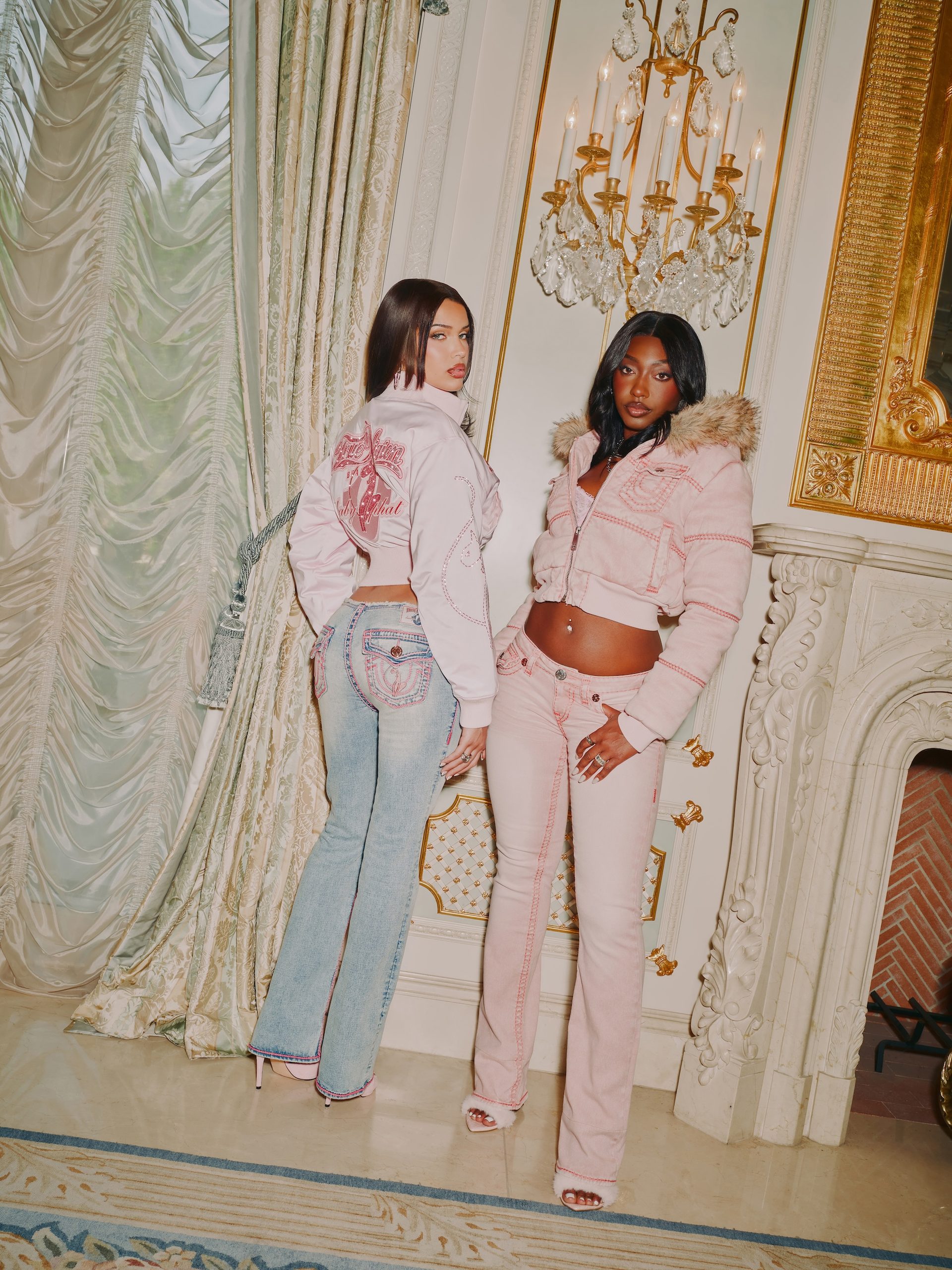
Every bottom in the capsule is designed with a low rise. The assortment includes flared, bootcut and baggy jeans, alongside sweatpants and short skirts. Fitted baby tees, satin bombers, puffers and other outerwear extend the collection beyond denim; pink detailing, crystal treatments and furry trims bring Baby Phat's visual codes into the mix.
The two brands say the collection will go on sale through their respective websites on Tuesday, October 27. Separate reporting by Sourcing Journal describes a planned runway presentation in Van Nuys, Los Angeles on the same day, with a performance and after-party. Prices and sales forecasts have not been disclosed in the sources reviewed here, so the commercial outcome is still an open question.
The partnership is also a useful example of fashion crossovers built from compatible archives. True Religion contributes its denim reputation and distinctive construction; Baby Phat contributes glamour, texture and branding that consumers can identify at a glance. That clarity matters when the product photography itself is part of the marketing.
How Making the Campaign borrows reality TV
The campaign is called Making the Campaign, and the joke is that the work of making a fashion advertisement becomes the entertainment. Harvey and Bosse appear in a Beverly Hills mansion, moving through wardrobe, styling, fit checks and confessionals before the finished images are revealed.
The format references MTV's Making the Video, a program associated with the music-video era that helped define the fashion language the capsule revisits. Harvey and Bosse appeared in the eighth season of Love Island USA, giving them direct experience with a confessional-driven reality format. Their presence connects the campaign's older media reference to contemporary reality-TV audiences.
Kimora Lee, Baby Phat's founder and chief executive, framed the tie-up around the brands' shared histories: "This collection joins those two legacies. It's not a throwback. It's the real thing." That positioning is worth noticing. The campaign invites people to recognize the past, but its casting and behind-the-scenes structure are aimed at the present.
A comparable approach appeared in Express' 2026 Y2K-themed fashion campaign with singer Tinashe, which borrowed the atmosphere of music-video culture to frame modern clothes. The distinction here is the second-generation reality-TV cast and a collaboration between two labels that helped shape the original aesthetic.
What marketers can learn from this crossover
The most interesting part of this collaboration is not simply that early-2000s clothes are fashionable again. It is the way the campaign turns heritage details into material that different generations can read, discuss and potentially wear.
- Give each collaborator a recognizable role. The pairing works as a design story because one brand is closely tied to denim and the other to embellished streetwear. Shoppers can see what each contributes before they know every item in the range.
- Cast for the storytelling format, not just reach. Reality-TV talent makes sense in a campaign built around confessionals and candid backstage moments. The casting helps explain the creative structure, rather than serving only as an endorsement.
- Make the archive visible in the product. The low-rise cuts, distinctive stitching and pink crystal details carry the early-2000s references into garments. That gives the nostalgia a physical form beyond the advertising treatment.
The planned October 27 retail release gives the creative film a near-term destination. It also creates a straightforward test of whether recognition of the era and interest in the cast can translate into product demand. The brands have not released verified sales or campaign-performance figures.
For fashion marketers, the lesson is that nostalgia needs more than old logos. In this example, familiar visual codes, a cast fluent in the chosen medium and products that carry the same cues all point in the same direction. The result is a collaboration that can speak to people who wore the style once and people encountering it for the first time.
