Tsinghua University rolls out China’s first AI guidelines for education and research
Tsinghua University releases a first-of-its-kind framework on how AI should be used in classrooms and labs

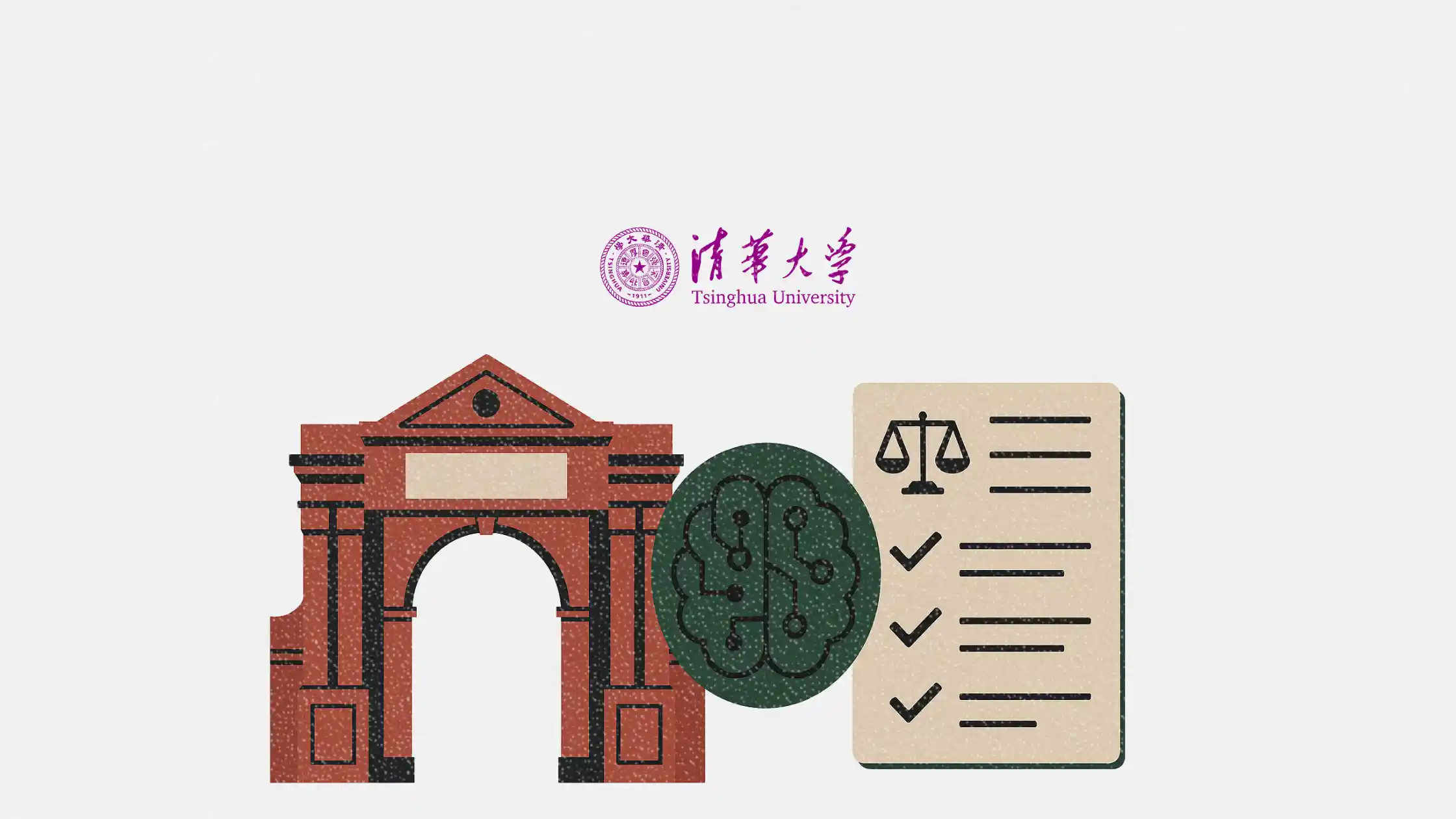
In a notable first for higher education, Tsinghua University has released a campus-wide framework that governs the use of artificial intelligence in teaching and research. As AI technologies become embedded in learning environments, the framework sets a precedent for how universities might balance innovation with ethical safeguards.
From AI-assisted assignments to thesis integrity, the guidelines offer a window into how one of China’s top institutions is tackling AI’s double-edged influence in academia.
This article explores what the “Tsinghua University Guiding Principles for the Application of Artificial Intelligence in Education” mean for academics, education technologists, and marketers keeping tabs on how AI is reshaping the knowledge economy.
Short on time?
Here is a table of content for quick access:
- What’s in Tsinghua’s AI framework?
- Strategic context: why it matters now
- What marketers and edtech players should know
 Patrecia Meliana
What's in Tsinghua's AI framework?
The new framework is divided into three key sections: General Provisions, Teaching and Learning, and Theses, Dissertations and Practical Achievements. The document provides scenario-based guidance for both students and faculty, with detailed rules around how AI tools may or may not be used.
The General Provisions define AI as a support tool, not a substitute for human intellectual labor. Faculty and students are expected to lead learning and research, with AI remaining in a secondary, assistive role. Five core principles drive the guidelines: responsibility, compliance and integrity, data security, critical thinking, and fairness. Explicit bans include using AI for plagiarism, ghostwriting, or processing sensitive data without authorization.
In Teaching and Learning, faculty are expected to establish clear boundaries for AI use per course and remain accountable for any AI-generated content introduced into the curriculum. Students are permitted to use AI tools, but only as a supplement. Blindly copying or paraphrasing AI output is strictly forbidden.
In the final section on Theses and Dissertations, the university draws a hard line. AI cannot replace the intellectual rigor expected of graduate-level research. Supervisors must guide appropriate use and ensure student work remains original.
Strategic context: why it matters now
This is not Tsinghua’s first AI education initiative. The university has been experimenting with AI-enabled teaching for years. What is new is the formalization of ethical boundaries, marking a shift from experimental adoption to institutional accountability.
As AI-powered tools like chatbots, intelligent tutors, and research assistants proliferate, universities worldwide are scrambling to define what counts as fair use versus academic misconduct. Tsinghua’s framework provides a top-down model that blends flexibility with firm red lines. It is also a signal to policymakers and tech firms that universities will not sit on the sidelines while AI rewrites the rules of knowledge creation.
Notably, the university sees the framework as a “living system.” According to Wang Shuaiguo, Director of the Online Education Center and lead drafter of the document, the guidelines are designed to evolve alongside new use cases, including admin systems, knowledge engines, and agent instructors.
What marketers and edtech players should know
Here is why this matters beyond academia:
1. A model for digital governance in education
Tsinghua’s move sets a potential benchmark for other universities and education ministries, not just in China but globally. If you're in edtech or education policy, this document offers a template for responsible AI integration that balances innovation with risk management.
2. Rising demand for explainable AI
The emphasis on transparency, bias mitigation, and human oversight signals an institutional demand for AI tools that are auditable and ethical by design. Marketers promoting AI-based education products will need to position around explainability and compliance, not just features.
3. Ethical marketing in higher education
For education marketers, these principles raise the bar for how AI-powered tools are pitched. Claims of "efficiency" or "personalization" will need to be backed by use cases that align with academic values like originality, fairness, and critical thinking.
4. AI literacy is a new battleground
Tsinghua plans to promote its framework through AI literacy platforms and workshops. Vendors offering AI literacy tools, ethical training modules, or policy consulting services should take note. This space is about to grow fast.
Tsinghua’s AI framework is more than just a campus policy. It is a public declaration that universities must take an active role in shaping how generative AI is used and misused within their walls.
For marketers, edtech founders, and researchers, this signals a new era where ethical design, transparent use, and institutional alignment are not optional. They are the baseline. As global education systems adapt to the AI wave, frameworks like this one may well become the rule rather than the exception.