Unusual raises US$3.6M to help brands shape how AI talks about them
As marketers grapple with AI misrepresentation, Unusual offers tools to audit and shape how models describe your brand

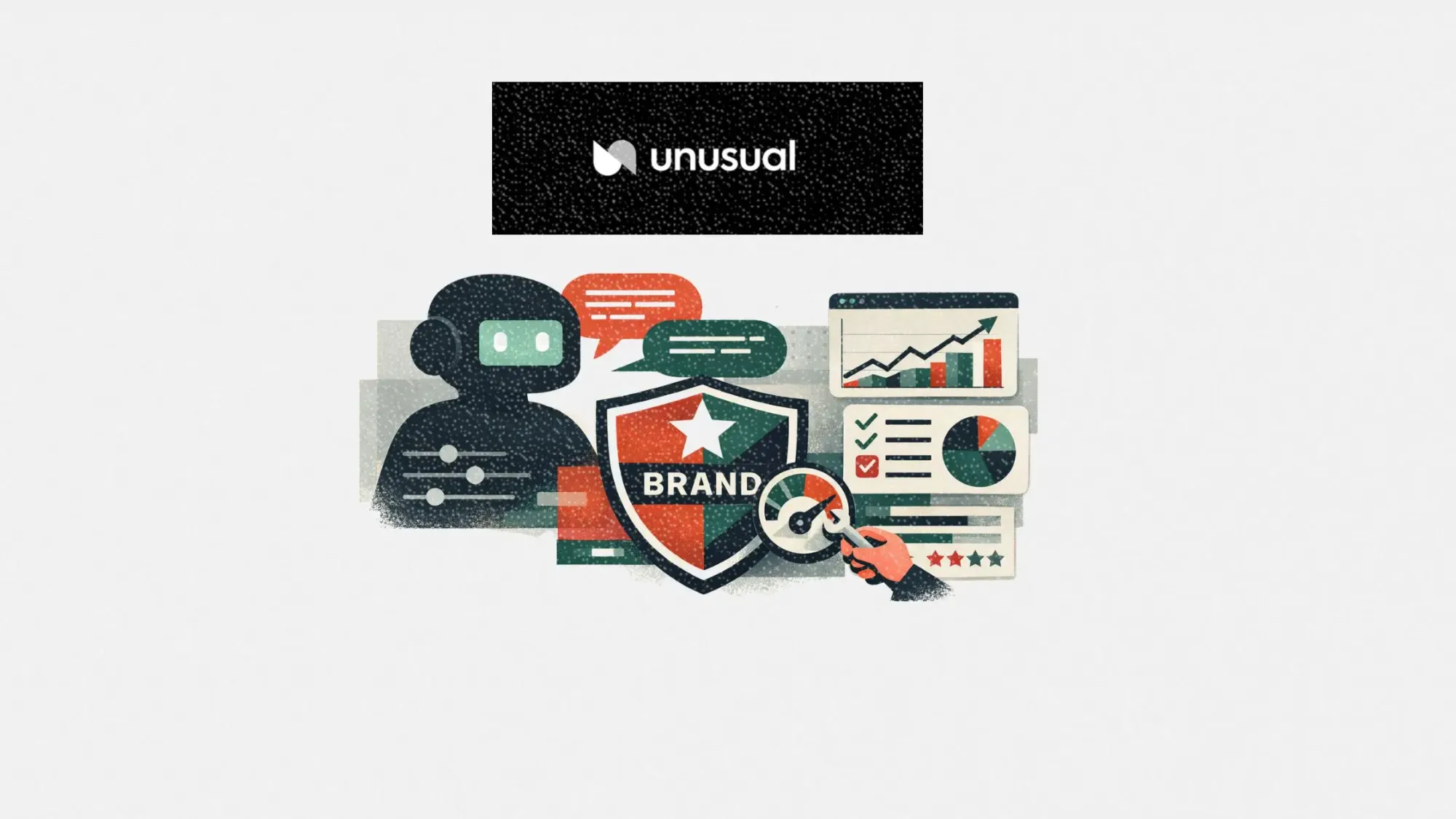
As marketers grapple with AI misrepresentation, Unusual offers tools to audit and shape how models describe your brand.
For most marketers, AI has become both a discovery channel and a brand risk. With tools like ChatGPT influencing purchase decisions, companies are finding they no longer control how their brand is perceived—or misrepresented—by machines. A new startup, Unusual, aims to change that.
This article explores Unusual’s seed funding round, why AI brand alignment is gaining urgency, and what marketers should know about reshaping their presence in the age of large language models.
Short on time?
Here’s a table of contents for quick access:
- What is Unusual and what did they raise?
- What makes Unusual different from AEO/GEO players?
- Why AI misrepresentation is a brand risk
- What marketers should know
What is Unusual and what did they raise?
San Francisco-based startup Unusual has raised US$3.6M in seed funding from investors including BoxGroup, Long Journey Ventures, Y Combinator, Instacart co-founder Max Mullen, and Phosphor Capital.
The company, founded in 2024 by Will Jack and Keller Maloney, offers an AI optimization platform that helps brands understand and influence how language models like ChatGPT describe them. The funding will go toward team expansion and platform development.
Jack is a second-time founder with roots in AI research since 2014, including stints at MIT and SpaceX. Maloney previously worked on AI applications at Gatsby and 8VC.
What makes Unusual different from AEO/GEO players?
Unusual operates in the emerging category of AI visibility and AI brand alignment. While many startups are approaching LLM optimization with a search engine mindset—coining terms like Answer Engine Optimization (AEO) or Generative Engine Optimization (GEO)—Unusual rejects that analogy.
Instead, the founders argue that AI models behave more like influencers than search engines. “The entire buyer journey—search, discovery, evaluation—now happens in a single conversation with an AI,” said Jack . This means brand influence must extend beyond rankings into how models describe and reason about a brand.
Unusual's platform audits how AI models respond to brand-related queries, using a kind of LLM sentiment analysis. For example, it might ask hundreds of questions like “Is [brand] enterprise-ready?” or “Would you recommend [brand] to a financial services company?” and then study the patterns in the model's answers. These insights are used to craft and host content designed to reshape model perception over time.
Why AI misrepresentation is a brand risk
As AI becomes a frontline source of product and service discovery, incorrect or outdated information from models can quietly undercut go-to-market strategies.
One early client, Reducto, found that ChatGPT was categorizing it as “a niche tool for startups” even though it serves Fortune 10 enterprises. After working with Unusual, Reducto saw its “enterprise readiness” score improve from 18 to 54 out of 100 in Unusual’s perception analysis.
This issue matters most for B2B and technical products, where AI-driven advice often shapes early buying behavior. “These models are not like search engines—the devil’s really in the details,” said Jack in an interview. “You want to ensure that, no matter the question, the model represents your brand with the right nuance”.
What marketers should know
Here’s why this matters, and what your team should consider:
1. AI is becoming a consultative channel
AI-powered chat interfaces now compress the entire buyer journey into one exchange. Unlike a Google search that leads users to branded assets, LLMs often summarize and interpret on your behalf. If you’re not influencing those summaries, someone—or something—else is.
2. Auditing LLM perception should be part of brand strategy
Marketers should start treating AI models like another audience segment. Tools like Unusual offer a diagnostic approach that surfaces how models interpret your market position, ICP, and differentiators.
3. AEO/GEO isn’t enough for nuanced branding
GEO-focused players often aim to game the system for high visibility in AI answers. But visibility without context may hurt more than help. Brand perception inside AI models affects long-term positioning—especially in multi-turn conversations where the model "thinks aloud" to justify its recommendations.
4. Consider adding AI brand alignment to PR and content ops
Unusual’s model suggests that case studies, external media mentions, and domain-specific proof points still play a role—just now through the lens of how AI interprets and ranks them. LLM visibility is increasingly a byproduct of what you signal, not just what you say.
Why AI perception should be on your radar
AI models are already reshaping buyer behavior. For marketers, waiting to see how your brand is represented by ChatGPT or Gemini could mean discovering misalignment too late. As LLMs become embedded into search, customer support, and product research, having tools to audit and shape model perception isn’t a luxury—it’s table stakes.
Platforms like Unusual are signaling a new category of AI-aware brand strategy. It may be time to add "how AI talks about us" to your next marketing review.