AI layoffs are coming, say VCs
Enterprise investors expect AI to reshape the labor market by 2026. Marketers should pay close attention

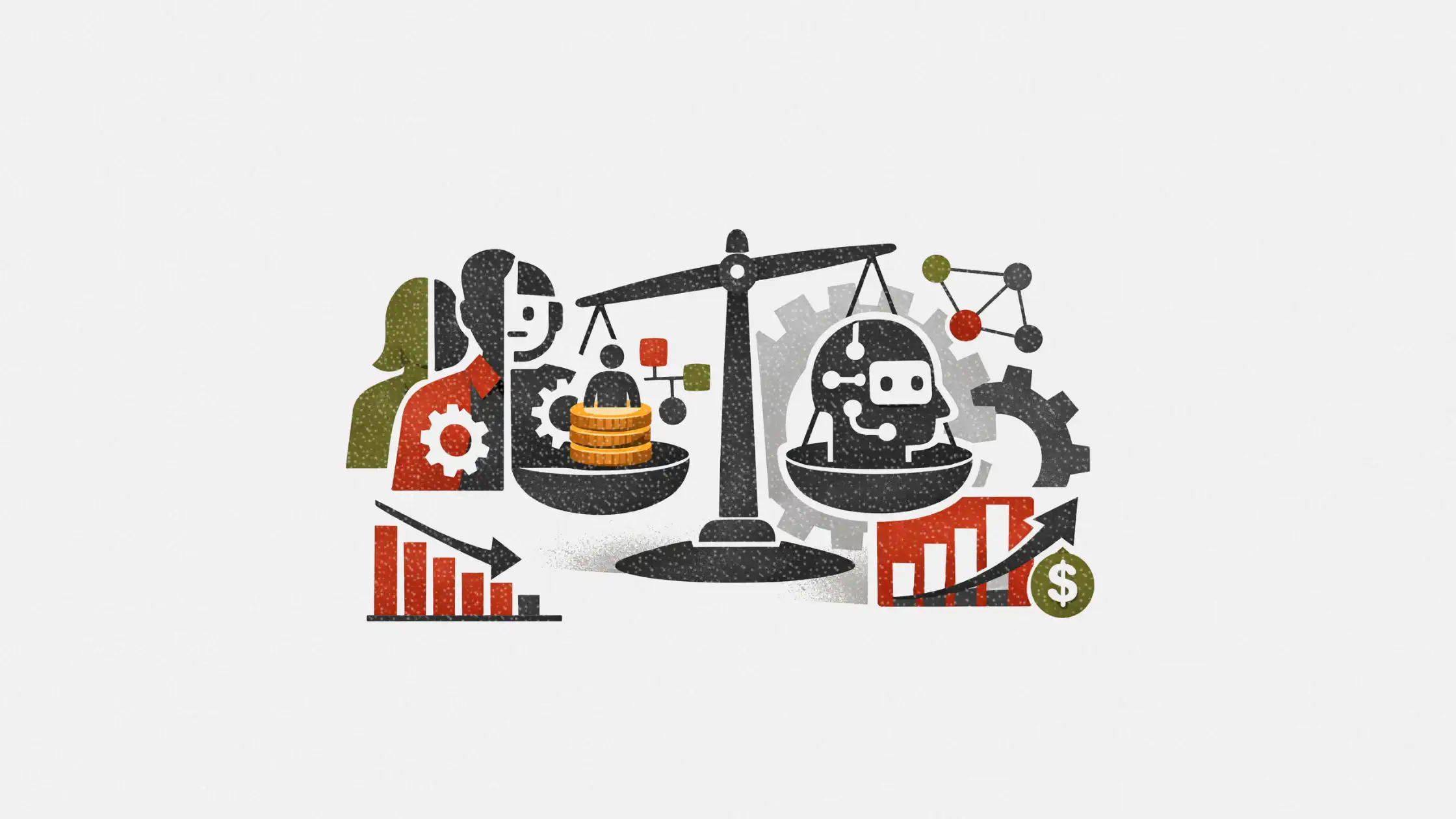
While AI headlines in 2025 focused on breakthroughs and product launches, 2026 is shaping up to be the year it hits the workforce.
A recent TechCrunch survey of enterprise-focused venture capitalists revealed a striking pattern: even when they weren’t asked about labor directly, many brought it up.
This article explores what enterprise investors are expecting in 2026, why job displacement is back in the spotlight, and what marketers, comms pros, and brand leaders should prepare for as AI starts pulling more weight inside companies.
Short on time?
Here’s a table of contents for quick access:
- What VCs are predicting for AI and labor in 2026
- Why 2026 matters: context and current trends
- What marketers should know
 Patrecia Meliana
What VCs are predicting for AI and labor in 2026
Eric Bahn of Hustle Fund isn’t ready to call it a full-blown jobs crisis yet, but he sees disruption ahead. He’s watching for both repetitive and logic-heavy roles to get automated. Whether that translates into layoffs or productivity gains, Bahn said, remains unclear. But he expects something big to shift.
Others are more definitive. Marell Evans of Exceptional Capital believes rising AI budgets will directly cannibalize labor spend, driving more layoffs and suppressing the U.S. employment rate. Rajeev Dham at Sapphire agrees: 2026 budgets will start to shift resources from labor to AI.
Jason Mendel of Battery Ventures went a step further, framing 2026 as the moment AI tools evolve into agents that automate full workflows, not just augment them. He described it as delivering on the human-labor displacement value proposition.
Even when the layoffs aren’t entirely due to AI, companies may start saying they are. That’s the view from Antonia Dean at Black Operator Ventures, who warns that AI could become the go-to excuse for cutting costs or hiding leadership missteps.
 Patrecia Meliana
Why 2026 matters: context and current trends
The growing fear of AI-driven job loss isn’t speculative. In late 2025, an MIT study found that 11.7% of jobs could already be automated with existing AI tools. Entry-level roles are often the first to go, and multiple employers have publicly blamed AI as the reason for layoffs.
What’s different heading into 2026 is that enterprises aren’t just experimenting with AI. They’re operationalizing it. That means budget decisions, workforce planning, and tech implementation are now on a collision course.
Whether it’s executives looking to boost margins or simply follow the herd, AI is increasingly part of the labor conversation. And while some companies frame automation as a way to free up humans for more strategic work, others are clearly viewing it as a cost-cutting tool.
Patrecia Meliana
What marketers should know
If you're leading brand strategy, talent planning, or internal comms, 2026 could be a turbulent year. Here’s how to get ahead of the curve:
1. Rethink talent priorities
With AI taking on more tasks, headcount planning may shift toward fewer but more specialized roles. Marketers should be prepared to advocate for strategic hires while justifying every position against automation potential.
2. Prepare for comms challenges
If layoffs are framed as AI-driven, messaging will matter. Marketers and PR leads will need clear language that aligns with brand values, avoids hype, and anticipates backlash internally and externally.
3. Watch the AI narrative
Companies that oversell AI as a fix-all may face trust issues. Be cautious about leaning too hard into the "AI makes us smarter" story without showing real results or human impact.
4. Expect scrutiny from talent and the public
Job seekers, employees, and customers are all watching how companies use AI. Transparency around tools, impact, and ethics will matter more than ever. Brand reputation is at stake.
5. Scenario-plan for workforce shifts
Even if your organization isn’t cutting roles, adjacent teams might be. That affects morale, resource sharing, and internal alignment. Marketing leaders should scenario-plan with HR and Ops to stay agile.
Whether it drives layoffs or just changes how teams work, AI is forcing tough choices. For marketers and brand stewards, 2026 isn’t just about leveraging new tools. It’s about navigating how those tools change company dynamics, from hiring to morale to messaging.
Staying close to both internal sentiment and external perception will be key. The future of work is being automated in real time. Be ready.