Vusion completes In-Store Media deal spanning 1,600 brands
Vusion's completed acquisition of In-Store Media adds retail advertising relationships across nine markets, including the Philippines, to its store technology business.


Vusion has completed its acquisition of In-Store Media, bringing a substantial network of retailer and advertiser relationships into its connected-store technology business. The deal gives Vusion an avenue to manage retail advertising closer to the point of purchase, rather than simply provide the hardware and software behind it.
The closing announced on October 29 follows the companies' July agreement and required regulatory approvals. For marketers, the practical test is whether the combined business can connect in-store ad placements to comparable campaign results across multiple retailers.
Key Takeaways
- Vusion completed its acquisition of Barcelona-based In-Store Media following regulatory approvals.
- The acquired company brings retail advertising relationships across Europe, Latin America and Asia.
- Advertisers will need evidence that the combination improves campaign execution, measurement and control.
Table of contents
Jump to each section:
- What Vusion gets from the completed deal
- Why in-store retail media needs stronger measurement
- How the deal compares with retail media consolidation
- What retailers and advertisers should watch
What Vusion gets from the completed deal
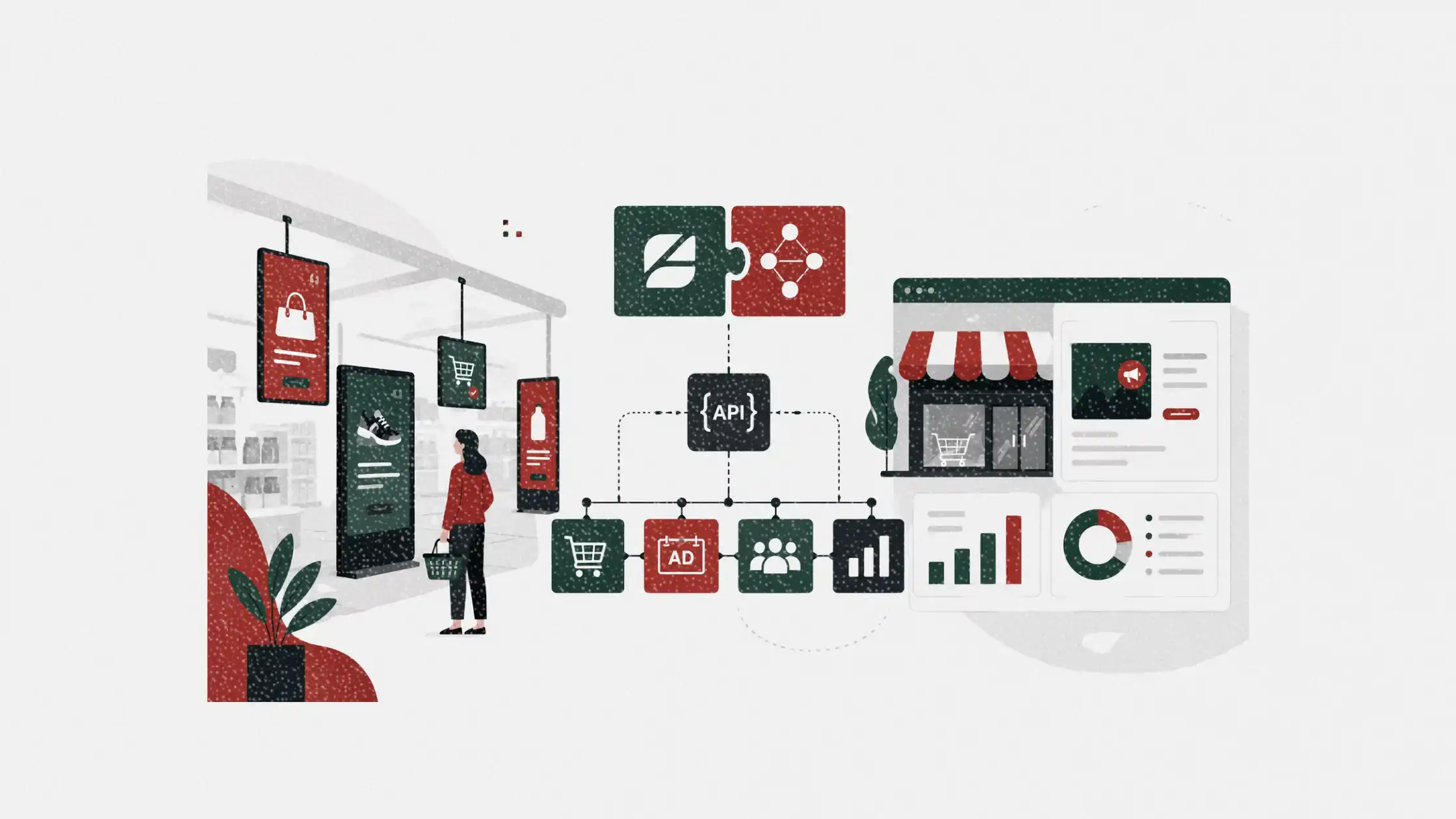
Under the completed transaction, Vusion is combining a connected-store platform with a company that has spent years selling and managing media inside physical retail environments. In-Store Media designs advertising placements and coordinates campaigns across retail partners, while Vusion supplies infrastructure that digitizes store shelves and processes.
90 retail banners and more than 1,600 brands across nine countries form part of In-Store Media’s relationships, according to Vusion’s October 29 acquisition announcement.
That advertiser base matters because the hardware and the commercial advertising business are different assets. A retailer can deploy digital labels or screens without having the sales operation, creative workflow and attribution process needed to convince advertisers to invest. In-Store Media brings experience on the commercial side of that equation.
Vusion said it financed the acquisition through a bridge facility but did not disclose the purchase price in the closing announcement. The financing commitment should not be treated as a disclosed valuation of In-Store Media.

Why in-store retail media needs stronger measurement
Physical stores offer advertisers access to shoppers near a purchase decision. But an impression close to the shelf does not automatically show whether the advertisement changed buying behavior, improved sales or added incremental value beyond a promotion already underway.
Less than 3% of retail media spending is captured by physical stores, according to a Vusion estimate in the acquisition announcement. This is the company’s stated market estimate, not an independently audited benchmark.
Vusion plans to combine store-level connectivity, audience understanding and advertising operations to make campaign performance easier to measure. That is a meaningful product direction, but it remains a claim to test as the integration unfolds. The companies have not yet provided independently comparable post-merger campaign performance evidence.
Thierry Gadou, Vusion’s chairman and CEO, described the opportunity this way: "We share the same vision that physical stores will be the next great digital media." The relevant question for media buyers is how that vision turns into reporting they can trust.
How the deal compares with retail media consolidation
Other vendors are also trying to connect physical retail placements with software for selling, operating and measuring advertising. ZetaDisplay's acquisition of retailmediatools added campaign-management technology to a digital-signage business. Vusion's acquisition is different because it brings an established retailer and brand relationship network into a connected-store platform.
That distinction may accelerate access to advertisers, but it also increases the complexity of integration. Store formats, media placements, local commercial arrangements and access to shopper data differ across retailers. A shared parent company does not automatically mean brands will get standardized inventory, booking processes or campaign metrics.
The sector is moving toward retail-controlled advertising systems rather than collections of disconnected screens. For the promise to be credible, both store-level execution and campaign measurement need to work without requiring every brand to negotiate a bespoke process at every retailer.
What retailers and advertisers should watch
Marketers considering in-store retail media should ask what a campaign report can actually show. Can the platform identify where ads appeared, which stores were exposed and whether the observed results were incremental? Will retailers allow comparable reporting across their locations, and can brands reconcile it with ecommerce and offsite advertising?
Data rights are just as important. Retailers control transaction and shopper information, while advertisers need sufficient visibility to evaluate performance. The combined company will have to establish what information can be used, shared and audited under each retail partner's rules.
In-Store Media already operates across European and Latin American markets and the Philippines. The geographic reach creates room for multi-market campaigns, but it does not erase differences in retail systems or privacy requirements. Advertisers will still need to evaluate availability and measurement by market.
Vusion plans to provide more detail about In-Store Media at its November capital markets presentation. Until then, the closing marks a strategic expansion into a working retail media operation, while the outcomes for marketers remain to be demonstrated.