Walmart expands gen AI ad tools with Sparky and Marty
Walmart is testing sponsored ads in its AI shopping assistant and rolling out new tools to automate campaign strategy

Retail media is evolving again, and Walmart doesn’t want to be left behind.
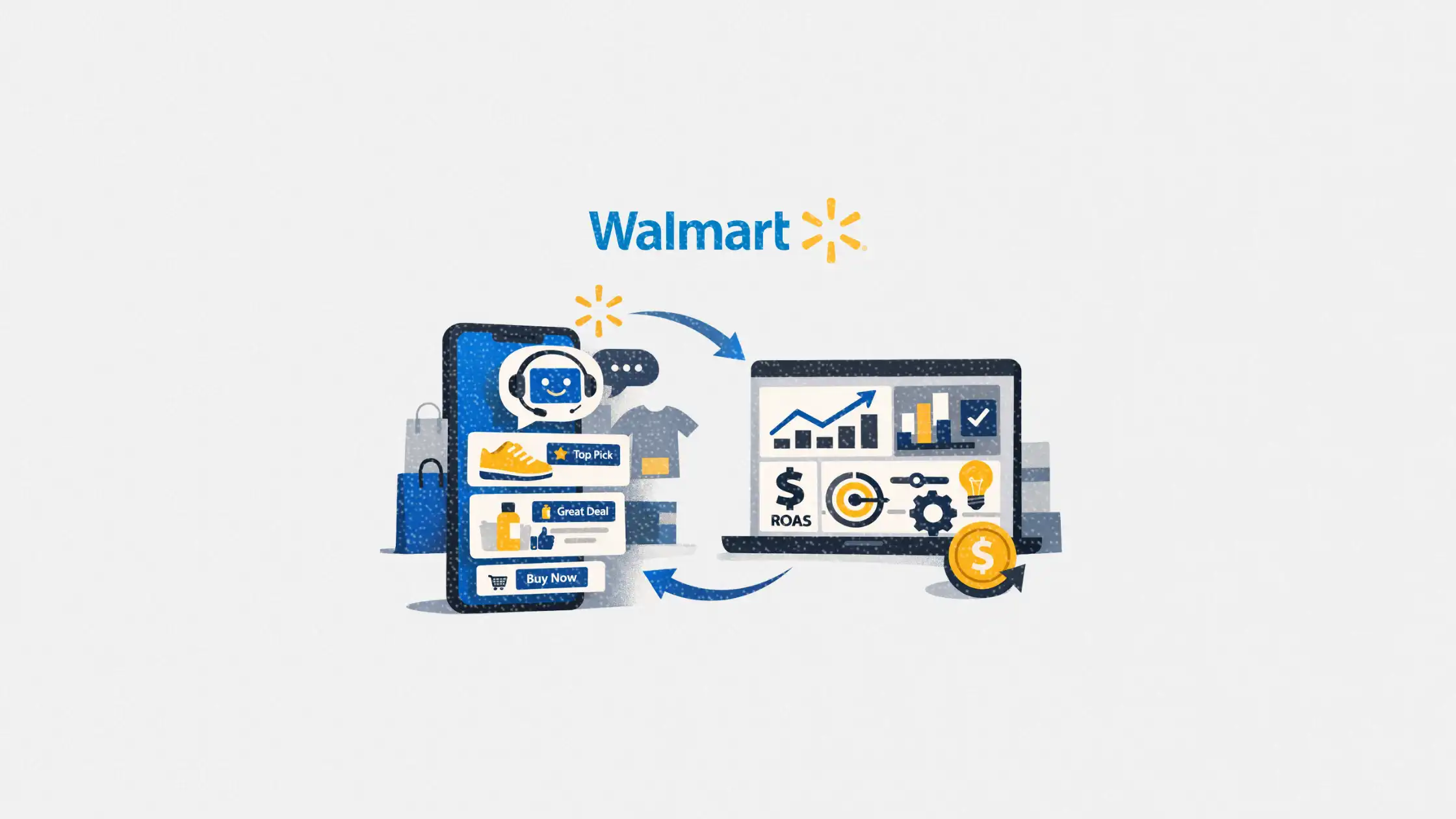
The retail giant is testing ads in Sparky, its in-app generative AI shopping assistant, while also expanding Marty, a separate AI agent built for advertisers. Together, the two tools signal how Walmart is embedding gen AI across shopper and brand experiences, and pushing to keep pace with rivals like Amazon.
This article explores Walmart's AI retail media strategy, how Sparky and Marty work, and what these developments mean for marketers managing retail campaigns in 2026.
Short on time?
Here’s a table of contents for quick access:
- Ads are coming to Sparky, Walmart's AI shopping assistant
- Marty automates search ad recommendations for Walmart advertisers
- New AI creative tools aim to cut production time
- What marketers should know
 Patrecia Meliana
Ads are coming to Sparky, Walmart's AI shopping assistant
After a quiet test in late 2025, Walmart is now expanding sponsored ads within Sparky, its AI shopping agent built into the Walmart app. Shoppers can ask Sparky about products, and the assistant uses natural language processing to analyze reviews and recommend relevant listings from Walmart's catalog.
The twist? Sponsored prompts will now appear when shoppers ask questions, placing ads directly into the AI's product recommendation flow.
Walmart reports that 81% of users who engage with Sparky use it to check product availability or research details before making a purchase. With search being Sparky's most-used function, the decision to introduce ads here could reshape how shoppers interact with product discovery.
This move mirrors Amazon’s introduction of ads within its own AI assistant, Rufus, which began monetizing earlier in 2024.
Marty automates search ad recommendations for Walmart advertisers
Beyond consumer-facing tools, Walmart has also launched Marty, a gen AI “super agent” aimed at advertisers and suppliers.
Currently in beta, Marty is rolling out to Walmart Connect Ad Center users who run sponsored search campaigns. The tool can analyze ad performance, recommend bid optimizations, suggest keyword changes, and generate campaign reports. One key metric it provides is share of voice, helping advertisers track their market position against competitors.
According to Walmart, 97% of queries to Marty are unique, indicating that advertisers are using it for highly specific tasks. This is particularly beneficial for small to midsize brands looking for smarter, tailored guidance on ad spend.
Marty is expected to expand to cover more ad formats across Walmart Connect later this year, with the long-term goal of becoming a cross-surface AI assistant for campaign planning and investment.
New AI creative tools aim to cut production time
In addition to search and targeting, Walmart is also applying gen AI to the creative side of advertising.
Its Automated Creative Generator helps brands design campaign visuals by generating backgrounds and creative assets for product imagery. Walmart claims the tool reduces production time by up to 80 percent, which could be a game-changer for time-strapped creative teams or emerging brands with limited design budgets.
Combined with connected TV ad inventory (thanks to Walmart’s Vizio acquisition), the company is positioning itself as a full-funnel media platform, from AI product discovery to upper-funnel video ads.
What marketers should know
As Walmart leans deeper into gen AI for both consumers and advertisers, B2B marketers should be watching closely. Here are three key takeaways:
1. Retail media is evolving into agentic media
The emergence of AI agents like Sparky and Marty suggests a shift from static ad placements to conversational, dynamic touchpoints. Marketers will need to design campaigns that can live within AI-driven interfaces, not just traditional search and display.
2. AI support levels the field for smaller advertisers
Marty’s recommendations and reporting features could make Walmart Connect more accessible to small businesses. This democratization of retail ad tools mirrors what’s happening across Meta and Amazon, and it creates new competition in mid-funnel ad formats.
3. Performance and brand budgets are converging
Walmart says it’s seeing increased demand for upper-funnel campaigns like connected TV. As gen AI tools blur the line between performance optimization and creative generation, marketers should be prepared to unify budgets across the funnel and measure them accordingly.
Whether you're optimizing for clicks, impressions, or conversations inside an AI shopping agent, the next wave of retail media requires tighter coordination between creative, data, and strategy teams.