
Walmart is turning Scintilla into an AI commerce intelligence layer
Walmart is adding Marketplace data, alerts and deeper conversational AI to Scintilla, shifting supplier analytics toward guided action.


Walmart Data Ventures is preparing to turn Scintilla from a supplier analytics portal into a broader commerce intelligence layer. The roadmap brings Marketplace assortment data, customizable dashboards, proactive alerts and a more capable conversational assistant into the same system.
The practical change is not simply that suppliers will receive more data. Walmart is trying to shorten the distance between a performance signal and a response. Instead of opening several reports to work out why sales moved, a supplier could ask Marty what changed, monitor the answer on a custom board and then move into a media, inventory or in-store workflow.
Table of contents
Jump to each section:
- What changes in Scintilla next year
- Marty moves from help desk to analyst
- The action layer already exists
- What marketers should watch
Key Takeaways
- Scintilla will combine more supplier, Marketplace and operational signals in one view for eligible brands.
- Marty is moving toward interpreting performance questions and creating dashboards, but autonomous campaign execution has not been established.
- Marketplace-only sellers remain outside the announced access plan, limiting how universal Walmart's intelligence layer will be.
What changes in Scintilla next year
In its September 16 roadmap, Walmart said brands that operate through both first-party retail and Marketplace will gain a more complete view of their Walmart.com assortment next year. That matters because hybrid suppliers can currently see only part of their business through Scintilla.
The expansion sits alongside customizable Scintilla Boards and custom alerts. Boards are intended to bring customer understanding, sales performance and other operating signals together. Alerts would then surface changes that deserve attention without requiring a user to check every metric manually.
This is a different product philosophy from adding another report tab. The interface is moving toward assembling the relevant signals around a business question. Mark Hardy, head of Walmart Data Ventures, said the aim is to “provide visibility across all data sets,” reducing the need for every user to become a specialist in each underlying dataset.
There is still an important access limit. Walmart told Digiday that Marketplace-only sellers do not currently receive Scintilla access, and there are no announced plans to include them. The combined view is therefore for suppliers that already have a first-party Walmart relationship and also sell through Marketplace.

Marty moves from help desk to analyst
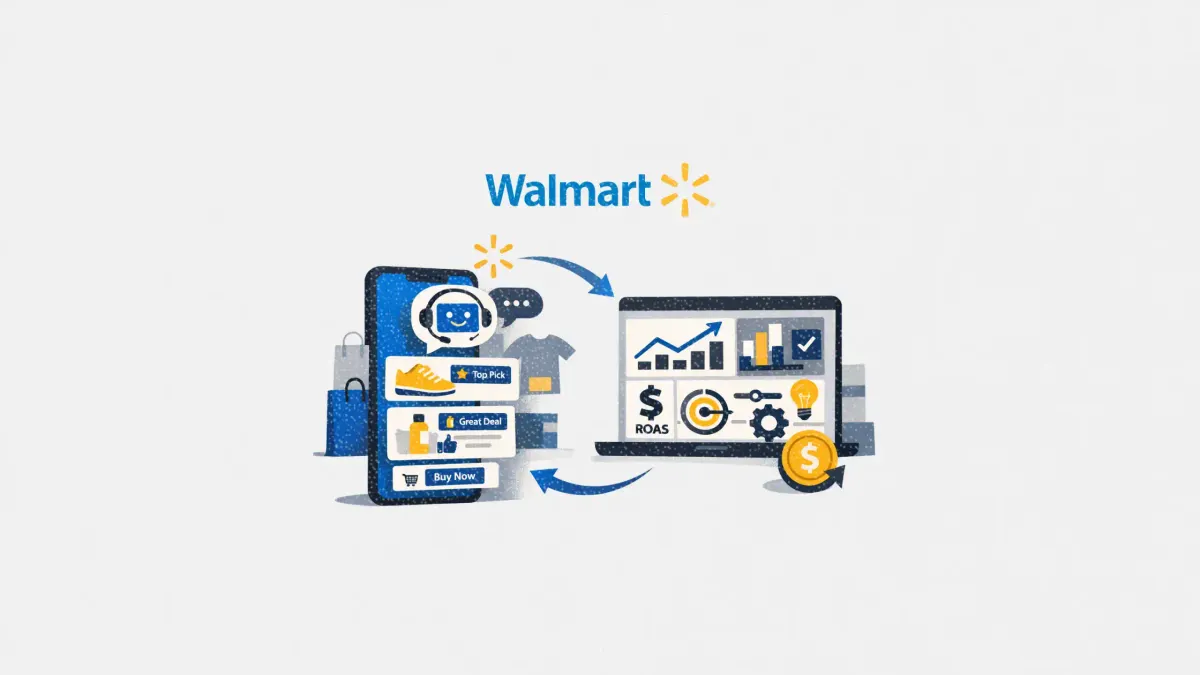
Marty for Scintilla currently helps users understand the platform's metrics, features and capabilities. Walmart's roadmap gives it a more analytical role: answering questions about performance, identifying drivers and helping users create dashboards around the signals they want to monitor.
That distinction matters. A help assistant explains where a metric lives. An analytical assistant attempts to connect sales, shopper behavior, inventory and other first-party signals before presenting an answer. If it works as described, users spend less time assembling the evidence and more time deciding whether the answer is credible and what to do next.
This also changes the skill marketers need. Knowing how to export and join reports becomes less central, while asking precise questions and checking the system's explanation become more important. A useful answer still depends on the user defining the product, period, audience and commercial problem clearly.
Walmart has not disclosed which Scintilla tiers will receive every expanded Marty capability, nor has it given separate launch dates for each feature. “Next year” is the clearest timing available. Suppliers should treat the announcement as a roadmap until Walmart publishes eligibility and release details.
The action layer already exists
Walmart is not starting the connection between intelligence and activation from zero. Scintilla Insights Activation already uses shopper and business signals to identify media opportunities and connect them with Walmart Connect. Walmart says those recommendations can reflect purchase history, brand switching and cross-shopping behavior.
The new roadmap extends that idea beyond media. Walmart describes a user spotting an out-of-stock risk in Scintilla and moving into the relevant replenishment system. Scintilla In-Store is meant to give field representatives recommendations about what needs attention inside stores.
That does not mean Marty has become an autonomous commerce operator. The evidence supports connected workflows and recommendations, not an AI assistant independently changing bids, launching campaigns or ordering inventory. Human approval and the destination systems still matter.
This is also where Scintilla differs from the Marty product ContentGrip covered earlier in Walmart Connect. The advertising version helps with sponsored-search performance and recommendations. Marty for Scintilla is being positioned around the supplier's wider Walmart business, including customer, sales and operational signals.
What marketers should watch
The broader competitive direction is clear. Amazon, Target, Kroger and Instacart each package retailer first-party data into analytics or media products. Walmart's advantage is the breadth of signals it can connect across stores, ecommerce, inventory and advertising. Its challenge is making those connections understandable without hiding important context behind an AI-generated answer.
For marketers, the first test is traceability. If Marty says a decline came from lost customers or misplaced inventory, users need to see which data produced that conclusion and over what period. A concise answer is useful only if a team can inspect it before changing a campaign or supply plan.
The second test is the handoff into action. Scintilla already has a path into Walmart Connect, but Walmart has not said the expanded assistant will directly trigger media changes. Whether it recommends an audience, pre-populates a workflow or executes a change will determine how much manual work actually disappears.
The third test is coverage. A commerce intelligence layer is most valuable when it reflects the full business. Hybrid first-party and Marketplace suppliers are gaining that view, while Marketplace-only sellers are not. That boundary will shape which brands can use Scintilla as a central decision interface and which still have to assemble their Walmart picture elsewhere.
Walmart's roadmap points toward a future in which retail platforms interpret their proprietary signals before marketers ever open a dashboard. The immediate opportunity is faster diagnosis. The immediate risk is accepting a neat explanation before checking the data and the action behind it.