Why writing quality matters for SEO and GEO in 2026
In the age of AI Overviews and ChatGPT, writing quality decides who gets surfaced


Search visibility used to be a game of keyword density and backlinks. Today, the game is about clarity, structure, and authority, especially with the rise of AI-powered search.
Whether you’re optimizing for Google AI Overviews, ChatGPT, or Perplexity, how you write determines whether you get cited, summarized, or ignored.
This article explores how the SEO landscape has shifted in 2026 and why writing quality has become a critical performance factor across both traditional search and AI-generated answers.
Short on time?
Here’s a table of contents for quick access:
- What changed in SEO in 2026
- What is GEO (generative engine optimization)?
- Why GEO depends on writing quality
- How poor writing hurts your SEO in 2026
- What high-quality writing looks like today
- How to write content that ranks in both SEO and GEO
 Patrecia Meliana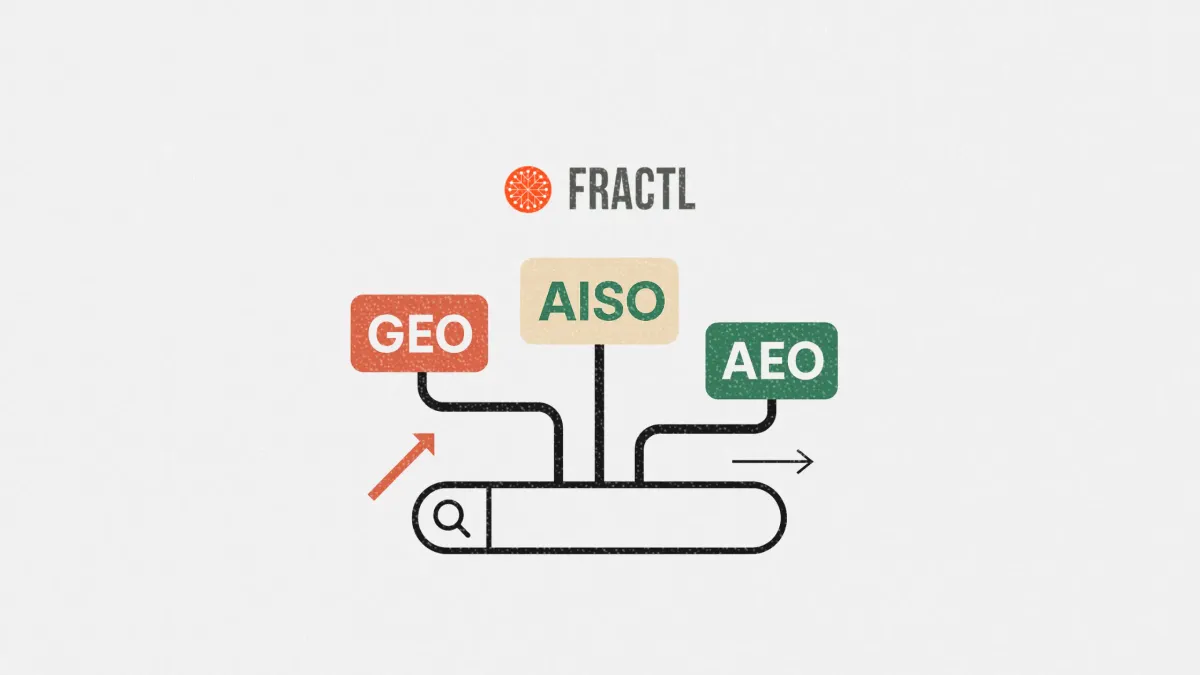
What changed in SEO in 2026
Search is no longer just about results pages. Now, Google’s AI Overviews summarize information directly on the SERP, while platforms like ChatGPT and Perplexity generate responses without relying on traditional link lists. Instead of simply ranking pages, these systems are selecting and condensing content they consider useful.
That shift changes the game. If your content isn’t easy to understand and extract, it doesn’t get surfaced.
More importantly, AI systems are not just indexing content anymore. They are evaluating it. Factors like clarity, structure, and perceived trust now influence whether your content gets cited, not just whether it gets crawled.
The same applies to ChatGPT. Its browsing capabilities have blurred the line between being indexed and being used. Getting your content discovered is one thing. Getting it selected as part of an answer is what actually drives visibility now.
What is GEO (generative engine optimization)?
GEO is the new layer of SEO—one that optimizes your content for AI-generated answers rather than traditional rankings.
- SEO still matters for visibility on search engine results pages.
- GEO determines whether you appear inside the answers themselves.
Instead of optimizing for crawlers, GEO focuses on writing in ways that AI can easily parse, summarize, and trust.
 Patrecia Meliana
Why GEO depends on writing quality
AI platforms use your writing as a signal for clarity and trust. Here’s what they look for:
1. AI needs clarity to understand your content
Simple, direct sentences outperform jargon or passive voice. It’s not just readability—it’s machine interpretability.
2. Structured writing improves AI extraction
Headings, bullet points, definitions, and modular paragraphs make it easier for systems like Google AI Overviews to select and cite your content.
3. Authority is judged through writing
AI platforms are now filtering out low-value, generic content. Specificity, unique insight, and confident tone signal human credibility—essential for getting referenced.
4. Engagement signals still matter
Even AI engines reference pages with strong behavioral signals like scroll depth, time on page, and low bounce rates. Poor writing underperforms on every metric.
 ContentGrip Staff
How poor writing hurts your SEO in 2026
Poor writing doesn’t just weaken your message. It actively reduces your visibility.
In 2026, search engines and AI platforms are no longer impressed by content that simply contains the right keywords. They are evaluating whether your content is actually useful. If it feels generic, repetitive, or overly optimized, it is unlikely to be selected for summaries or citations.
This is where many teams run into trouble. AI tools have made content production faster, but speed often comes at the cost of depth. The result is a flood of content that looks acceptable on the surface but fails under closer inspection.
Common failure patterns include:
- Content that is keyword-heavy but lacks real substance
- Generic AI-generated articles that mirror existing pages
- Overly long paragraphs that are difficult to scan or extract
Even when this content gets indexed, it struggles at the next stage: selection.
AI systems prioritize content that is easy to interpret and reuse. If your structure is unclear or your ideas are buried, your content is far less likely to be surfaced. In practice, that means:
- Your page exists, but is not cited
- Your rankings plateau despite optimization efforts
- Your content is ignored in AI-generated answers
There is also a human impact. Poor writing leads to lower engagement, shorter session durations, and higher bounce rates. These signals reinforce what AI systems are already detecting.
 Patrecia Meliana
What high-quality writing looks like today
High-quality writing is not about sounding sophisticated. It is about being clear, structured, and immediately useful.
The best-performing content answers the core question early, avoids unnecessary complexity, and guides the reader without friction. You can usually recognize it by how little effort it requires to understand.
Clarity that reduces effort for the reader
Strong content is easy to read on the first pass. It uses direct language, avoids unnecessary jargon, and gets to the point quickly. This is not just about readability. Simpler phrasing also makes it easier for AI systems to interpret and extract your content.
Structure that supports both scanning and extraction
Structure is one of the biggest differentiators today. Well-written content is intentionally organized so readers can scan it quickly while AI systems can break it into usable pieces. This includes clear section headings that align with search intent, short and focused paragraphs, and the use of lists or definitions where they improve understanding. Good structure turns your content into something that can be easily navigated and reused.
Insight that goes beyond generic information
High-quality writing adds something new. Instead of repeating common knowledge, it provides context, sharper explanations, or a clear point of view. This is what signals authority and increases your chances of being selected in AI-generated answers.
A balanced use of AI and human input
The most effective content is not fully automated. AI can support drafting and structure, but human input is what refines the narrative, improves clarity, and adds original insight. This is what separates credible content from generic output.
Ultimately, strong writing today does two things at once: it serves the reader and signals quality to AI systems.
How to write content that ranks in both SEO and GEO
Writing for SEO and GEO requires a shift in how you approach content. You are no longer just trying to rank on a page. You are trying to be selected as the answer. So that requires a more deliberate, step-by-step approach.
1. Start with search intent, not keywords
Before writing anything, clarify what the user is actually trying to solve. A keyword is just a signal. The real goal is understanding the underlying question behind it.
Strong content aligns tightly with intent by:
- Addressing a specific problem
- Matching the depth the user expects
- Avoiding unnecessary tangents
When intent is clear, everything else becomes easier. Your structure, tone, and level of detail naturally fall into place.
2. Answer the question early and directly
In traditional SEO, it was common to build up slowly. That no longer works.
AI systems prioritize content that delivers value immediately. The earlier you answer the core question, the higher your chances of being selected. This often means stating the key point within the first few lines of a section, then expanding on it.
Think of it as layering:
- Start with a clear answer
- Follow with explanation
- Add depth only where needed
3. Structure your content for extraction, not just reading
GEO changes how content is consumed. AI does not read your page from top to bottom. It extracts relevant sections. That means your writing needs to be modular.
Each section should:
- Have a clear, descriptive heading
- Focus on one idea at a time
- Be understandable on its own
Well-structured content increases your chances of being pulled into summaries, especially in environments like Google AI Overviews.
4. Add original insight to stand out
Content that simply repeats existing information is easy to replace. AI systems are increasingly filtering out generic summaries in favor of content that adds value.
To stand out, your writing should include:
- Context that explains why the topic matters now
- Observations based on experience or pattern recognition
- Clear positioning or point of view
This is what signals authority and increases the likelihood of being cited.
5. Optimize for citations, not just rankings
In GEO, visibility often comes from being quoted. AI systems tend to pull content that is easy to extract and reuse. To improve your chances:
- Write concise, self-contained explanations
- Use definitions where appropriate
- Avoid burying key points inside long paragraphs
If a sentence can stand alone and still make sense, it is more likely to be used in an AI-generated answer.
 Atikah Amalia
6. Treat content as a reusable asset
The best-performing content is designed to be reused across different contexts, not just read once.
This means your content should:
- Deliver immediate value without requiring full-page reading
- Be easy for machines to interpret programmatically
- Provide enough depth to be trusted as a source
When you approach content this way, SEO and GEO stop feeling like separate strategies. They become a natural outcome of writing that is clear, structured, and genuinely useful.
In 2026, content isn’t just for humans, it’s for AI distribution. Every blog post, guide, or landing page is a potential answer source. Brands that want to stay visible need: better writing, better structure and consistent authority.