X bets on vertical video again with a redesigned player and TikTok-style feed
With a swipeable video player and global vertical feed rollout, X is positioning itself for the short-form video battle.

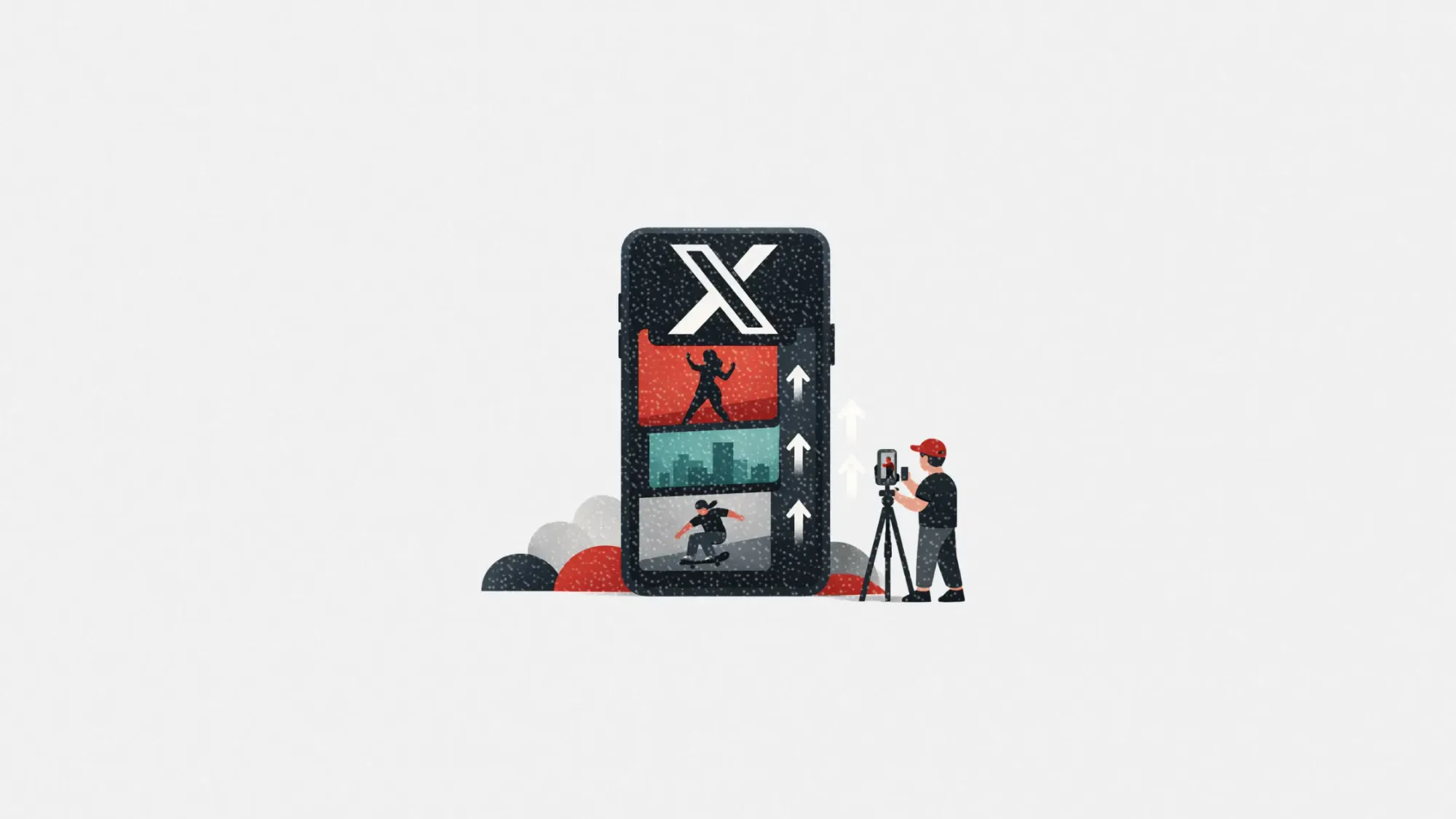
X is doubling down on vertical video. The platform has introduced a redesigned immersive video player and is expanding its vertical video feed, signaling a deeper push into short-form video consumption.
The update also comes at a strategic moment. With TikTok’s US ownership situation still evolving and competitors rushing to fill potential gaps, X appears eager to position itself as a serious destination for both video creators and audiences.
We're rolling out a few updates to video this week.
— Nikita Bier (@nikitabier) February 16, 2026
We're starting with a new immersive video player, which badly needed a refresh. Available on iOS today. pic.twitter.com/sCDH8E0x91
This article explores what the update changes, why X is prioritizing vertical video, and what the move means for marketers navigating an increasingly TikTok-shaped social media landscape.
Short on time?
Here’s a table of contents for quick access:
- What changed in X’s new immersive video player
- Why X is pushing harder into vertical video
- What marketers should know about X’s video-first strategy
- The bigger platform battle for short-form video
 Patrecia Meliana
What changed in X's new immersive video player
X recently rolled out an updated immersive video player designed to improve the mobile viewing experience. The redesign allows users to tap on a video to expand it instantly to full screen.
Once in full-screen mode, viewers can swipe up to move to the next video. The navigation closely mirrors the scrollable format popularized by TikTok and widely adopted by Instagram Reels and YouTube Shorts.
According to Nikita Bier, X’s Head of Product, the previous player needed a refresh. The new design focuses on making video consumption easier and more engaging on mobile devices.
However, the update has also drawn criticism from some users. Several have pointed out that the interface forces videos into a cropped, full-screen view, limiting the ability to watch content in its original aspect ratio.
This UI sucks so bad. Let me just watch full scale videos. pic.twitter.com/blRdT5n6jQ
— Leonardo (@LeonardoZerega) February 16, 2026
Bier acknowledged the feedback but emphasized that portrait orientation is now the preferred format for the platform. He added that X plans to stop cropping vertical videos going forward, a move intended to encourage creators to post vertical content instead of square formats.
The new player is currently rolling out to iOS users.
Why X is pushing harder into vertical video
The redesigned player is only one part of a broader video push.
X has also expanded its dedicated vertical video feed globally. The feature was first introduced in the United States and is now available in several other markets, including India, Australia, and parts of Europe. It currently remains limited to iOS devices.
Users can access the feed through a dedicated tab inside the X app, positioned next to the Grok button. The feed includes entertainment-focused content and in-feed advertising placements designed to increase engagement and generate revenue.
The company has been building toward this shift for some time. In recent years, X has launched short-form video navigation features and even introduced a standalone TV app as part of its effort to become a broader video platform.
Artificial intelligence is also part of the roadmap. X has begun integrating Grok-powered creative tools, including text-to-video generation features that could eventually help creators produce video content directly on the platform.
What marketers should know about X's video-first strategy
For marketers and social media teams, the update reinforces several trends that are already reshaping platform strategy.
1. Vertical video is now the default format
Short-form, vertical video continues to dominate user behavior across major social platforms. X aligning its interface with TikTok-style navigation suggests the format is now unavoidable for brands that want organic reach.
Marketing teams should consider adapting creative workflows to prioritize vertical-first video assets.
2. Creator incentives will likely follow
As platforms redesign their interfaces around video, they typically introduce incentives to encourage creators to publish more content. That could include monetization programs, algorithm boosts, or new editing tools.
Brands working with creators should watch for these signals and experiment early.
3. In-feed video ads will expand
The vertical video feed already includes advertising placements. As the feature gains traction, X will likely increase monetization options for brands looking to appear inside the scrollable feed.
This opens opportunities for performance marketing formats similar to TikTok and Reels ads.
4. AI-assisted video creation may become part of the stack
X’s integration of Grok-powered media tools hints at a future where creators and marketers can generate video content directly inside the platform.
If those tools mature, they could reduce production barriers and accelerate experimentation with short-form video campaigns.
The bigger platform battle for short-form video
X’s video push reflects a larger industry shift.
TikTok’s short-form format has become the dominant model for content discovery across social platforms. Instagram, YouTube, and even streaming services are now experimenting with vertical video feeds.
Some media platforms have begun integrating vertical viewing into long-form ecosystems as well, signaling that the format is expanding beyond traditional social media.
Against this backdrop, X’s strategy appears clear. The platform wants to capture more viewing time, attract creators, and compete directly with TikTok-style content loops.
The timing is also significant. TikTok’s US operations were recently sold to an American investor group, creating ongoing uncertainty about the platform’s future structure and competition dynamics.
X may see that moment as an opportunity to strengthen its own video ecosystem.