
YouTrip turns Jungkook lookalikes into a S$9,000 fan contest
A BTS-inspired lookalike contest invites Singapore fans to vote online and attend a finale while YouTrip promotes its Korea flight giveaway.


K-pop fandom revolves around recognizing a face, a look or a performance detail, and YouTrip is turning that instinct into a contest. A lookalike competition gives fans a way to test how well they can recreate an idol's appearance. The Singapore travel wallet is asking an unusually specific question: could someone locally pass for BTS singer Jung Kook?
The multi-currency platform is using that question to promote its 100 Flights to Korea campaign. Its JKook lookalike competition offers a combined S$9,000 (about US$7,000) in cash prizes, with Instagram voting and a live Singapore finale on November 12. The premise is fan participation rather than a conventional celebrity endorsement.
The connection with Korean travel is easy to follow. Fans can enter a contest inspired by an idol, see submissions on social media and potentially end up at an event with K-pop trivia and flight prizes. It gives the brand several ways to be part of a shared cultural interest without requiring every participant to be a travel-card customer first.
Table of contents
Jump to each section:
- Why a JKook lookalike works as fan participation
- How the contest moves from Instagram to a live stage
- How Korea flights connect fandom to travel spending
- What marketers can learn from the fan contest
Why a JKook lookalike works as fan participation
BTS has a fan community known as ARMY, and Jung Kook is its youngest member. The group's official profile lists him among its seven members. His name and image are readily recognizable cues in a fandom where fans pay attention to individual members as well as the group.
YouTrip calls the competition JKook, a direct nod to Jung Kook, and its own contest page speaks to ARMYs who think they could resemble the singer. That is a more participatory idea than simply placing a celebrity picture alongside a card promotion. Participants must put forward two photographs and an Instagram handle, according to the official competition rules.
An important distinction is that this is a lookalike competition, not a confirmed partnership with Jung Kook or BTS. Neither the company's announcement nor its competition terms establish that the artist is involved, has endorsed the campaign or will attend. The brand is referencing fan culture rather than reporting an ambassador deal.
That difference matters creatively. Instead of asking people to admire an inaccessible star, the contest asks who could convincingly play the part. The activity moves the fan from spectator to participant while retaining a clear link to the culture that makes the premise recognizable.

How the contest moves from Instagram to a live stage
The competition has a sequence designed to keep people involved after the initial application. Entrants have until November 3 to submit their details. YouTrip plans to showcase 20 shortlisted participants through its social channels, with members of the public voting through the designated Instagram post.
The ten contestants with the most eligible votes advance to a live finale on November 12. Audience members at that event will vote on the top three, whose cash prizes are S$5,000 (about US$3,900), S$3,000 (about US$2,300) and S$1,000 (about US$780). The prize breakdown follows the official competition terms.
The campaign's design relies on several different forms of participation. Someone may submit a photograph, vote for a favorite, register to watch the final or join the K-pop trivia activities. YouTrip's calendar places Instagram voting from November 3 to 5, event registration from November 7 to 10 and the finale on November 12.
Kelvin Lam, YouTrip's chief operating officer, told MARKETING-INTERACTIVE that "K-pop fandom is inherently social and expressive." He described the live event as a way to bring the contest's online participants together in person. The line explains why a live competition, rather than an online-only draw, is central to the plan.
The event also includes a K-pop DJ afterparty, trivia and opportunities for eligible registered attendees to win flights. But the brand has not disclosed attendance or participation results. Applications, votes and event response are planned measures of success, not verified outcomes as of this report.
How Korea flights connect fandom to travel spending
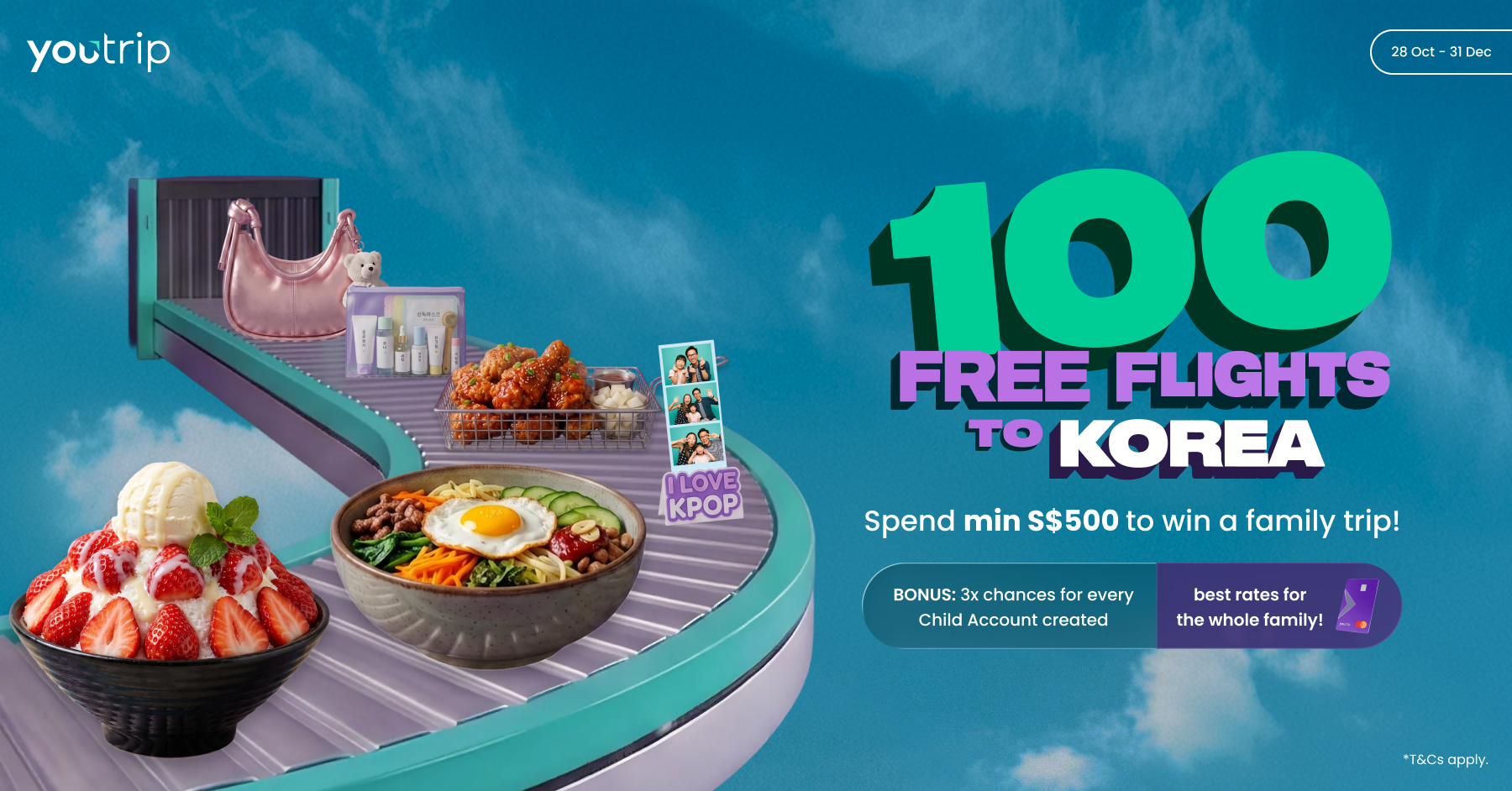
The lookalike contest is only one part of a wider promotion. YouTrip is giving away 100 flights to South Korea through its campaign running from October 28 to December 31, 2026. Under the main offer, 31 winning account holders will each receive three flight tickets, or 93 tickets in total. The other seven are allocated through additional activities described by the company.
For new customers, the entry route is to sign up with the code FLY100KR. Existing users must opt in through the promotional banner in the app and make qualifying spending of S$500 (about US$390) during the campaign period. Eligible users can also gain extra entries by setting up YouTrip Family child accounts. The flight giveaway terms spell out the eligibility and travel restrictions.
There is a clear difference between the two offers. The lookalike contest asks fans to share and vote around a recognizable cultural reference; the broader flight giveaway asks existing or prospective YouTrip users to take actions linked to their travel-payment account. Both point toward the same destination, but they serve different purposes.
It also keeps the brand's role concrete. YouTrip is not selling a K-pop album or arranging a concert. It provides a way for travellers to spend in foreign currencies. A competition about looking like a Korean pop star can make the associated Korea travel offer more noticeable, while the in-app requirements make the commercial proposition explicit.
The structure is relevant because K-pop brands and payment providers have used more direct celebrity collaborations before. In Singapore, ACUVUE gave CORTIS fans a photo opportunity at a train station through an actual ambassador campaign. YouTrip takes a different route, prompting fans to create the talent-inspired content themselves rather than claiming the idol's formal participation.
What marketers can learn from the fan contest
The interesting part of the JKook idea is not simply the cash prize. It is how an existing fandom provides the social logic for an activity that otherwise might be a routine travel giveaway. People understand what a lookalike contest asks them to do, and the result can unfold as a public sequence rather than a single announcement.
- Build a reason to participate, not just a reason to watch. Contestants submit their appearance, audiences help choose the shortlist and event guests take part in the final. Each stage gives people a distinct role within a shared idea.
- Keep the cultural reference and the commercial offer separate. The competition is inspired by Jung Kook, but the brand does not present him as its ambassador. The main flight giveaway is linked to YouTrip account actions. The boundaries help audiences understand exactly what is being offered.
- Connect the online moment to a physical one. A November 12 finale gives the Instagram competition a destination in the real world. It also creates a point where the brand can observe attendance, conversations and feedback rather than counting digital activity alone.
- Judge what the idea achieves after it happens. YouTrip has identified sign-ups, entries, public voting, event participation and brand sentiment as measures it will examine. The release offers no results yet, so performance should be assessed only when those outcomes become available.
The campaign fits a wider pattern in which brands look for ways to let fans do something with the entertainment culture they follow. ACUVUE's CORTIS photo activation puts fans inside a branded frame; YouTrip puts participants on stage and asks an audience to choose. Neither mechanic can stand in for measured conversion, but each asks more from the audience than passive attention.
For marketers, that is the practical distinction: a recognizable idol reference may attract interest, but the participation design determines what people can do next. Whether the JKook contest translates into deeper affinity or more travel-wallet customers remains to be seen. The idea's value will ultimately depend on how well YouTrip connects a playful fan experience to a useful reason to travel.
