
ABC turns Australia's Big Banana into a giant protein bar
A temporary landmark makeover gives ABC a visual metaphor for its documentary on food marketing and a direct path to the November 24 premiere.


A roadside banana might not seem like a place to start a debate about food marketing. But in Coffs Harbour, Australia's Big Banana has been part of the local landscape since 1964. It belongs to a distinctly Australian tradition of turning everyday objects into oversized tourist attractions. Changing it means playing with something people already recognize.
That is the premise behind a stunt by the Australian Broadcasting Corporation (ABC), which has temporarily turned the landmark into a giant protein bar to promote its three-part documentary The Great Food Con. The November 24 installation, created with Glue Society and production company Revolver, makes the transformation from fruit to packaged food impossible to miss.
Rather than start the conversation with a television trailer, the broadcaster is using an object familiar to generations of Australians. The joke is a way into a much more serious discussion about how food companies package, promote and sell what we eat.
Table of contents
Jump to each section:
- How the Big Banana Heist works
- Why the location is part of the message
- How the prank connects to the documentary
- How this compares with other curiosity-led campaigns
- What marketers can learn from the Big Banana Heist
How the Big Banana Heist works
The campaign, dubbed the Big Banana Heist, involved an overnight makeover of the Coffs Harbour attraction. Commuters passing along the Pacific Highway on November 24 encountered the unexpected replacement. Presenter Craig Reucassel then revealed his involvement in the prank.
Glue Society worked with specialist fabricators to create the temporary installation. The campaign credits and announcement identify ABC as the client and Revolver as the production company. The bar is scheduled to remain on display until 5 p.m. local time, with the documentary premiering at 8 p.m. on ABC TV that evening.
ABC director of audiences Milla McPhee explained the metaphor in a statement: “A familiar icon, quietly replaced, just like the food on our plates.” The substitution is the creative idea, not merely a location for displaying a television advertisement.
The campaign also includes two films hosted by Little Black Book, including a security-camera-themed version. The physical object gives those films an immediately recognizable before-and-after premise. People who never travel to Coffs Harbour can still understand what has changed.
Why the location is part of the message
Australia has a particular fondness for roadside attractions that make everyday things enormous. The Big Banana is one example of a tradition explored in ABC's Behind the News, which traces how such objects help towns attract visitors and establish a distinctive identity.
A protein bar on a billboard would look like a regular product advertisement. A protein bar in place of a famous fruit-shaped landmark is a different proposition. The contrast invites a question about why a familiar thing has changed, and why the substitute looks so recognizable in its own right.
That local history gives the installation an emotional dimension without requiring the broadcaster to claim that everyone feels the same way about it. It can be a joke about an unusual roadside sight and a reference to a national tradition at the same time.
There is also a tension inherent in borrowing a landmark. The attraction has a life beyond the campaign, and the change needs to be temporary and intelligible. The scheduled removal on the same day helps frame this as a brief interruption rather than a permanent rebranding of the destination.
It is the difference between putting a brand in a familiar place and making the familiar place itself communicate the idea.
How the prank connects to the documentary
ABC's October announcement describes The Great Food Con as an investigation of the food industry, including advertising, ingredients and regulation. The series looks at how Australian families navigate food choices and asks whether shoppers receive enough information to make them.
Reucassel is a useful bridge between the physical joke and the reporting. An Australian comedian and broadcaster whose previous work includes War on Waste, he has experience making ordinary household habits the starting point for public-interest television.
The protein bar is not presented as a specific commercial product whose nutritional value the stunt has established. It is a visual shorthand for the questions the series intends to investigate. The joke would lose some of its meaning if the giant fruit were simply replaced by a generic billboard with the show's title.
The timing matters, too. ABC has a specific destination for the attention it hopes to earn: the premiere that evening and the episodes available on ABC iview. An audience member who wants to know more does not need to wait weeks for the subject of the campaign to become available.
That connection makes the stunt more than a novelty photo opportunity. The broadcaster has a program that can answer some of the questions the image is designed to raise. The promotional idea and the editorial subject reinforce each other.
How this compares with other curiosity-led campaigns
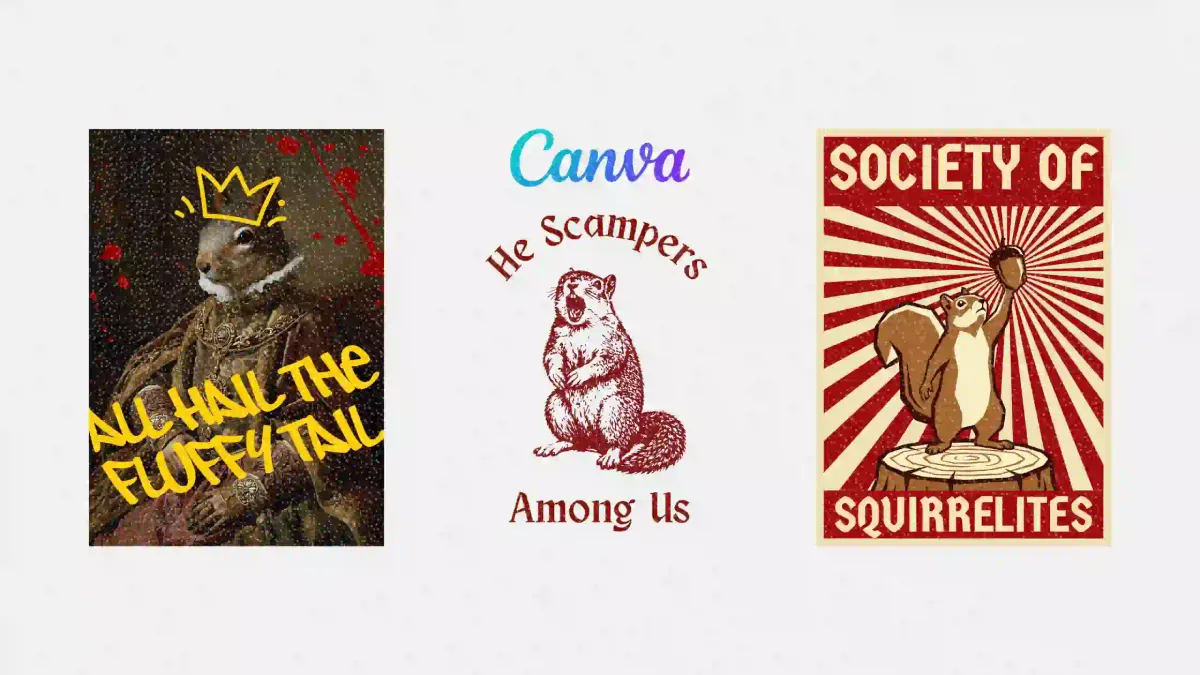
There are parallels with the way entertainment and consumer brands create a public mystery before explaining what they are promoting. Canva's US campaign placed a giant squirrel statue in a New York park and built a fictional community around it. Audible used a staged sighting of Jennifer Coolidge in Bondi as a starting point for a wider Australian advertising campaign.
Those examples show two different ways a physical event can create material for subsequent storytelling. The squirrel belonged to an invented cultural movement, while the Bondi appearance relied on a recognizable personality in a familiar setting. The Big Banana Heist borrows an existing cultural object and changes its meaning.
The ABC's purpose is also distinct. Its public-service remit means the campaign has to be understood as an invitation to watch an investigation, rather than a pitch to purchase the object being advertised. The visual joke is deliberately commercial-looking even though the program questions commercial food messaging.
None of the available campaign announcements provides a verified audience total, number of incremental streams or measured effect on public awareness. It would be premature to describe the stunt as a proven viral success. Its significance at launch lies in the creative mechanism and the alignment between the spectacle and its subject.
What marketers can learn from the Big Banana Heist
The most interesting part of the campaign is not simply that the installation is large. It is that the audience can recognize what is different about it before anyone explains the marketing message.
1. Start with something people already know. A familiar object gives viewers a baseline. A well-chosen alteration can convey more with fewer words than an entirely new visual property that first needs to be explained.
2. Make the reveal answer the question. The audience should be able to connect the unexpected sight to the thing being promoted. Here, the substitution of a fruit-shaped landmark for a packaged snack gives the documentary's subject a visual form. If the reveal had nothing to do with the original joke, the stunt could be memorable while the program remained forgettable.
3. Give physical attention a useful next destination. An installation that disappears after a few hours can still support a launch if photographs, films and a clear viewing destination extend its life. The program's premiere provides a reason to make the connection immediately rather than leaving the audience with an unresolved tease.
4. Separate spectacle from evidence. Marketers should distinguish how many people notice a stunt from how many subsequently seek out the program or remember its argument. For a broadcaster, relevant evaluation could include premiere viewing, incremental streaming starts and awareness of the documentary's subject. None of those outcomes is established yet for this campaign.
In a media environment full of polished trailers, the Big Banana makeover offers an alternative starting point: a real place and a simple, visible contradiction. It makes the issue feel closer to everyday life without asking viewers to absorb an entire documentary's argument in one image.
The test for ABC is what happens when the joke ends and the investigation begins. The lasting value of the idea will depend less on the scale of the object than on whether people find the documentary worth their attention.
