
Canva turns a giant squirrel into a marketing movement with new US campaign
Canva’s “The Thing That Makes Anything A Thing” campaign blends absurdity, AI, and experiential marketing to show how ideas become cultural moments.

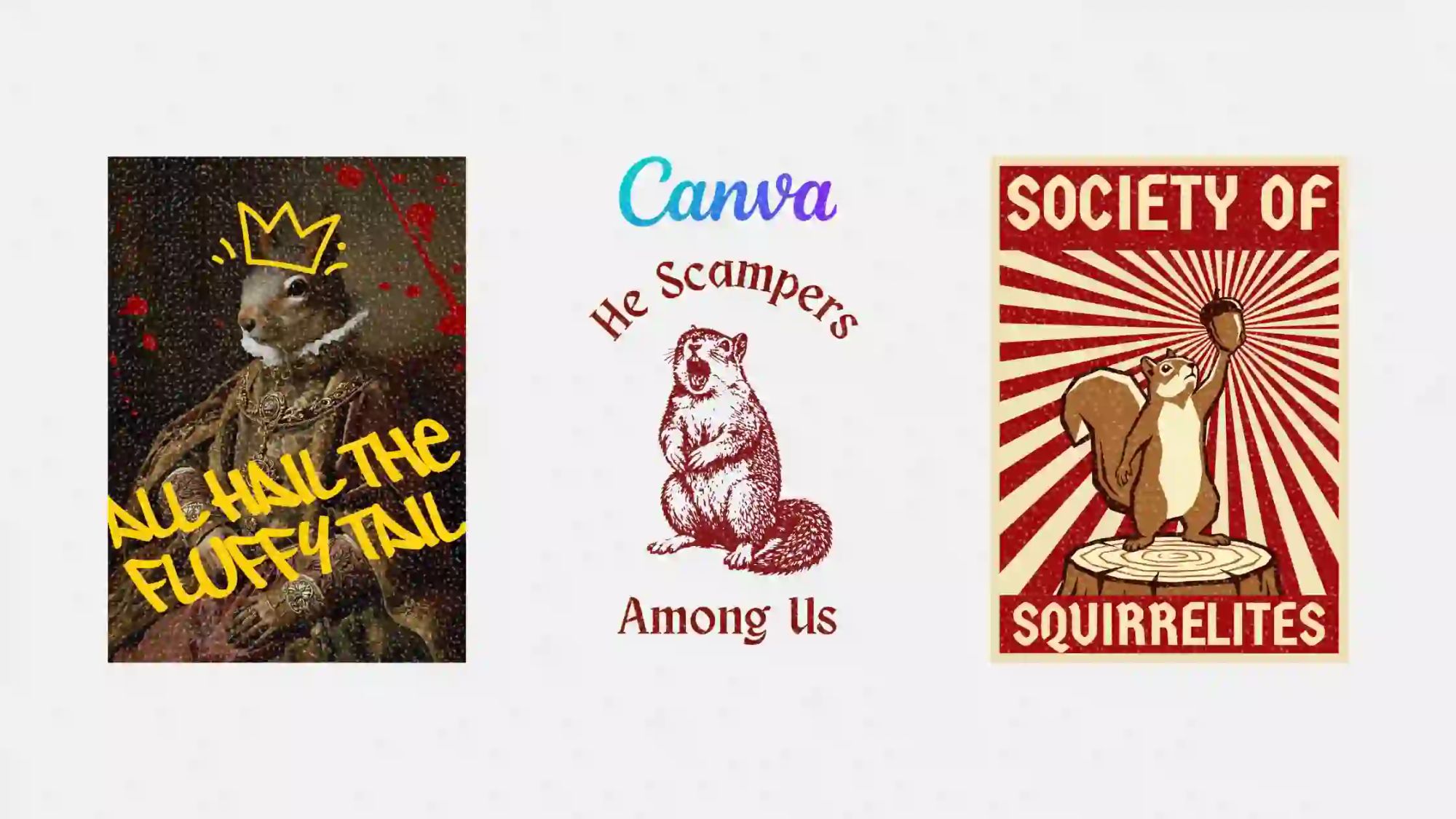
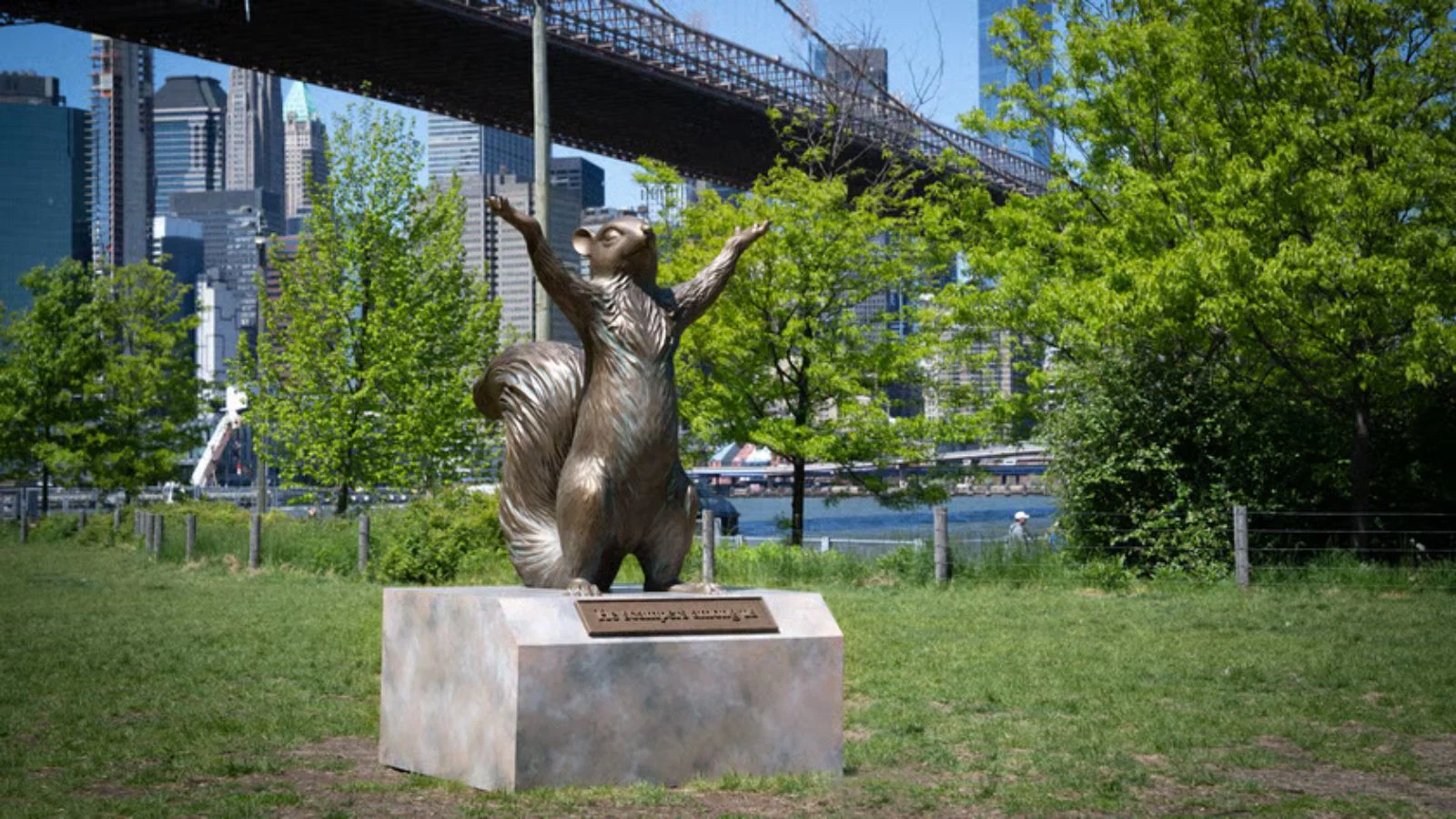
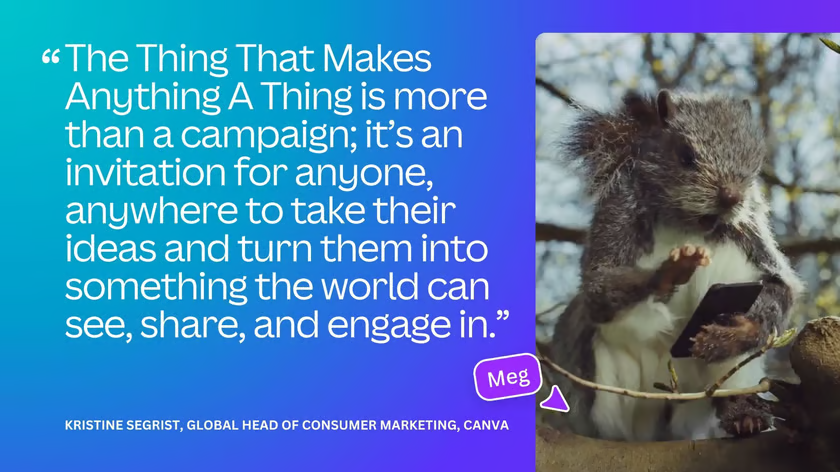
Canva is leaning hard into absurdist marketing with its latest US campaign, “The Thing That Makes Anything A Thing.” The campaign started with an unbranded giant squirrel statue appearing in Brooklyn Bridge Park, followed by squirrel-themed performances, influencer posts, billboards, and a fictional community called “The Squirrelites.”
Behind the surreal activation is a more strategic message aimed squarely at marketers and creative teams. Canva wants to position itself as the platform that turns fleeting ideas into scalable campaigns through AI-powered creative workflows, automation, and collaborative design tools.
The campaign also arrives as Canva continues expanding beyond design software into a broader AI-driven workflow platform. With Canva AI 2.0 and its growing Visual Suite ecosystem, the company is increasingly competing not just with design tools, but with productivity, collaboration, and campaign execution platforms.
Table of contents
Jump to each section:
- Why Canva launched “The Squirrelites” campaign
- How Canva is turning creativity into a workflow platform
- What marketers should know about experiential AI marketing
- Why bizarre brand storytelling keeps working
- What this means for B2B and martech brands
 Patrecia Meliana
Why Canva launched "The Squirrelites" campaign
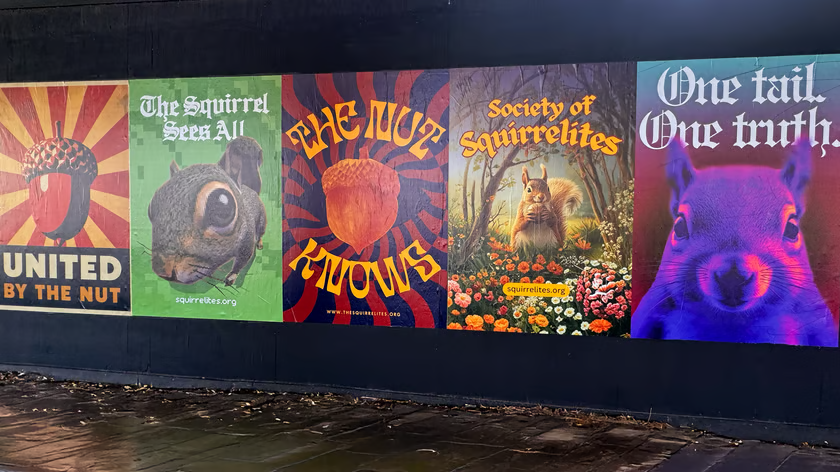
Canva’s campaign centers around a fictional squirrel-loving movement called “The Squirrelites.” The activation began with a giant squirrel statue appearing in New York without explanation or branding. Soon after, squirrel-themed knitting circles, choirs, balloon vendors, billboards, and influencer content started appearing around the city.
The reveal came through Canva’s hero film, which follows a woman whose brief encounter with a squirrel spirals into a viral community movement complete with posters, merchandise, and public gatherings.
The campaign’s message is intentionally simple: ideas become “things” when people can quickly turn them into visible, shareable creative outputs.
For Canva, this is less about squirrels and more about positioning. The company is trying to connect emotional storytelling with its expanding AI-powered creative stack.
This also reflects a broader trend in B2B and SaaS marketing. Brands increasingly need campaigns that feel culturally native instead of overly polished corporate messaging. Weirdness travels faster online, especially when audiences can participate in the joke.
How Canva is turning creativity into a workflow platform
The squirrel campaign also acts as a live demonstration of Canva’s larger strategic direction.
Over the past year, Canva has been steadily evolving from a design tool into an AI-driven workflow platform for marketers, creators, and business teams. Recent launches around Canva AI 2.0, conversational design, workflow automation, integrations, and AI-assisted content generation signal a clear expansion beyond templates and social graphics.
Instead of positioning itself as software for designers, Canva increasingly frames itself as infrastructure for creative execution.
That matters because modern marketing teams are overwhelmed by content demands. Teams now need to generate:
- Social assets
- Presentation decks
- Internal communications
- Landing pages
- Event visuals
- Multi-format campaign variations
- Personalized creative at scale
Canva’s strategy appears focused on reducing the friction between idea, production, and distribution.
The “Squirrelites” campaign reflects that positioning directly. The fictional movement spreads through posters, social content, outdoor media, merchandise, and community participation, mirroring the multi-channel workflows Canva wants users to build inside its ecosystem.
The company is effectively marketing its platform through the exact type of campaign workflow it hopes marketers will replicate.
What marketers should know about experiential AI marketing
Canva’s campaign highlights several shifts marketers should pay attention to.
1. Experiential campaigns now fuel digital distribution
The squirrel statue itself is not the campaign.
The real campaign is the stream of social posts, videos, influencer reactions, memes, and online speculation generated around the stunt.
Physical activations increasingly exist to manufacture digital momentum.
For marketers, this means experiential marketing is becoming less about foot traffic and more about creating remixable online moments.
2. AI tools are accelerating campaign production
Canva is clearly tying this campaign to its AI positioning.
The company wants marketers to associate AI-powered design workflows with speed, accessibility, and rapid creative iteration.
That matters because creative bottlenecks remain one of the biggest operational problems inside marketing teams.
AI-assisted tools now allow smaller teams to:
- Generate campaign variants faster
- Produce multi-channel assets without separate production pipelines
- Adapt visuals for different audiences quickly
- Test creative concepts at larger scale
- Reduce dependency on fragmented design workflows
The operational advantage is becoming difficult to ignore.
3. Campaign absurdity increases memorability
The squirrel concept works because it is bizarre enough to interrupt attention. B2B and SaaS brands often over-optimize for clarity and under-invest in memorability.
Canva is doing the opposite here.
The campaign demonstrates that even productivity or martech platforms can lean into humor, surrealism, and cultural storytelling without losing business relevance.
Why bizarre brand storytelling keeps working
Canva is not alone in embracing strange, highly visual campaigns.
Across SaaS, AI, and martech, brands increasingly use entertainment-first creative to break through audience fatigue. Traditional product marketing often struggles online because audiences are overwhelmed with feature comparisons, productivity claims, and repetitive AI messaging.
Absurd storytelling creates emotional recall.
The squirrel campaign succeeds because people naturally want to ask questions about it:
- Why is there a giant squirrel statue?
- Is this real?
- Who are “The Squirrelites”?
- Why are people wearing acorn hats?
That curiosity loop drives sharing.
Importantly, Canva balances absurdity with a clear product narrative. The campaign always circles back to the idea that creative tools help ideas spread.
Without that strategic anchor, the stunt risks becoming disconnected entertainment.
This balance is where many brand campaigns fail. Viral attention without operational relevance rarely translates into long-term positioning.
What this means for B2B and martech brands
Canva’s latest campaign reinforces several important shifts happening across modern marketing.
- AI positioning is moving from productivity messaging toward creative empowerment and workflow orchestration.
- B2B brands are increasingly borrowing emotional storytelling techniques from consumer marketing.
- Physical experiences are becoming content-generation engines for digital distribution.
- Creative flexibility is emerging as a competitive advantage, especially for lean teams.
- Campaigns that invite audience participation tend to outperform static brand messaging.
The larger takeaway is not that every brand needs a giant squirrel. The company is using a surreal squirrel movement to reinforce a serious business message: modern marketing depends on turning ideas into scalable creative outputs quickly.
At the same time, Canva continues positioning itself as more than a design platform. Its expanding AI ecosystem, workflow integrations, and automation tools signal ambitions far beyond social graphics.
For marketers, the campaign is a reminder that creativity still matters, even in an increasingly automated landscape. AI can accelerate production, but memorable campaigns still depend on storytelling, emotional resonance, and cultural participation.
The challenge now is not simply producing more content. It is producing ideas people care enough to spread.