Microsoft predicts the “agent boss” era and marketing teams could be first to feel it
Instead of using AI tools, professionals may soon supervise AI systems that run campaigns and workflows.

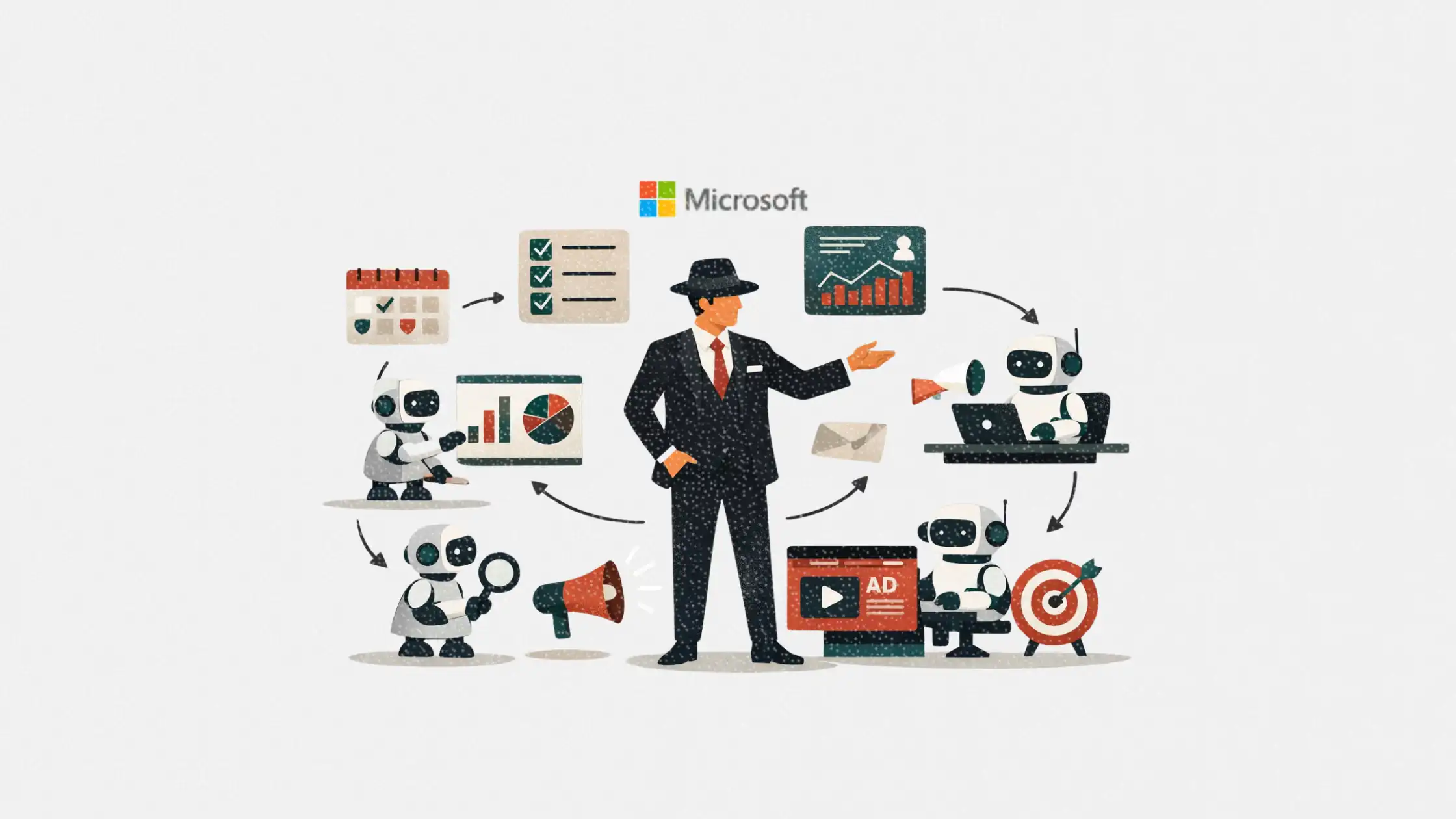
One of the most intriguing ideas in Microsoft’s latest Work Trend Index report is the emergence of a new role in the AI economy: the agent boss.
The term refers to employees who oversee AI agents the same way managers oversee human colleagues. Instead of executing every task themselves, they assign work to AI systems, guide their output, and refine the results. According to Microsoft, this shift could soon become common across organizations as AI agents take on increasingly complex work.
For marketers, this development may arrive sooner than expected. Marketing teams are already heavy users of automation, analytics, and AI-powered tools. As those tools evolve into autonomous agents capable of running workflows, marketers may find themselves managing digital teammates rather than simply operating software.
Short on time?
Here’s a table of contents for quick access:
- What Microsoft means by an “agent boss”
- Why marketing teams may adopt AI agents quickly
- The mindset shift marketers will need
- What marketers should do now
 Patrecia Meliana
What Microsoft means by an "agent boss"
In the report, Microsoft describes an agent boss as someone who builds, delegates to, and manages AI agents in order to expand their impact.
Instead of a single employee completing every operational task, the employee becomes a coordinator of intelligent systems. AI agents might handle research, data analysis, reporting, or even parts of creative development while the human worker focuses on higher-level strategy and decision-making.
The concept may sound futuristic, but the research suggests the transition is already underway.
Within the next five years, many leaders expect their teams to take on responsibilities such as training AI agents, building multi-agent systems, and redesigning workflows around AI. For knowledge workers, this effectively turns every employee into a manager of digital labor.
 Patrecia Meliana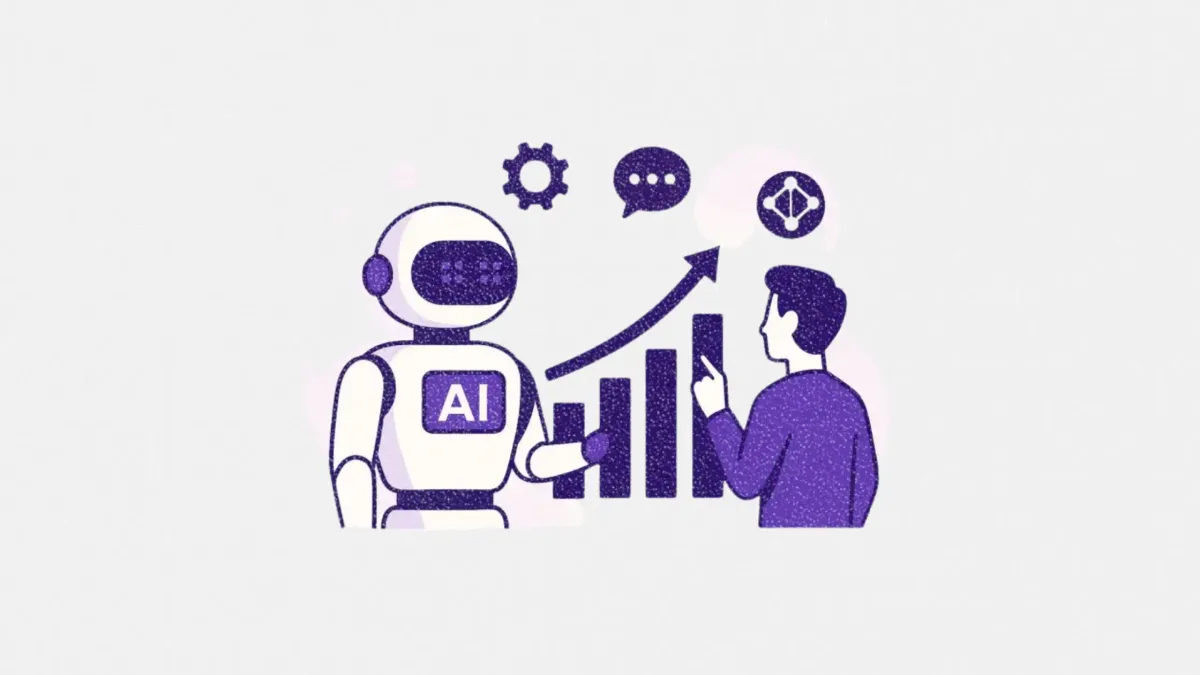
Why marketing teams may adopt AI agents quickly
Among all business functions, marketing appears especially well positioned for early adoption of AI agents.
The report identifies marketing, customer service, and product development as top areas where leaders plan to accelerate AI investment. That is not surprising. Much of marketing work involves repeatable processes that AI systems are well suited to handle, including campaign analysis, content testing, audience segmentation, and reporting.
Imagine a marketing team where AI agents continuously analyze campaign performance, generate creative variations, run A/B tests, and deliver insights in real time. Human marketers would still shape strategy and brand direction, but the operational workload could increasingly shift to AI systems.
In that environment, marketers would spend less time operating dashboards and more time orchestrating intelligent workflows.
 Patrecia Meliana
The mindset shift marketers will need
Technology alone will not drive this change. The report suggests the bigger challenge is how people think about AI.
Today, most employees still treat AI as a command-based tool. Microsoft’s survey found that 52% of workers interact with AI by issuing simple commands, while 46% use it as a thought partner for brainstorming and problem solving.
Working effectively with AI agents requires a deeper shift. Employees will need to learn how to collaborate with AI systems rather than simply instruct them. That means prompting with context, refining AI outputs, identifying gaps in reasoning, and deciding when to delegate work to AI versus handling it manually.
For marketers accustomed to managing campaigns and tools, the next step may be learning how to manage intelligent marketing systems.
 Atikah Amalia
What marketers should do now
The report makes it clear that organizations are already preparing for this shift.
Nearly half of leaders say upskilling their existing workforce in AI is a top priority, and many companies are considering new roles such as AI trainers, AI strategists, and AI agent specialists.
For marketing leaders, preparation should focus on three areas.
- Teams need to develop AI literacy across all levels, not just among technical specialists. Understanding how AI systems operate will become as essential as understanding analytics tools today.
- Organizations should begin experimenting with AI-driven workflows, identifying areas where agents could automate repetitive tasks or accelerate campaign execution.
- Leaders should rethink how marketing teams are structured. If AI agents can handle operational work, marketers may spend more time on strategy, storytelling, and experimentation.
The rise of the agent boss reflects a broader shift in how work itself is organized. Rather than replacing employees outright, AI may increasingly act as a scalable workforce that employees direct and manage.
For marketers, that means the role of the marketing professional could evolve from operator to orchestrator. The tools that once supported campaigns may soon become collaborators in running them.
And the marketers who learn how to lead those systems may gain a powerful advantage in the AI era.