
Agentic AI tools are spreading across programmatic ad buying platforms
Magnite, Mediaocean, and PubMatic are tied to agentic AI buying tools. Here’s what changes in governance, control, and measurement.

Agentic AI is showing up more often in the ad buying stack, with programmatic-facing products positioned around automating parts of campaign setup and execution. Magnite, Mediaocean, and PubMatic are among the platforms tied to this latest wave of agentic AI advertising offerings.
While “saving time” is the most obvious promise, the bigger question for marketers is what changes when parts of buying become delegated to software that can take actions, not just generate suggestions. The practical impact will depend on where these tools sit in the workflow, what controls remain with buyers, and how performance and accountability are measured.

Table of contents
Jump to each section:
- Why agentic AI is showing up in programmatic buying now
- What “agentic” can mean inside an ad buying workflow
- Where marketers should be cautious
- What this means for marketers
Why agentic AI is showing up in programmatic buying now
A cluster of adtech and media workflow vendors are positioning agentic AI as a new layer in campaign buying. The near-term driver is straightforward: media teams are under pressure to do more across more channels, with more permutations of audiences, creatives, and pacing decisions than manual workflows handle comfortably.
The longer-term driver is standardization. Programmatic buying already relies on structured inputs, repeatable rules, and machine-executed decisions. That makes it a natural environment for “agentic” systems that can take defined actions, especially when the actions can be constrained by policy and approvals.
 ContentGrip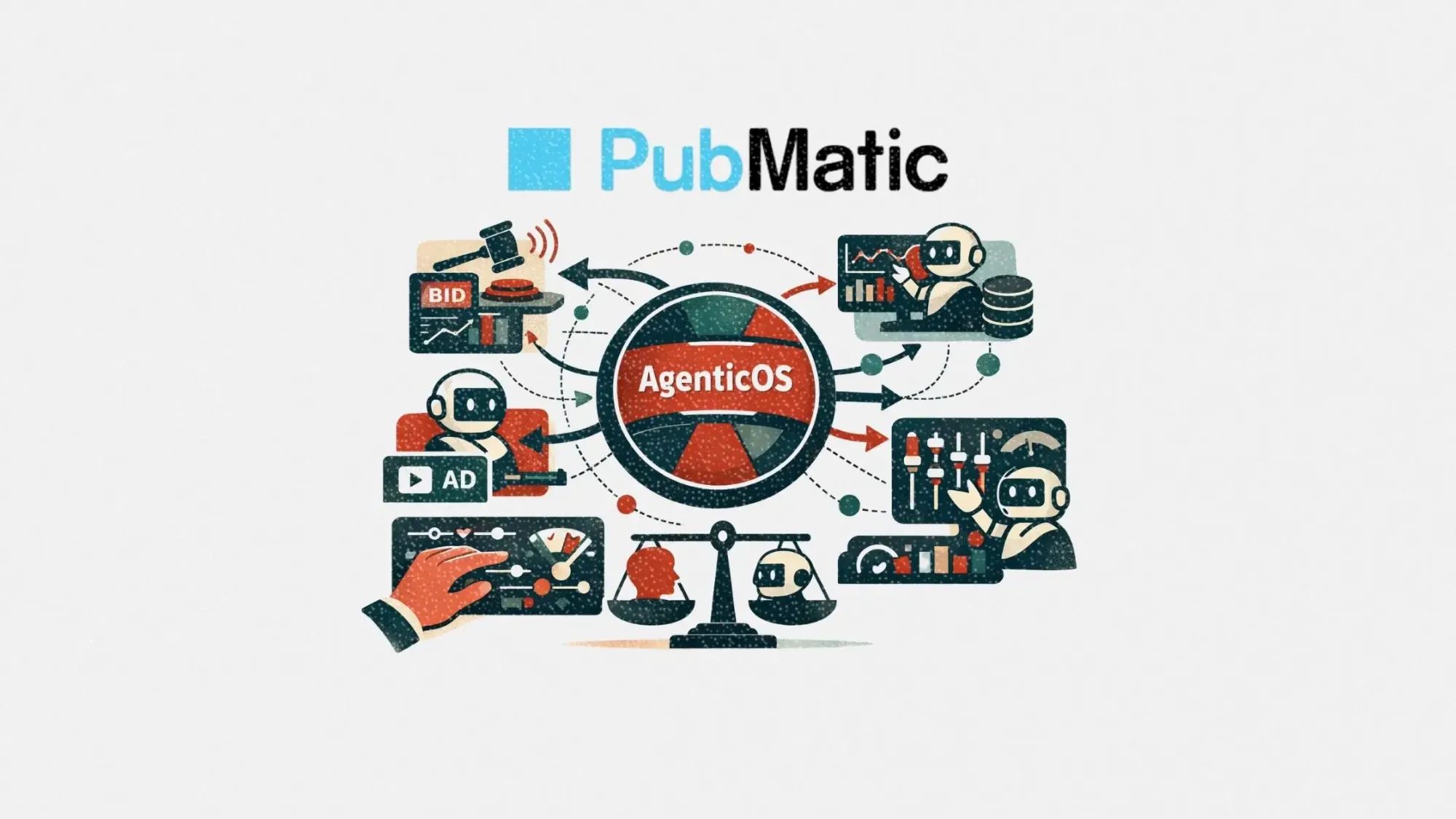
What “agentic” can mean inside an ad buying workflow
In an ad buying context, “agentic” is often used to describe AI systems that can do more than generate copy or insights. The implication is that the software can execute tasks across steps of a workflow, such as translating goals into settings, iterating based on outcomes, and coordinating between systems.
In practice, the difference between an assistant and an agent tends to come down to three things:
- Scope: which parts of buying it touches (planning, setup, optimization, reporting).
- Autonomy: whether it can make changes without a human approving each one.
- Orchestration: whether it can coordinate actions across multiple tools, not just within a single interface.
Even if the first versions stay conservative, the direction is clear: more workflow steps may move from “human sets parameters” to “human sets guardrails.”
Where marketers should be cautious
The biggest risks are not abstract AI risks. They are operational risks that show up in media performance and governance.
First, there is control and accountability. If a system can change bids, targeting, or allocations, teams need clarity on what was changed, why it was changed, and whether those changes were compliant with brand policies.
Second, there is measurement discipline. If an agent is optimizing toward a goal, teams need to ensure the goal is defined correctly and that success is not being “manufactured” through proxy metrics that look good but do not translate into business outcomes.
Third, there is workflow fragmentation. If multiple vendors each offer their own “agent,” marketers can end up with competing automation layers. That can increase complexity unless roles are clearly separated, such as one system for orchestration and others for execution.
What this means for marketers
Agentic AI in programmatic buying is best understood as a workflow shift, not a single feature upgrade. The near-term advantage is speed, but the strategic advantage is consistency if teams can encode decision rules and enforce them.
1. Treat agentic buying as a governance project, not only an efficiency play
Define what the system is allowed to do, what requires approval, and what logs need to exist for internal accountability.
2. Get specific about the “actions” you want automated
Start by naming a small set of repeatable decisions (pacing adjustments, budget rebalancing, audience exclusions) rather than delegating broad “optimize performance” mandates.
3. Expect differentiation to move from tooling to operating model
If several platforms offer agentic capabilities, the edge may come from how your team sets constraints, evaluates changes, and learns from outcomes.
4. Plan for multi-vendor overlap
If different platforms can act on the same campaign outcomes, decide which one is the system of record for decisions to avoid conflicting optimizations.
Agentic AI is likely to push media teams toward a higher-leverage role: setting strategy, defining guardrails, and auditing outcomes. That can reduce manual workload, but it also raises the bar for how clearly organizations define objectives and how rigorously they manage automation.
As these tools become more common, marketers who build strong governance and measurement habits will be better positioned than those who adopt automation without clear decision ownership.