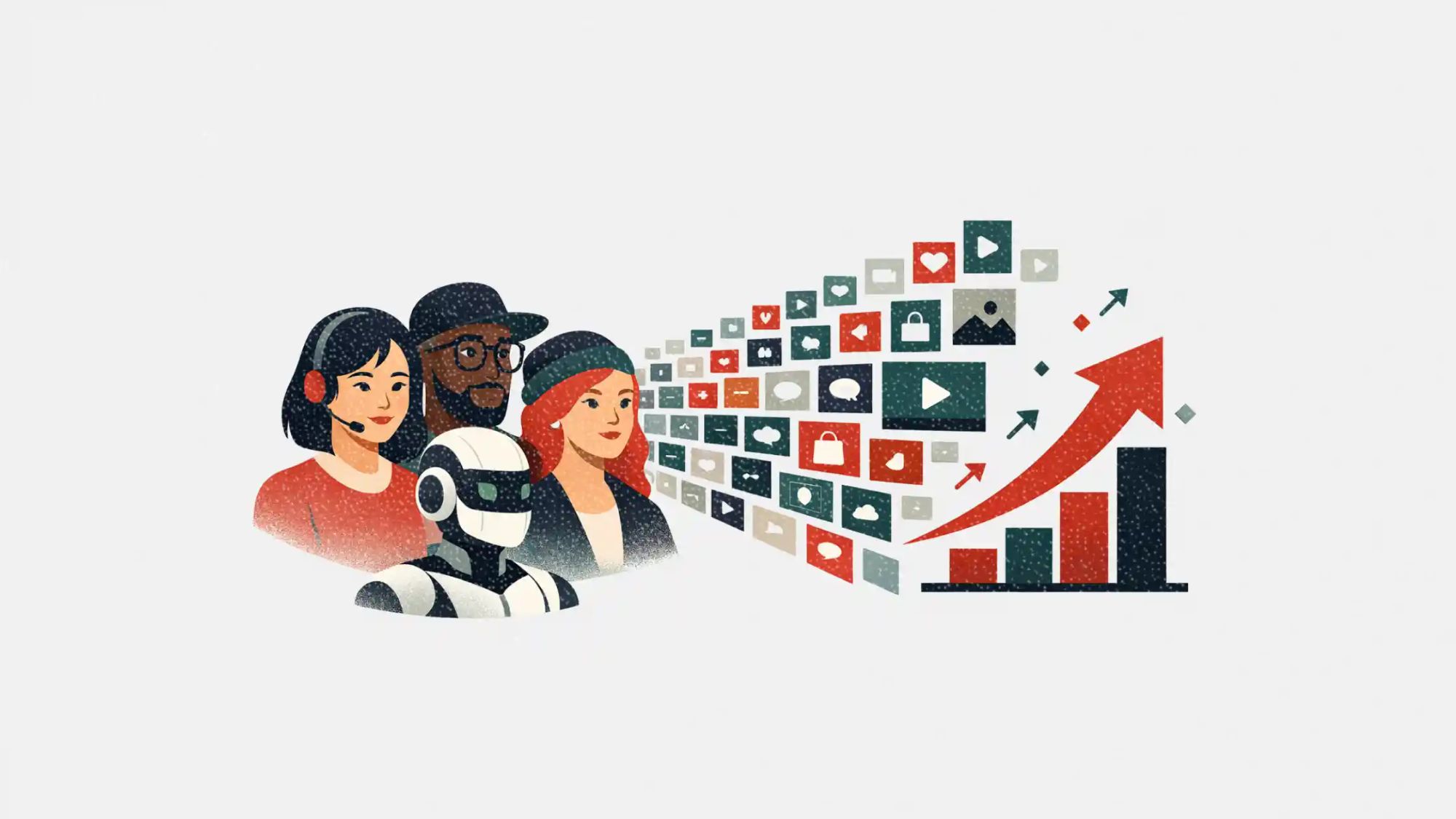
AI creators are scaling faster than humans according to data from Humanz
AI-generated creators are producing content at a scale humans can’t match

The creator economy is entering a new phase where scale is no longer limited by human output.
New data from Humanz suggests that AI-generated creators are not just a novelty but a performance engine that is already outperforming traditional influencer and brand-led campaigns.
This article explores how AI creators are changing the economics of content production, why engagement is shifting toward creator-style ads, and what this means for marketers trying to stay relevant in an increasingly personalized media landscape.
Short on time?
Here’s a table of contents for quick access:
- How Humanz data reveals the scale gap between AI and human creators
- Why creator-style ads are outperforming traditional brand content
- The shift toward hyper-personalized AI-driven campaigns
- What marketers should know about scaling AI creator strategies
 Patrecia Meliana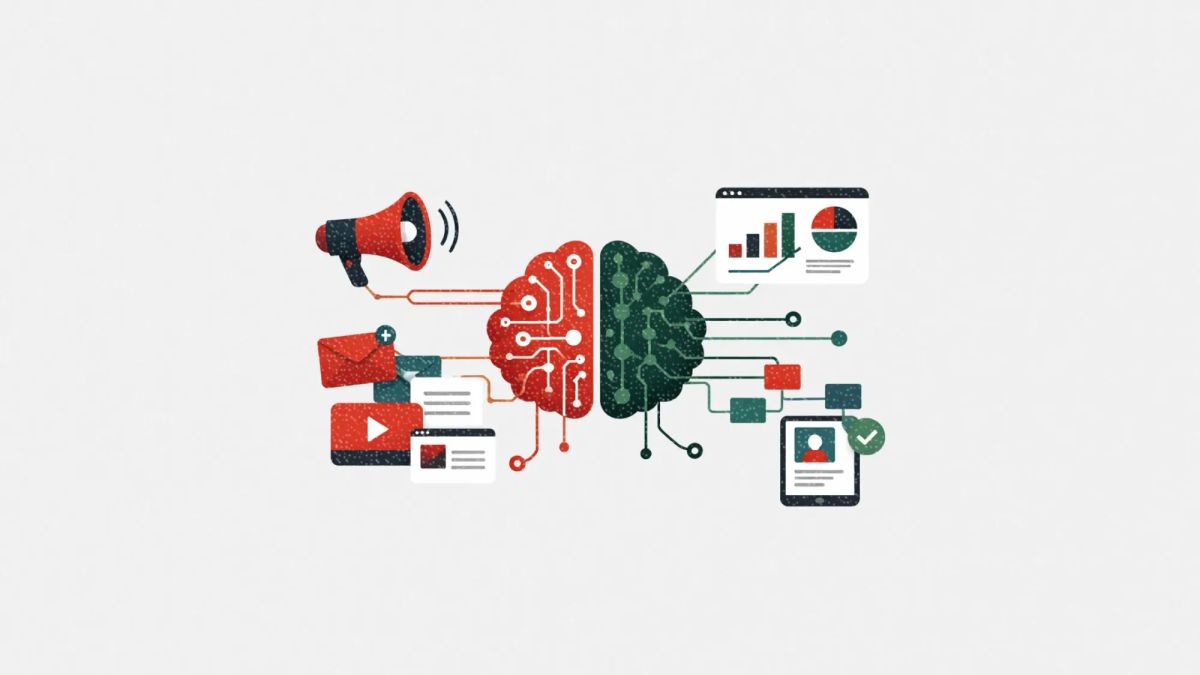
How Humanz data reveals the scale gap between AI and human creators
Humanz, an AI platform focused on the creator economy, has released new data that highlights just how quickly AI creators are reshaping content production.
The findings are stark. A typical human creator partnership produces between 5 and 20 creative variations. In contrast, just 4 AI creator accounts generated 169 creatives in a comparable setup. That kind of output fundamentally changes how campaigns are planned, tested, and optimized.
This is not just about efficiency. It is about unlocking a level of experimentation that was previously impossible due to cost, time, and coordination constraints. AI creators allow marketers to test more formats, angles, and audience segments simultaneously, turning creative into a scalable performance lever rather than a bottleneck.
Patrecia Meliana
Why creator-style ads are outperforming traditional brand content
The same dataset shows that creator-style ads, whether produced by humans or AI, are already outperforming traditional brand page ads by 3 to 5 times in engagement.
This reinforces a trend marketers have been seeing for years. Audiences respond better to content that feels native, personal, and relatable rather than polished brand messaging. Creator-led formats blend into feeds more naturally and build trust faster.
AI creators take this further by combining that native feel with scale. Instead of relying on a handful of influencers, brands can generate hundreds of variations that mimic creator styles, each tailored to specific audience segments.
This shifts the role of creative from a one-time asset to an ongoing system of testing and iteration.
Patrecia Meliana
The shift toward hyper-personalized AI-driven campaigns
Humanz projects that AI creator campaigns could scale up to 24 times by 2026 under continued optimization, and potentially up to 80 times with broader adoption.
According to Liran Liberman, CEO at Humanz, the shift is not just about scale but about personalization at a granular level. He describes it as an era where “instead of one ad for a million people, AI will generate a million ads for targeted audiences.”
He adds that users will increasingly see content that feels individually tailored, where “a creator that looks like someone they'd follow” speaks about what they care about in real time. In this model, each person encounters a different face, style, and message, all generated dynamically by AI.
This vision reframes social media marketing. Instead of optimizing a few high-performing creatives, brands move toward generating continuous streams of personalized content designed for specific micro-audiences.
Liberman also notes that this is already happening in practice, with AI creators “already outperforming every existing paid strategy, including creator partnership ads.” The pace of improvement is accelerating as well, with performance “improving even faster than we expected.”
Patrecia Meliana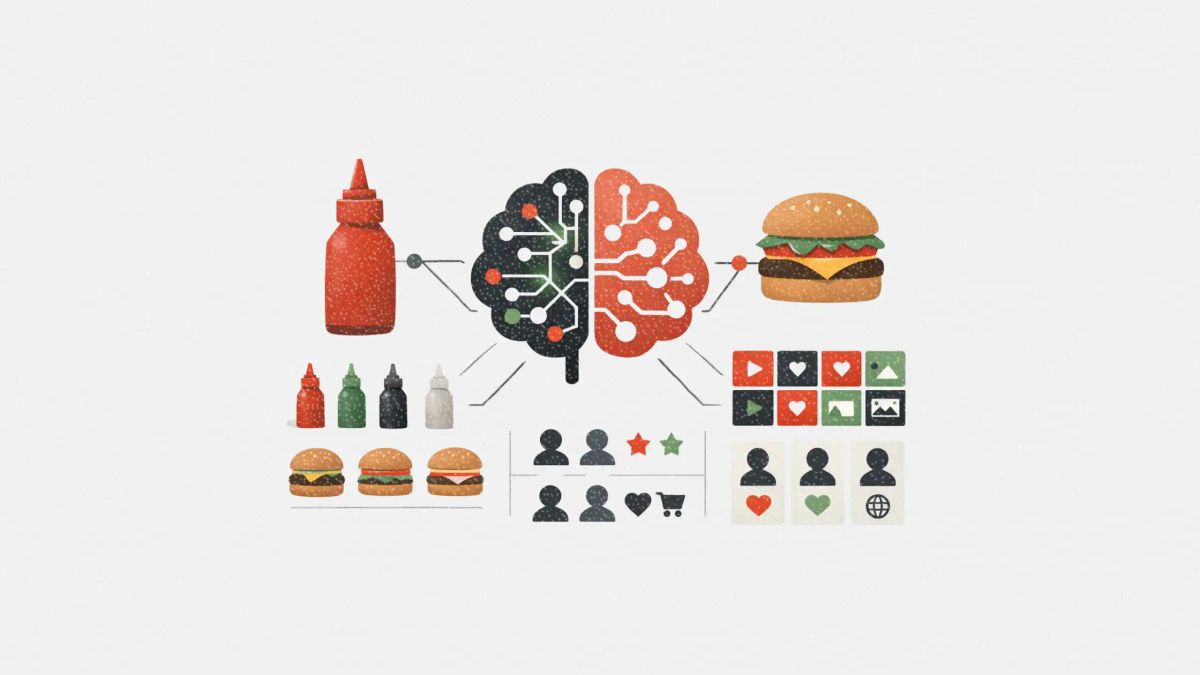
What marketers should know about scaling AI creator strategies
For marketers, this shift introduces both opportunity and pressure. The brands that adapt early will gain a structural advantage, while others risk falling behind quickly.
Here are the key considerations:
1. Creative becomes a system, not an asset
Marketers need to move from producing individual campaigns to building pipelines that generate, test, and iterate creatives continuously.
2. Personalization becomes the default expectation
Broad messaging will struggle to compete against highly targeted, AI-generated content tailored to individual preferences.
3. Speed outpaces traditional workflows
AI creator systems can produce and deploy content at a pace that human teams cannot match, forcing a rethink of approval cycles and production processes.
4. Platform integration matters
As Liberman notes, being part of platforms like Google’s ad ecosystem enables automation across text, image, and video. This integration will be critical for scaling effectively.
5. Relevance window is shrinking
Brands that fail to adopt scalable, personalized content strategies may lose visibility faster than expected. As Liberman puts it, brands not building for this future "won't be relevant in less than two years."
Patrecia Meliana
The rise of AI creators signals a fundamental shift in how marketing content is produced, distributed, and optimized. What used to be a resource-intensive process is becoming automated, scalable, and deeply personalized.
For B2B marketers and PR professionals, the takeaway is clear. The competitive edge is moving away from who can produce the best single campaign and toward who can build the most effective content systems.
The question is no longer whether AI will play a role in creator marketing. It is how quickly teams can adapt to a world where scale and personalization are no longer trade-offs but expectations.