AI-generated music in ads: where consumers accept it and where they push back
Adobe Express research reveals how AI-generated music affects brand perception, ethics concerns, and purchase decisions

AI-generated music is quickly becoming part of modern advertising workflows. Brands can now create original soundtracks instantly, reducing the need for studio production, licensing negotiations, or custom compositions.
But how do audiences feel about hearing AI-created music in ads?
A new Adobe Express survey of 850 consumers and 205 marketers sheds light on consumer attitudes toward AI-generated music and how it affects brand perception, trust, and purchase intent.
This article explores how audiences react to AI music in advertising and what the findings mean for marketing teams experimenting with synthetic audio.
Short on time?
Here’s a table of contents for quick access:
- Why marketers are adopting AI-generated music
- How consumers perceive AI-generated music in advertising
- Where AI-generated music is most acceptable in advertising
- What marketers should know before using AI music
 Patrecia Meliana
Why marketers are adopting AI-generated music
For marketing teams, AI-generated music offers a practical advantage: speed and efficiency.
Adobe’s survey found that 49% of marketers say faster production turnaround is the biggest advantage of AI audio tools. Another 41% cited cost savings on talent or studio time.
Other benefits include:
- Ability to create multiple voice or music variants quickly
- Greater control over tone and emotional style
- Easier localization for global campaigns
These capabilities make AI audio especially appealing for content-heavy environments such as social media advertising and short-form video campaigns.
Patrecia Meliana
How consumers perceive AI-generated music in advertising
Consumer reactions to AI-generated music are mixed.
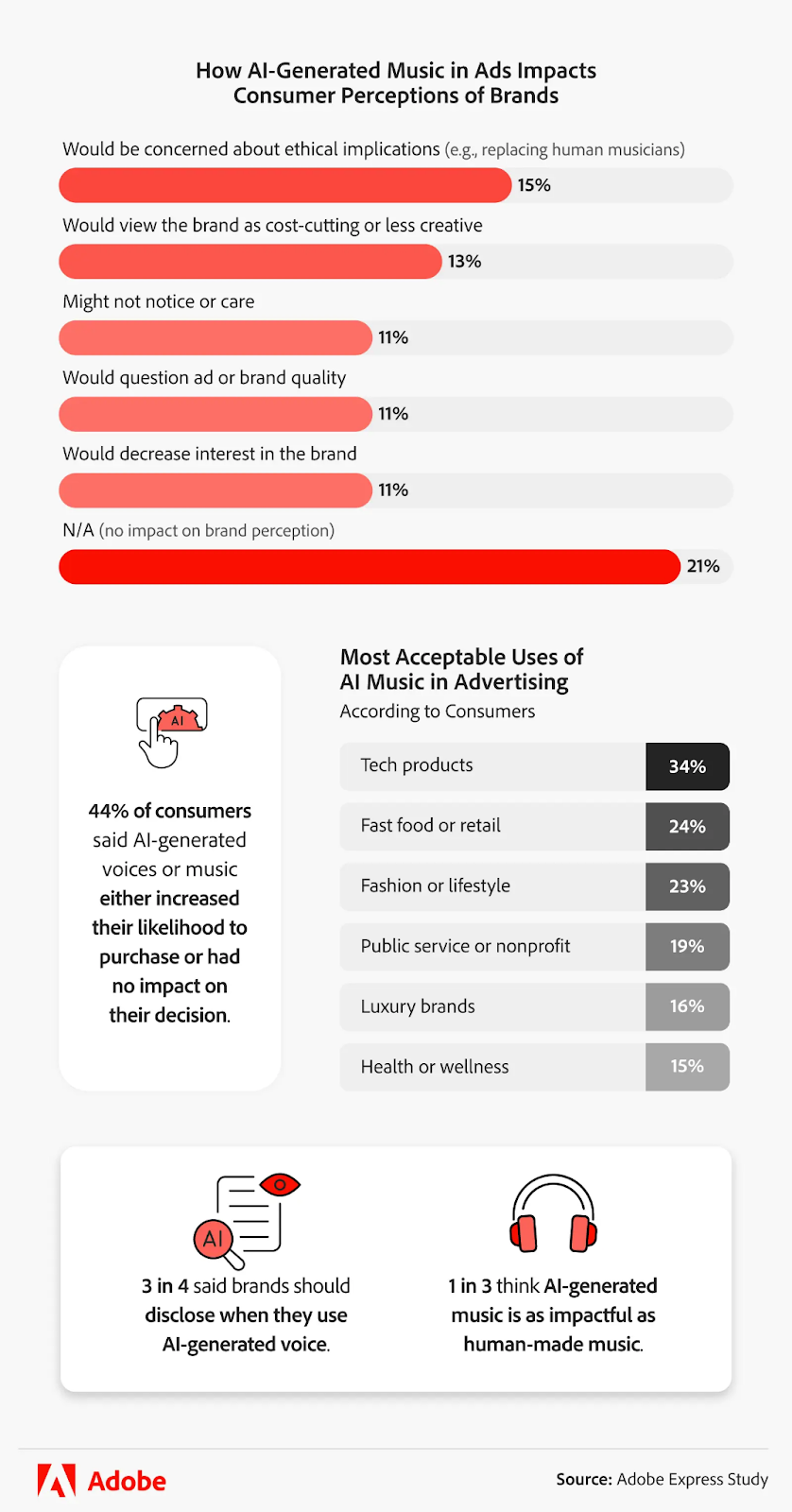
Some respondents expressed concerns about the broader implications of replacing human musicians. According to the survey:
- 15% worry about ethical implications
- 13% believe brands are using AI music primarily to cut costs
Others question how it affects brand quality.
About 11% said they might question the quality of the ad or brand, while another 11% said it could reduce their interest in the brand.
Despite these concerns, the impact on purchasing behavior is less dramatic.
44% of consumers said AI-generated voice or music either increased their likelihood of buying or had no impact on their purchase decision.
This suggests that while AI audio may raise questions about brand values, it does not always translate into lost sales.
Where AI-generated music is most acceptable in advertising
Acceptance of AI music varies by industry.
Consumers were most comfortable hearing AI-generated music in ads for:
- Technology products: 34%
- Fast food or retail brands: 24%
- Fashion or lifestyle brands: 23%
- Public service campaigns or nonprofits: 19%
Acceptance was lower in categories where emotional storytelling or prestige are central.
For example:
- Luxury brands: 16%
- Health or wellness campaigns: 15%
These patterns indicate that audiences may tolerate AI music more in functional or high-volume advertising categories, while expecting more traditional creative approaches from premium or emotionally driven brands.
What marketers should know before using AI music
The survey results highlight several considerations for brands exploring AI-generated music.
1. Disclosure is increasingly expected
Nearly three in four consumers believe brands should disclose when AI-generated voice or music is used in marketing content.
Transparency may become essential as audiences grow more aware of AI-created media.
2. Brand perception can shift
When consumers hear AI-generated music in ads, some interpret it as a signal of cost-cutting rather than creativity. This perception may influence how audiences judge brand quality.
3. Efficiency remains a strong motivator
Despite these concerns, marketers continue to adopt AI audio tools because they simplify production and allow faster experimentation with creative formats.
For many teams, AI music is less about replacing composers and more about enabling rapid iteration in modern content workflows.
AI-generated music is beginning to reshape the sound of advertising. For marketers, it offers faster production, lower costs, and greater creative flexibility. But consumer attitudes show that the transition is still evolving. Ethical concerns, assumptions about cost-cutting, and expectations around disclosure all influence how audiences interpret AI-generated audio.
As brands experiment with synthetic music, success may depend less on the technology itself and more on how transparently and thoughtfully it is used.