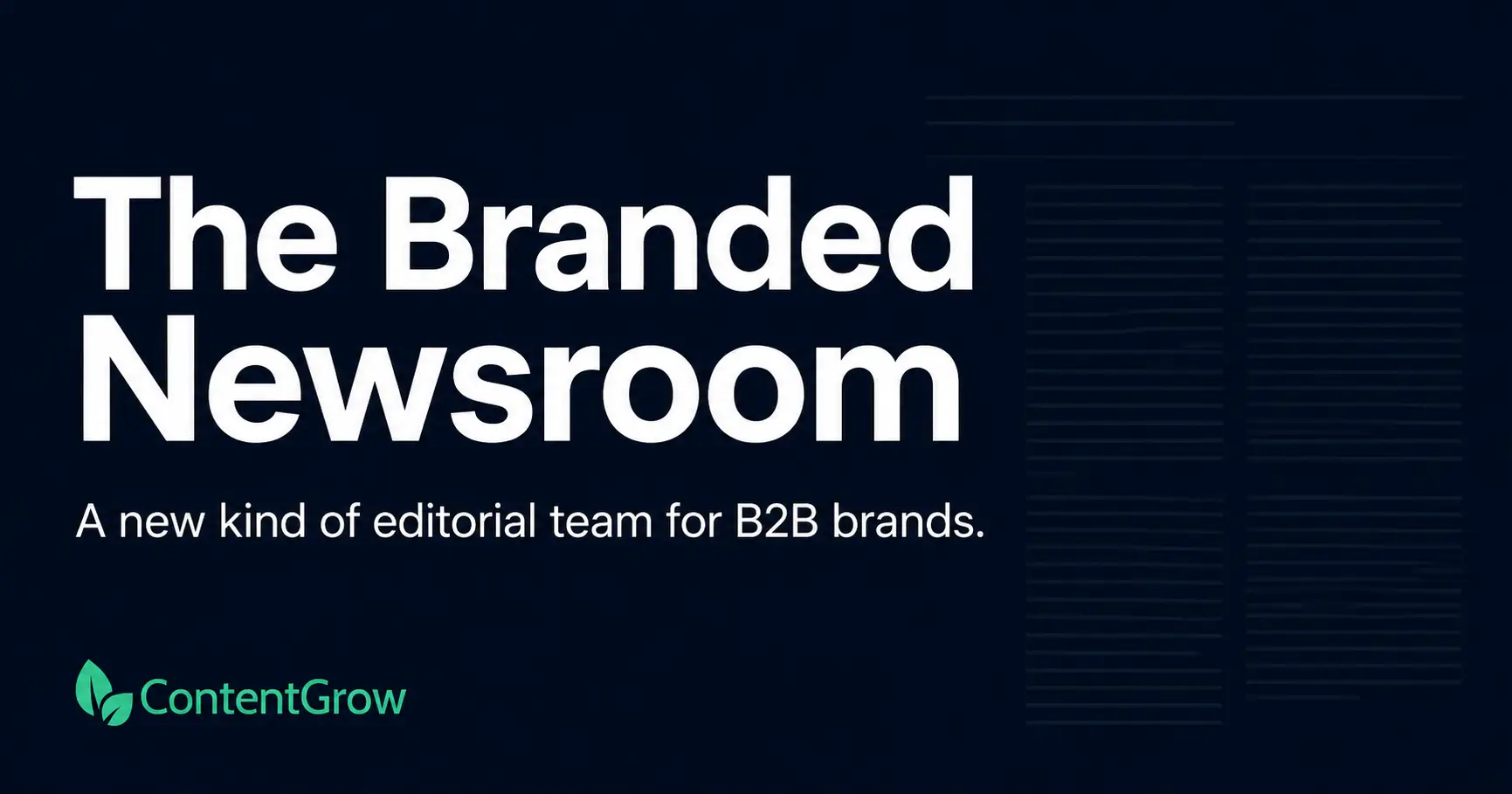
AnyMind's Singapore chief on making live commerce AI work
AnyMind Singapore Country Manager Toh Yi Hui explains how AI, human hosts and local data can turn livestream engagement into sales.

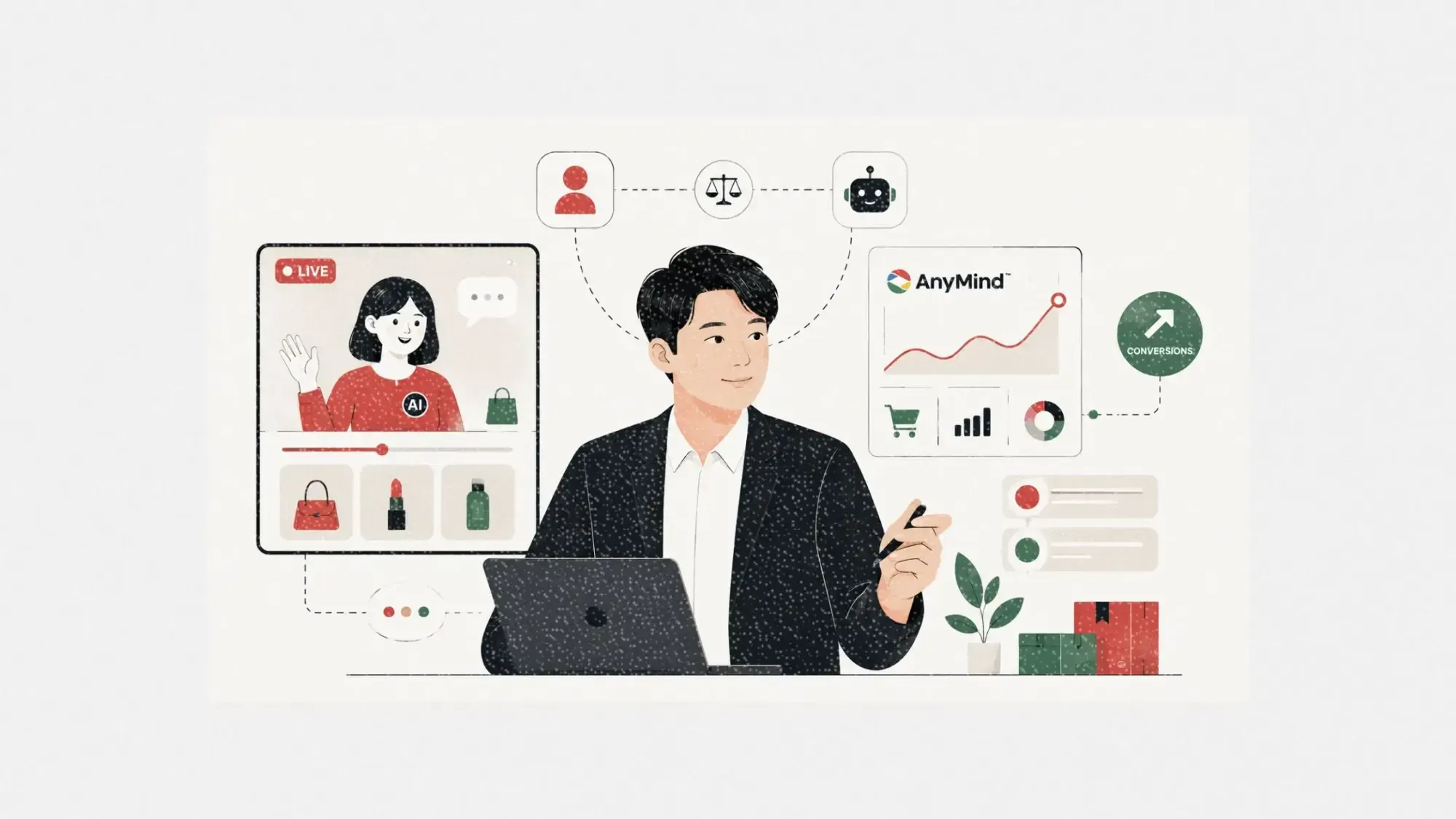
Live commerce is supposed to make online shopping feel human. Yet the more hours a brand wants to stream, the harder and more expensive it becomes to keep a human on screen. Automation solves the coverage problem, but it can also strip away the rapport that makes the format persuasive.
The stakes are growing. DBS estimated Singapore's live commerce market could generate up to US$1.3 billion in sales in 2025, equivalent to about 40% of the country's social commerce market. For brands, the question is no longer whether to try livestream selling. It is how to add hours without confusing activity with commercial progress.
Toh Yi Hui, Country Manager for Singapore at AnyMind Group, a business-process-as-a-service company spanning marketing, ecommerce and digital transformation, has spent years working through that question directly, leading the Singapore business and operations since 2023.
Earlier this month, AnyMind announced that it had been recognized as a Shopee-Certified Enabler in the Engagement category for Q2 2026 in Singapore. The recognition covers work across livestreaming, content management and campaign management. It also provides the backdrop for a larger operating question: where should AI take over, and where should people remain in charge?
In an email interview with ContentGrip, Yi Hui explained why his answer begins with workflow design, not an avatar.
Table of contents
Jump to each section:
- Automate the work behind the stream
- Use scale to learn, not just to broadcast
- Give humans the moments that need rapport
- Connect the funnel before optimizing it
- Local value beats a regional template
Automate the work behind the stream
AnyMind's most consequential change in Singapore happened away from the camera. The team connected its AnyX ecommerce management platform to AnyAI Agent, an enterprise system designed to execute and optimize marketing and ecommerce workflows. That meant repetitive work such as setting promotions across campaigns and preparing reports could move out of employees' daily queues.
Yi Hui says the redesign reduced the man-hours spent on promotion setup and manual reporting by 80%. AnyMind also attributes double-digit gross merchandise value growth among managed brands to the extra bandwidth it created for campaign optimization and strategic work. These are company-reported outcomes, not independently audited figures, but they show what the team chose to measure: time returned to operators and commercial movement after that time was reassigned.
Generative output is only one part of AI adoption. A livestream avatar may be the most visible application, but automating a weak workflow simply makes the weakness run faster. AnyMind's sequence was to remove high-frequency operational work first, then direct people toward planning and analysis.
 Patrecia Meliana
Use scale to learn, not just to broadcast
The same logic shaped the team's response when a Shopee campaign attracted attention without producing enough evidence about sales. "Engagement was strong early on, but we couldn't gather enough data to see whether views were driving sales," Yi Hui says. Extending human-hosted sessions would have produced more observations, but the cost made that approach difficult to scale.
The team used AnyLive's AI hosts to run more sessions at lower cost. The extra hours became a research surface. Operators could compare peak engagement and purchase times, study questions in the comments and see how viewers moved from watching to buying.
Those signals led the team to revise product bundles, promotions, product lineups and scripts around viewer intent. Yi Hui says AI-powered streams now contribute about 15% to 20% of one store's monthly GMV while maintaining what he describes as a sustainable return on investment. The figure is a company claim, but the mechanism is more instructive than the percentage: cheaper coverage created more data, and the data changed the offer.
Scale, in this model, is useful only when it shortens the distance between a signal and a decision. More broadcast hours are an input. The outcome depends on whether the team can turn what viewers do and ask into a different commercial action.
Give humans the moments that need rapport
Automation does not make every livestream slot interchangeable. Yi Hui says smaller consumer electronics such as phones and tablets can perform in both human-led and AI-led sessions. During high-traffic campaign periods, however, he favors human hosts because immediate connection and real-time rapport can be critical to conversion.
He sees a different role for AI with televisions and monitors. These larger, higher-consideration products often require structured explanations of features and specifications. AI avatars can repeat that educational work during off-peak hours without the studio and staffing constraints of a human-led production.
This division is already being tested at regional scale. In April 2026, AnyMind said Samsung would add 4,450 livestream hours per month across eight markets through AnyLive. The deployment combined Shopee, TikTok and brand-owned channels in Southeast Asia with AI avatars on Samsung's sites in Australia and New Zealand.
The useful boundary is not human versus machine. It is improvisation versus repetition. Peak moments, emotional selling and unpredictable audience exchanges favor people. Repeatable product education and off-peak coverage give AI a clearer advantage.
 Ariana Sorensen
Connect the funnel before optimizing it
Live commerce can become an isolated production task: choose a host, write a script, schedule a session and count views. Yi Hui describes a wider chain in which each decision informs the next.
The process begins with AnyAI combining information from AnyMind's platforms and verified third-party data to identify consumer behavior, market trends, category entry points and the jobs a customer is trying to accomplish. AnyTag then helps the team identify creators whose audience and past performance fit the campaign. AnyX adds store, product and historical promotion data so operators can shape bundles and offers.
Once a campaign is live, AnyAI monitors performance and feeds adjustments back into product lineups and creative scripts. "By integrating these platforms, data flows naturally across every phase of the campaign rather than getting stuck in silos," Yi Hui says.
That sounds straightforward, but it introduces a complication. A connected stack can accelerate decisions only if teams agree on which signals matter and who can act on them. Otherwise, an end-to-end platform becomes another dashboard. The Singapore workflow works as described because the team paired access to data with permission to change promotions, lineups and scripts while the campaign was still active.
Local value beats a regional template
The final constraint is local behavior. Singapore shoppers may look for promotions, but Yi Hui says discount depth alone is an incomplete reading of the market. "They are happy to pay a premium as long as the value is clear."
For some skincare campaigns, the team created bundles around specific local concerns. It also used surprise blind-box gifts with purchase to create interest without relying entirely on lower prices. Premium-feel visual assets helped brands emphasize quality and work toward higher average order values rather than entering a price war.
This is where automation meets its limit. AI can extend hours, assemble analysis and make repeatable tasks cheaper. It cannot make a regional playbook locally relevant without people choosing which signals deserve attention and what value should look like in that market.
Yi Hui has a fitting habit outside work: sea kayaking. "You're constantly reading the waters and testing your limits," he says. Live commerce calls for the same vigilance. The advantage does not come from putting every stream on autopilot. It comes from building an operation that can keep reading the conditions, then decide when to automate, when to adapt and when a person needs to take the lead.