
Alexa+ turns Echo Show into a full-screen AI shopping hub for Amazon
Amazon’s upgraded Alexa+ shopping experience could change how consumers discover products and how brands compete inside AI-powered retail ecosystems.

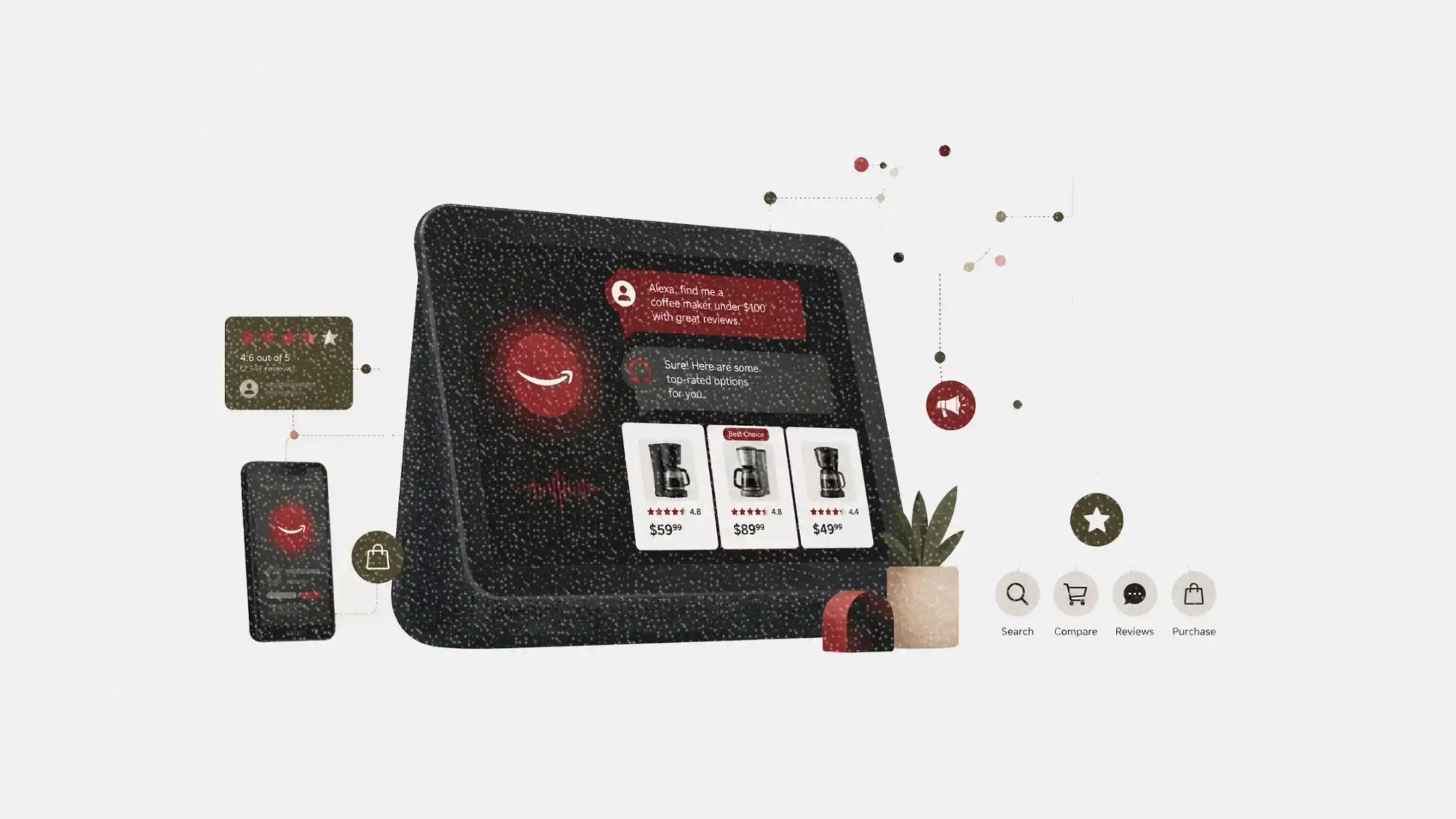
Amazon is bringing a major upgrade to Echo Show devices with a new visual shopping experience powered by Alexa+. The update transforms Echo Show from a voice-first smart display into a more complete ecommerce interface that mirrors the Amazon website and mobile app, while layering in conversational AI capabilities for product discovery, comparison, and purchasing.
The rollout signals something bigger than a UI refresh. Amazon is positioning Alexa+ as an AI shopping assistant that blends voice interaction, personalization, and transaction capabilities into one connected experience. For marketers and ecommerce advertisers, this could reshape how product discovery, sponsored placements, and retail media evolve inside Amazon’s ecosystem.
The move also shows how Amazon is merging conversational AI directly into commerce workflows. Instead of treating AI chat as a separate feature, Alexa+ becomes the shopping interface itself, replacing the older Rufus assistant experience with a more embedded, cross-device retail assistant.
Table of contents
Jump to each section:
- How Alexa+ changes shopping on Echo Show
- Why Amazon is merging Alexa and Rufus into one AI shopping assistant
- What marketers should know about Amazon’s AI shopping push
- How AI shopping assistants could reshape ecommerce advertising
- What this means for brands using Amazon retail media
 Patrecia Meliana
How Alexa+ changes shopping on Echo Show
Starting May 13, Amazon began rolling out a redesigned shopping interface for Alexa+ users on Echo Show 15 and Echo Show 21 devices. The experience gives users access to the full Amazon shopping environment directly on Echo Show screens, including:
- Product search and filtering
- Product detail pages
- Customer reviews and photos
- Deal alerts
- Auto-purchase setup
- Cart and checkout management
- Delivery and payment settings
The interface closely mirrors Amazon’s website and mobile app, but it is optimized for larger screens and hybrid voice-touch interaction.
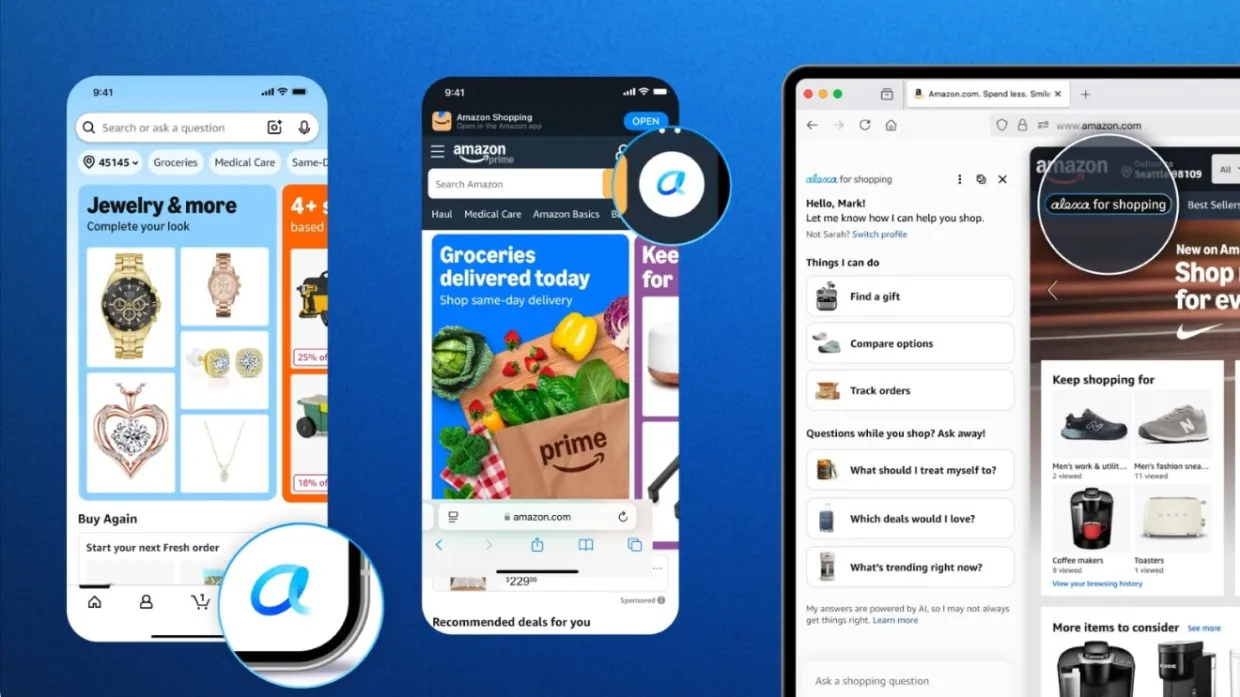
Users can browse products visually while asking Alexa+ follow-up questions conversationally. For example, shoppers can compare products, ask for review summaries, check delivery timing, or request recommendations without manually typing complex search terms.
Amazon says customers using Alexa+ on Echo Show devices are already completing purchases at three times the rate of the original Alexa experience, suggesting the company is seeing stronger transaction intent when combining conversational AI with visual browsing.
The upgrade also reinforces Amazon’s long-term ambition to make Alexa more proactive and context-aware. Alexa+ remembers preferences, shopping behavior, and prior interactions across devices, allowing users to continue shopping sessions between Echo Show, mobile apps, and Amazon’s website.
Why Amazon is merging Alexa and Rufus into one AI shopping assistant
Amazon’s broader AI commerce strategy is becoming clearer with the integration of Rufus into Alexa for Shopping.
Rufus originally launched as a standalone generative AI shopping assistant inside Amazon’s apps and desktop experience. Rather than remaining a separate chatbot, its capabilities are now being folded into Alexa+, creating a unified AI shopping layer across Amazon properties.
The combined assistant can:
- Generate shopping guides
- Recommend products based on shopping history
- Track prices
- Automate recurring purchases
- Answer product comparison questions
- Surface personalized suggestions
Importantly, Alexa for Shopping is integrated directly into Amazon’s search experience instead of operating as an isolated chatbot window. That changes how users interact with ecommerce discovery.
This matters because conversational commerce historically struggled with friction. Separate chatbot interfaces often interrupted browsing behavior instead of enhancing it. Amazon appears to be solving this by embedding AI directly into the retail journey itself.
For marketers, this creates a new hybrid environment where traditional search optimization, retail media advertising, conversational prompts, and recommendation algorithms may increasingly overlap.
What marketers should know about Amazon's AI shopping push
Amazon’s update is not just about convenience. It has implications for ecommerce visibility, retail advertising, and product discovery.
Here are the biggest shifts marketers should watch:
1. AI-assisted discovery may reduce traditional keyword dependence
Consumers may rely less on typing exact product names and more on natural-language prompts like:
- “Find a rain jacket under US$100 with the best reviews”
- “Show me espresso machines good for small kitchens”
- “Which protein powder has the cleanest ingredients?”
That could gradually shift optimization priorities from exact-match keywords toward richer product metadata, stronger review signals, and contextual relevance.
2. Reviews and structured product data become even more valuable
Alexa+ actively references reviews, ratings, and product attributes when answering questions or comparing products.
Brands with weak review quality, inconsistent listings, or incomplete product information may struggle in AI-assisted recommendations.
3. Conversational retail media could emerge
If Alexa+ becomes a primary shopping interface, sponsored placements may evolve beyond static ads into conversational recommendations.
Amazon already dominates retail media advertising. AI-powered shopping assistants could expand that influence by inserting sponsored recommendations directly into product conversations.
4. Cross-device continuity strengthens Amazon’s ecosystem lock-in
Amazon is creating a seamless commerce flow between Echo devices, mobile apps, and desktop experiences.
That continuity increases customer retention while keeping product discovery, research, and purchasing inside Amazon’s ecosystem instead of external search engines or social commerce platforms.
How AI shopping assistants could reshape ecommerce advertising
The bigger story here is that Amazon may be accelerating the transition from search-based ecommerce to assistant-led commerce.
Traditional ecommerce relies heavily on users manually browsing, filtering, and comparing listings. AI assistants compress that process into summarized recommendations and guided decision-making.
That changes several dynamics:
- Visibility may increasingly depend on recommendation algorithms instead of simple search ranking
- Brands may need to optimize for AI interpretation, not just SEO
- Conversational product discovery could reduce exposure to competitor listings
- Sponsored AI recommendations may become a premium advertising category
This is especially important as Google, OpenAI, Shopify, and Perplexity all push deeper into AI commerce experiences.
Amazon has one major advantage: transaction infrastructure. Unlike standalone AI assistants, Amazon controls the entire retail loop, including discovery, fulfillment, payments, and customer data.
That gives Alexa+ stronger personalization signals and stronger monetization opportunities than many competitors.
What this means for brands using Amazon retail media
For ecommerce and retail media teams, Amazon’s Alexa+ rollout should be treated as an early signal of interface change, not just a device update.
Brands should start preparing for:
- More conversational product discovery
- Increased reliance on review quality and structured data
- AI-generated comparison experiences
- Potential new sponsored recommendation formats
- More contextual shopping journeys
Practical steps marketers can take now include:
- Audit Amazon product listings for completeness and clarity
- Improve review generation and customer feedback workflows
- Strengthen product attributes and structured metadata
- Test conversational-style copy in listings and FAQs
- Monitor how AI assistants summarize or compare products
The rise of AI shopping assistants may also increase pressure on brands to own stronger first-party customer relationships outside marketplaces. If AI intermediaries increasingly control discovery, differentiation could become harder without distinct brand positioning and loyalty strategies.
For marketers, the implications extend beyond hardware. Amazon is testing how AI can influence discovery, recommendations, advertising, and purchasing behavior inside one tightly integrated retail ecosystem.