Anthropic’s refusal strategy: the brand play inside the Pentagon AI clash
As OpenAI signs a classified Department of War deal, Anthropic reframes constraint as competitive advantage

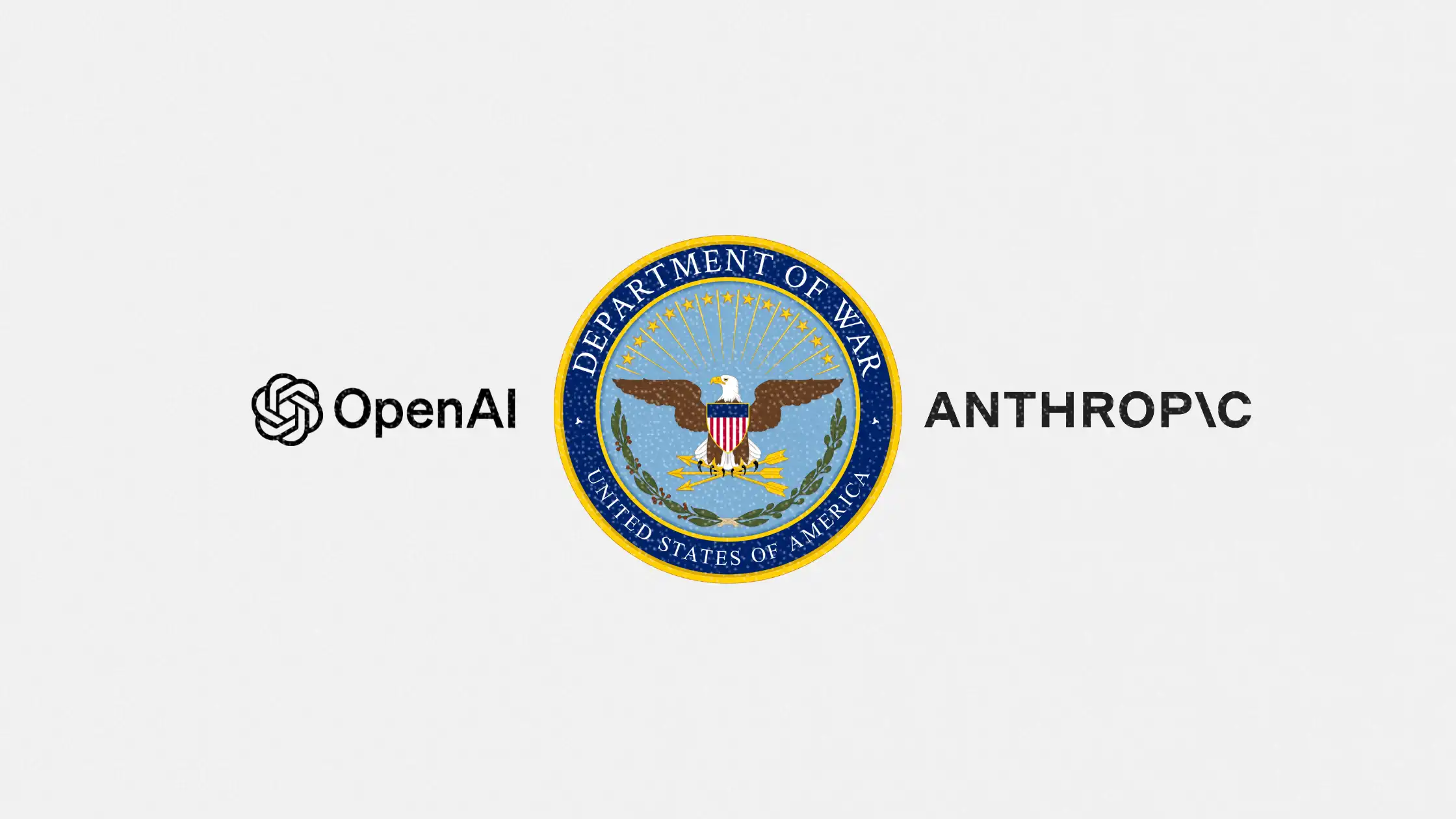
OpenAI signing a classified Department of War deal is the headline, but Anthropic refusing similar terms is the real strategic story.
For marketers and PR leaders, the Pentagon contract matters. These Department of War AI agreements have been reported as worth up to US$200 million each, placing them among the most high-profile and financially significant enterprise AI deployments to date.
But the sharper lesson sits in a single sentence from Anthropic CEO Dario Amodei:
“We cannot in good conscience accede to their request.”
This article reframes the Pentagon clash as something more relevant to ContentGrip readers: a brand architecture decision in public view, and a reminder that in the AI race, refusal can be a strategy.
Short on time?
Here’s a table of contents for quick access:
- What actually happened between OpenAI, Anthropic, and the Department of War
- Refusal as differentiation in a commoditizing AI market
- What marketers and PR teams should do now
 Patrecia Meliana
What actually happened between OpenAI, Anthropic, and the Department of War
According to Reuters, US President Donald Trump directed federal agencies to stop using Anthropic’s AI tools after negotiations broke down over guardrails tied to mass domestic surveillance and fully autonomous weapons. Defense Secretary Pete Hegseth said Anthropic would be deemed a “supply chain risk.”
Hours later, OpenAI CEO Sam Altman announced that OpenAI had signed its own agreement to deploy models within classified defense systems. OpenAI stated the contract embeds red lines, including prohibitions on domestic mass surveillance and requirements for human responsibility in the use of force.
Tonight, we reached an agreement with the Department of War to deploy our models in their classified network.
— Sam Altman (@sama) February 28, 2026
In all of our interactions, the DoW displayed a deep respect for safety and a desire to partner to achieve the best possible outcome.
AI safety and wide distribution of…
On paper, both companies claim guardrails. In practice, one proceeded under a framework that includes “all lawful purposes” language, while the other walked away when categorical exclusions were not guaranteed. That divergence is where the marketing story begins.
Anthropic’s official statement makes that positioning explicit. It framed the company as pro-defense and already active in classified contexts, but drew two explicit boundaries: no mass domestic surveillance and no fully autonomous weapons powered by today’s frontier AI systems.
Then came the line that will outlive the news cycle:
“We cannot in good conscience accede to their request.”
That sentence does three things at once:
- It reinforces Anthropic’s founding narrative around AI safety.
- It differentiates the company from OpenAI without naming it as reckless.
- It signals moral consistency to regulators, employees, and enterprise buyers.
This is not campaign messaging. It is category-level identity work.
Refusal as differentiation in a commoditizing AI market
The AI model layer is rapidly becoming infrastructure. Performance gaps narrow. APIs look similar. Enterprise buyers compare latency, price, and integration support.
In that environment, differentiation shifts from capability to philosophy.
Anthropic has consistently positioned itself as safety-first and constraint-driven. Its stance in the Department of War dispute extends that narrative. It reinforces an identity of being willing to forego revenue rather than remove guardrails.
When paired with broader public perception, including backlash against OpenAI following their Pentagon agreement announcement and rising rankings of Claude in the app store, the refusal becomes more than a moral stance. It becomes a competitive signal.
This is where the earlier criticism around growth tactics and aggressive expansion strategies across the AI market becomes context, not gossip. Anthropic is shaping a contrast: not growth at all costs, not compromise for access, not flexible on core red lines.
Whether that posture scales is another question. But as positioning, it is coherent.
What marketers and PR teams should do now
This is the moment where positioning stops being theoretical. Whether you side with OpenAI’s access strategy or Anthropic’s refusal strategy, the takeaway for marketing and communications leaders is clear: policy posture is now part of brand strategy.
1. Constraint can be a growth narrative
In saturated markets, “we can do anything” is weak positioning. “Here is what we will not do” is sharper. Anthropic is betting that clearly defined limits will resonate with enterprise buyers navigating regulatory risk and public scrutiny.
If your brand operates in AI, data, or automation, defining red lines publicly may be more powerful than publishing another feature roadmap.
2. Values only work if they cost you something
Anthropic’s stance is credible because it appears to carry financial and political consequences. That makes the positioning believable.
Marketers should ask: where are our values visible in action, not just messaging? If a value has never constrained a revenue opportunity, stakeholders may see it as ornamental.
3. Brand architecture now includes policy posture
In frontier AI, policy positions are no longer side notes. They are brand assets or brand liabilities.
This shifts “AI safety” from a product FAQ to a reputational dependency. Marketing and communications leaders need alignment with legal and policy teams before controversy hits.
4. Refusal travels
The most quoted line in this cycle was not a contract clause. It was a refusal. Clear, principled language spreads faster than technical detail.
If you want to influence narrative, define your boundaries in plain language. Anthropic did not have to make that refusal public. It could have negotiated quietly and moved on. Instead, it chose to say no in full view.
The longer-term question in this story is not who supplies AI to classified defense systems. It is who gets to define lawful use, and how much discretion a company is willing to give up for scale.
OpenAI chose access with guardrails it says are enforceable. Anthropic chose refusal where it says guardrails were insufficient. For ContentGrip readers, the lesson is not to pick a side. It is to recognize the strategic move.
In a market obsessed with scale and access, Anthropic is betting that saying no can be a growth strategy. That is not a policy debate. It is a brand architecture decision playing out in public.