
APAC marketers say human connection matters more as AI content floods the market
The conversation around AI is shifting from content volume to authenticity, trust, and business outcomes.

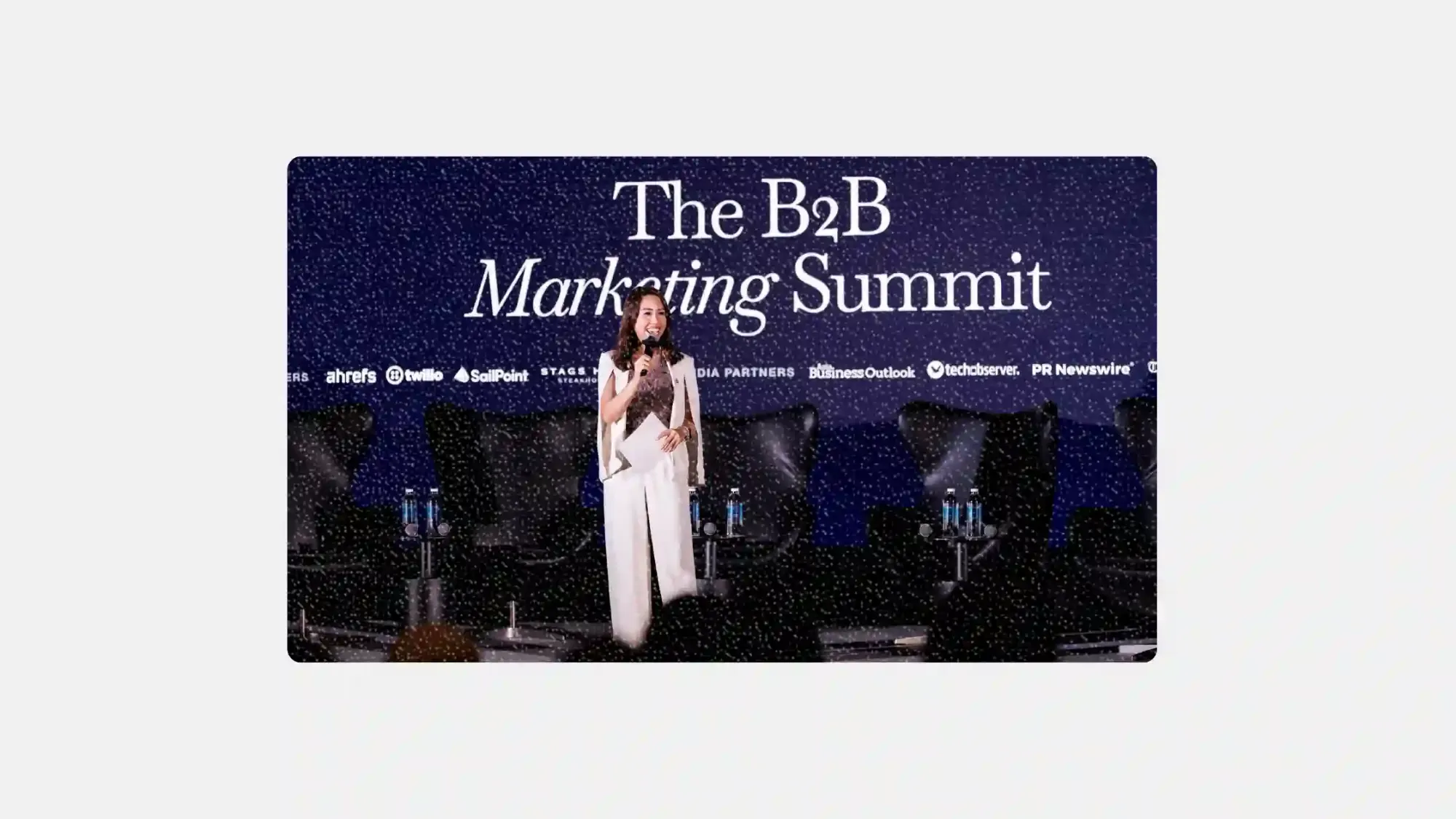
Artificial intelligence dominated conversations at The Ortus Club’s B2B Marketing Summit in Singapore, but not in the way many might expect. Instead of focusing on AI hype, many of APAC’s senior B2B marketers spent their time discussing the limits of automation and the growing value of authentic human perspectives.
Held at Marina Bay Sands on April 23, the event brought together more than 200 senior marketing leaders from organizations including Google, Canva, NVIDIA, Meta, AWS, Visa, Adobe, Twilio, Ahrefs, Airwallex, Zendesk, and Kyriba.
The discussions revealed a more nuanced view of AI adoption: marketers are embracing AI for efficiency, but many believe genuine human connection is becoming an even greater competitive advantage.
Table of contents
Jump to each section:
- What happened at The B2B Marketing Summit?
- Why marketers are questioning the AI productivity race
- What marketers should know about balancing AI and authenticity
- What this means for B2B marketing leaders
 Patrecia Meliana
What happened at The B2B Marketing Summit?
The Ortus Club's B2B Marketing Summit brought together more than 200 senior marketing leaders from across APAC for a full day of peer-led discussions focused on the future of B2B marketing. While AI featured prominently throughout the event, the conversation was notably practical rather than speculative.
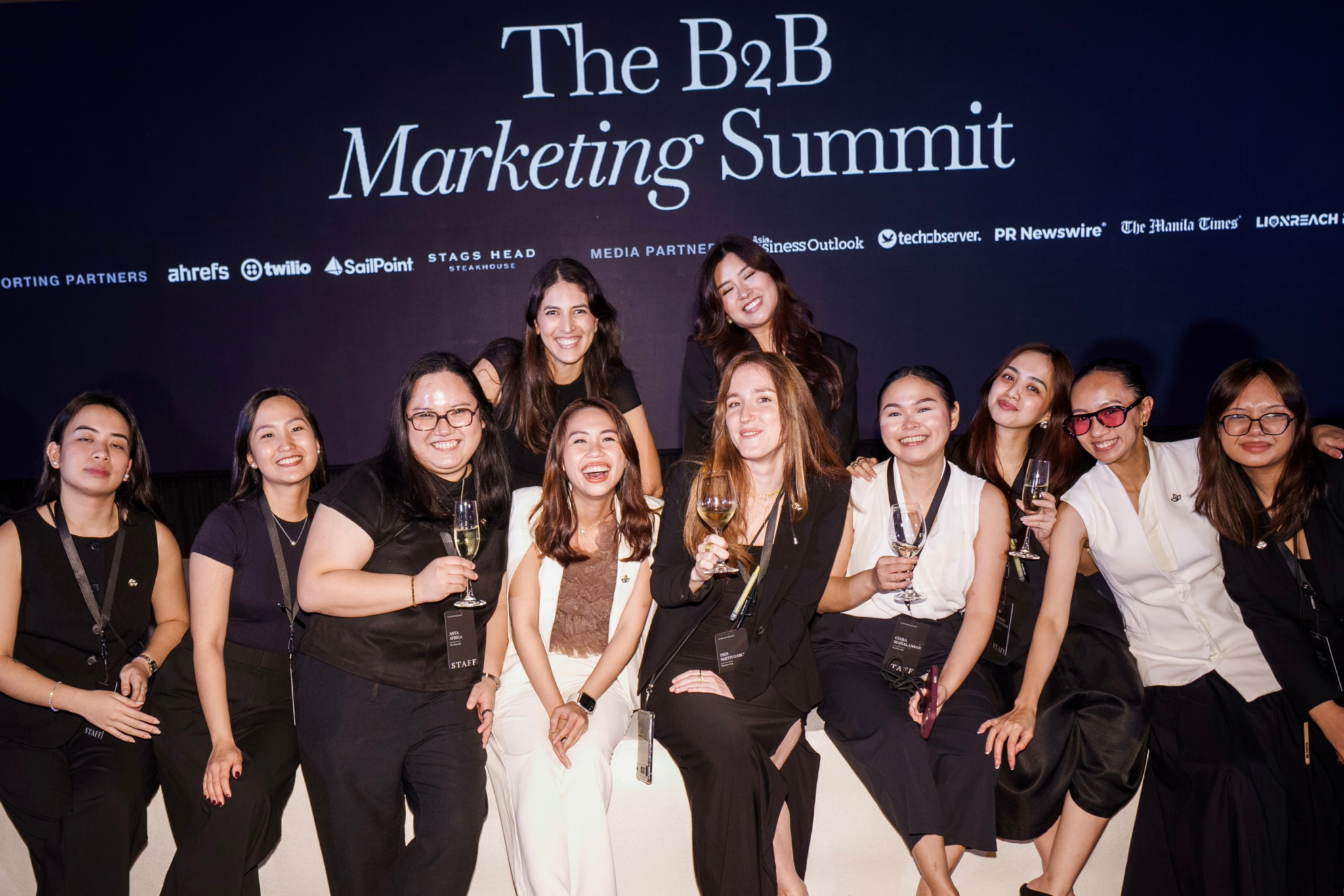
Behind the summit was an all-female team responsible for every layer of the experience, from audience curation and sponsor partnerships to logistics, production, content capture, and on-the-ground execution. The detail matters because it reinforces one of the event’s sharper takeaways: even in an AI-heavy marketing era, high-value B2B experiences still depend on human coordination, judgment, and trust.
The summit also offered a look at the operational side of executive events that audiences rarely see, including months of relationship building, delegate acquisition, strategic matchmaking, and real-time problem solving required to make a gathering of this scale feel effortless.
One of the standout themes was the increasing importance of authentic human perspectives in a market saturated with AI-generated content.
Nicholas Braman, marketing director APJ at Kyriba, highlighted this shift: “The value of the human voice, and not the polished content, but the off-the-cuff content, people speaking their opinions, real things that cannot be replicated by AI, becomes even more valuable.”
Braman also noted that one reason he attended the event was to have conversations with real people rather than AI assistants, adding that it was reassuring to discover peers facing many of the same challenges.
Why marketers are questioning the AI productivity race
The discussion also challenged one of the most common assumptions surrounding AI adoption: that success should be measured by output volume.
Marina Snegirjova, head of field and partner marketing for Asia and India at Zendesk, argued that marketers should avoid treating AI as a mandate for producing more content.
According to Snegirjova, increased output has never been a reliable indicator of marketing success. Instead, marketers should focus on business outcomes such as pipeline generation, customer engagement, and revenue impact.
At the same time, she shared a practical example of AI delivering measurable value. Zendesk reportedly trained AI systems using existing customer stories written and edited according to the company's brand voice. In blind testing with employees and customers, many participants preferred the AI-assisted versions.
The takeaway was not that AI replaces marketers. Rather, AI performs best when guided by strong human inputs, clear brand standards, and strategic oversight.
What marketers should know about balancing AI and authenticity
The summit conversations highlighted several practical lessons for B2B marketers:
1. Use AI to scale expertise, not replace it
Organizations seeing positive results are often feeding AI with proven customer stories, messaging frameworks, and brand-approved content rather than relying on generic prompts.
2. Invest more heavily in expert-led content
Several marketers discussed the growing effectiveness of content that captures real opinions, experiences, and expertise. This includes executive thought leadership, customer perspectives, and subject matter expert commentary.
3. Prioritize authentic video and social content
Zendesk has increasingly encouraged technical experts and sales leaders to create selfie-style LinkedIn videos and thought leadership posts. The reasoning is straightforward: when content volume explodes, authentic voices become easier to distinguish from the noise.
4. Measure outcomes, not output
The summit reinforced a growing industry shift away from content quantity metrics toward business impact metrics. AI should improve effectiveness, not simply increase activity levels.
 Patrecia Meliana
What this means for B2B marketing leaders
The discussions at The Ortus Club’s summit suggest several broader shifts happening across the industry:
- AI adoption is becoming more mature and pragmatic.
- Authentic human expertise is emerging as a stronger differentiator.
- Executive networking and peer communities remain highly valuable despite advances in AI.
- Thought leadership from employees and subject matter experts may become more important than highly polished corporate content.
- Marketing leaders are increasingly evaluating AI based on business outcomes rather than content production volume.
For B2B brands, the challenge is no longer whether to use AI. The challenge is how to combine AI-driven efficiency with genuine human insight.
The conversation at The Ortus Club’s B2B Marketing Summit revealed an important shift in how senior marketers think about AI. While automation is becoming a core part of modern marketing operations, many leaders believe the real differentiator will be authenticity, expertise, and human connection.
As AI-generated content becomes more common, marketers who amplify real voices, encourage meaningful conversations, and focus on business outcomes may be the ones who stand out.