
Canva's breakup ad makes a case for creativity in the AI era
Canva's new brand platform uses everyday humor to show why ownership still matters as AI makes creative production faster.


Canva has found a familiar use for a photo editor: removing an ex from a picture. In its new “Erase Your Ex” commercial, a woman deletes former boyfriends from her photos. Then one texts “I miss you,” and she immediately reaches for Undo.
The joke introduces the design platform's new North American campaign, “What Will You Canva Today?”, created with Goodby Silverstein & Partners. It replaces the longstanding homepage prompt “What will you design today?” with a broader invitation, one designed to cover far more than conventional graphic design.
There is an interesting tension behind the humor. Canva keeps expanding its AI-powered creative tools, yet the brand campaign argues that people still care about making something they can call their own. That makes this more than a software demonstration. It is a positioning exercise for a creative platform in the AI era.
Table of contents
Jump to each section:
- How the breakup ad makes editing the punchline
- Why Canva is selling ownership alongside AI
- Canva wants its name to mean more than design
- What marketers can learn from the campaign
How the breakup ad makes editing the punchline
The “Erase Your Ex” film uses the sort of decision that rarely makes it into a software ad. The lead character edits old relationships out of her photos, then reverses the choice when a message changes her mind. The product's Undo button becomes the punchline.
Editing is the mechanism of the joke, not the subject of the ad.
That distinction matters. Rather than asking people to admire a technical capability, Canva makes the feature useful inside a situation audiences can understand without a tutorial. The edit is quick, but the decision about what belongs in the image is human.
Two companion films extend that approach. In “New Drink,” a café team lands on a lavender latte and makes a promotional poster. In “Promposal,” a student keeps revising a dance invitation as the social situation changes. The common thread is not a particular editing tool. It is the ability to revise an idea as life unfolds.

Why Canva is selling ownership alongside AI
Canva describes pride as a pillar of the campaign, alongside product breadth and simplicity. In its announcement, the company explicitly contrasts personal creative ownership with an AI-generated world in which producing an image or design can happen almost instantly.
That message sits next to Canva's product direction. Canva AI 2.0 supports generating editable, multi-format creative work, including campaign materials. Its recently introduced Craft image model also emphasizes designs that can be modified instead of treated as finished, flattened outputs.
The apparent contradiction is the strategy. A platform can reduce the effort of production while still selling the satisfaction of making choices.
Canva is not arguing against AI in this campaign. It is trying to preserve a role for human intention as the tool does more of the technical work. The heroine's decision to restore the photo illustrates that difference particularly well: the software makes either outcome possible, but it cannot decide which relationship belongs in her story.
For marketers evaluating creative AI, that is an important positioning distinction. Speed and output volume describe how tools work. Ownership and personal relevance describe why someone might want to use them.
Canva wants its name to mean more than design
The new brand line is also a category-expansion move. “What will you design today?” suggests a familiar graphic-design task. “What Will You Canva Today?” invites the brand name to stand in for a much wider range of activities, from making invitations and promotional posters to editing video and publishing materials.
“So many people know and love Canva, but they may not know everything that’s possible on the platform today,” said Dana Marineau, Canva's chief marketing officer for North America, in the campaign announcement.
That awareness problem is different from a feature-discovery problem. A menu of capabilities could tell people what Canva offers. A sequence of recognizable situations tries to make those capabilities easier to imagine using.
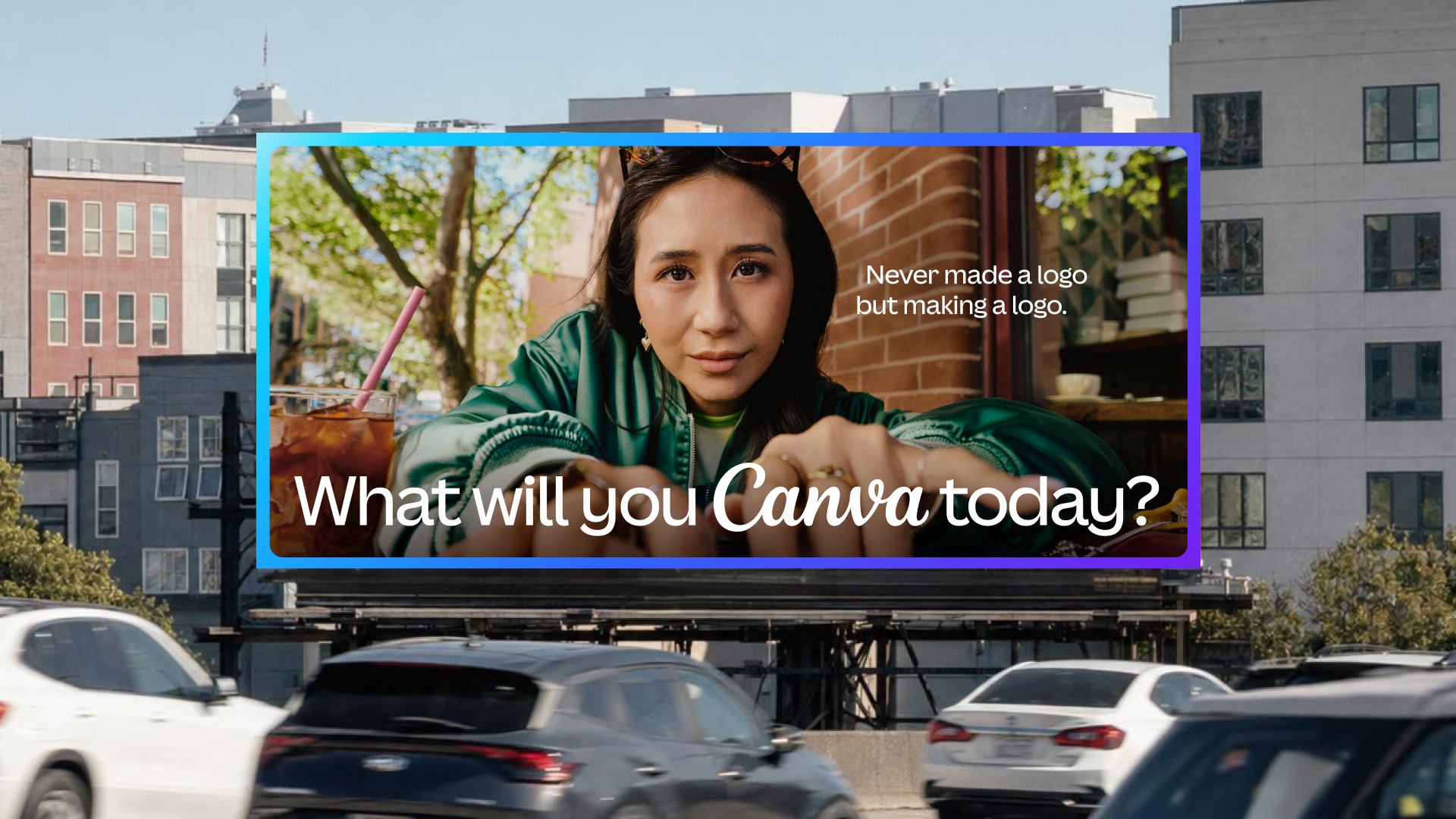
Canva is extending the positioning into outdoor and social creative centered on people visibly absorbed in making things. The advertisements show creators mid-task, not just polished finished assets. That choice reinforces the campaign's claim that the maker still matters.
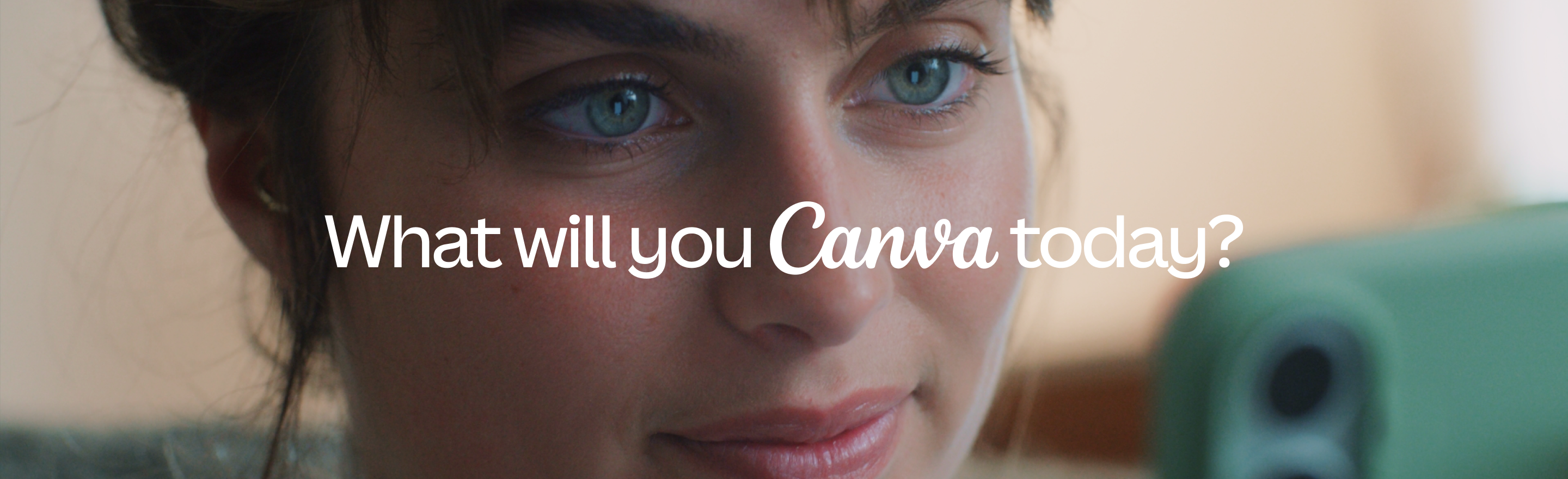
The bigger ambition is to make the name describe an outcome rather than a single feature. But a brand cannot become a verb through a slogan alone. The idea has to prove useful across enough everyday situations for audiences to adopt it.
What marketers can learn from the campaign
For marketing teams, the campaign offers a useful example of how a product story can carry a broader brand message without becoming a feature list.
Let the feature serve a story. The Undo button gives the breakup film its payoff. The product benefit is easy to understand because it changes what happens to a character.
Show different reasons to create. A romantic photo, a café poster and a dance invitation demonstrate range without presenting an exhaustive product catalog.
Keep human choices visible. Canva pairs an expanding AI toolkit with a message about creative intent. Brands selling automation can distinguish between reducing work and removing the person from the process.
Separate positioning from results. The campaign's strategic promise is clear, but the sources reviewed do not establish whether it improves adoption, repeat use or brand perception. Those remain outcomes to measure, not conclusions to assume.
There is a wider branding question here. As creative tools become better at generating acceptable first drafts, competing only on the speed of making content may be a less distinctive story.
Canva's campaign suggests another possibility: market the freedom to change your mind, revise an idea and recognize yourself in the finished work. In a market increasingly defined by what software can produce, the reason a person makes something may become a stronger message than the output itself.
