
Svedka turns AI ad backlash into a fan-created Super Bowl contest
Svedka's 2027 Super Bowl contest welcomes human and AI-made entries. The strategy puts audience creativity at the center of its response.


Svedka is asking people who criticized its AI-created Super Bowl commercial to try making a better one. The vodka brand's next appearance in the Big Game will feature a consumer-created ad, turning a contentious creative decision into the premise for a new campaign.
In its November 2 announcement, parent company Sazerac invited eligible US adults to submit original commercials for Svedka Vodka Water, a canned ready-to-drink product introduced earlier this year. The important detail is that entries can still use AI. Svedka is not rejecting the technology that drew criticism. It is changing who has a say in the creative.
Table of contents
Jump to each section:
- How the public will make the next commercial
- AI backlash becomes an invitation to participate
- Why the contest is not a rejection of AI
- What marketers should learn about creative control
How the public will make the next commercial
Entrants have to create a short commercial showcasing Svedka Vodka Water and submit it through the brand's contest site by December 1, 2026. The winning idea could become Svedka's national commercial during Super Bowl LXI on February 14, 2027. Participation is restricted to eligible US and Washington, DC residents aged 21 and older, and the brand says no purchase is necessary.
US$500,000 for a 15-second commercial. That is the single prize available to the selected creator, subject to the official rules and verification, according to Sazerac.
The company is providing a free digital toolkit with product imagery so creators can produce entries without purchasing the drink. Television host Andy Cohen will help evaluate submissions. The contest is also a product communication exercise: whichever production technique a creator chooses, the commercial must feature the newer Vodka Water line.
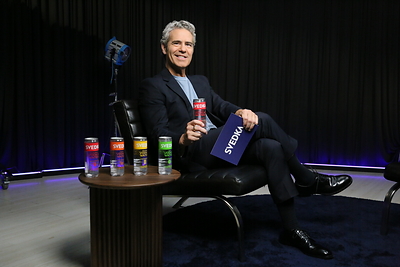
For the launch, Cohen interviewed the returning Svedbot mascot in a deliberately self-aware video about the response to the prior ad. The conversation addresses the awkwardness of the previous reception rather than pretending it never happened.

AI backlash becomes an invitation to participate
Svedka's 2026 Super Bowl debut took a different approach. The brand's in-house team worked with AI production studio Silverside on a national spot featuring its robot mascot. That campaign also involved fan participation through dance contributions associated with actress Victoria Justice, but the finished commercial was fundamentally controlled by the brand and its production partners.
This time, the criticism itself is part of the creative setup. Sazerac group president and chief marketing officer Sara Saunders acknowledged that the brand had heard from people who believed they could do better. In the announcement, she said, "We welcomed the debate."
Backlash can become a creative brief, but it does not automatically become a better ad.
There is a strategic difference between responding to negative feedback with a statement and inviting the critics to produce an alternative. The second approach gives the discussion another event to follow: submissions, judging and a possible winning commercial. It can extend the conversation beyond a single game-day appearance without promising that audiences will respond more positively.
The contest also helps Svedka keep its recognizable robot character in the story while shifting attention away from the question of whether the company relied too heavily on generative technology. The question becomes who can make the most entertaining commercial, rather than which creative software was used to produce it.
Why the contest is not a rejection of AI
A straightforward reading would be that Svedka tried AI, faced a backlash and decided to return to human-made advertising. The details do not support that conclusion. The official contest specifically welcomes AI-led submissions alongside low-budget, cinematic and other creative approaches.
Audience involvement does not make a campaign AI-free. It makes authorship more visible.
That distinction matters for marketing teams weighing efficiency against authenticity. A campaign can use generative tools but still give people meaningful authority over concepts, tone and execution. Conversely, a fully human-produced campaign can feel detached from its audience if the creative process leaves no room for their response.
There is a precedent for crowdsourcing a Super Bowl commercial. Doritos revived its Crash the Super Bowl contest for 2025, inviting fans to make their own ads years after establishing the format. Svedka is borrowing the participation mechanic, but the context is different. Its invitation follows a specific AI-produced commercial that polarized viewers, making the production method itself part of the public discussion.
The company has not provided entrant numbers, audience-sentiment results or evidence that the contest will improve sales. Sazerac has cited Nielsen data supporting a strong recent volume-growth claim for the brand, but that company-reported performance does not establish that either its previous AI commercial or this new contest caused the growth.
What marketers should learn about creative control
The value of this experiment is not limited to the eventual winning film. It is in how Svedka has separated creative tools from creative participation.
Give critics a role, not just a response. Svedka has turned the claim that consumers could make a better ad into an actual invitation, with a defined brief, deadline and judging process. Whether this results in goodwill still needs evidence.
Keep the product brief clear. The entrant can choose the style and production method, but the commercial must introduce Vodka Water. Openness works here within a tangible marketing requirement.
Avoid a false human-versus-AI choice. The eligibility rules explicitly allow AI-assisted work. For marketers, that is a more useful distinction than treating any synthetic contribution as incompatible with human creativity.
Measure participation separately from reception. A large number of submissions, if achieved, would signal involvement, not necessarily improved brand trust or stronger commercial effectiveness. Creative engagement and business results are separate outcomes.
Creative control can move outward while brand accountability stays inside.
Svedka still decides the rules, provides the assets, selects the winner and carries the risk of putting the result on a national broadcast. Crowdsourcing does not remove editorial responsibility. It changes where ideas originate and who feels invited into the process.
For brands working with AI, that may be the more durable lesson. The next creative advantage may not come from making advertisements faster or announcing that no AI was involved. It may come from designing processes where the audience has a more recognizable contribution, while marketers remain accountable for what finally reaches the screen.
