
Close launches Chloe, an AI sales agent built into its CRM
Close makes Chloe generally available in the U.S. and Canada, pushing AI calling into native CRM workflows for SMB sales teams.

Close has made Chloe, an AI sales agent embedded directly inside its CRM, generally available for customers in the U.S. and Canada across all plans. The company positions the release around automating outbound and inbound phone work, qualification, follow-up, scheduling, and CRM updates without adding a separate tool.
In beta, Close says Chloe was used by 306 businesses to place more than 818,000 calls, reaching 111,915 prospects and customers and logging over 6,400 hours of conversations. For SMB sales teams, those usage metrics matter less as a “proof of AI” and more as evidence that voice automation is being productized into everyday CRM workflows.
Table of contents
Jump to each section:
- What Close is shipping with Chloe
- Why embedding AI inside the CRM changes adoption dynamics
- How Close stacks up against HubSpot, Pipedrive, Salesforce, and Freshsales
- The broader trend: AI-powered CRM and marketing-sales convergence
- Practical considerations for teams adopting AI calling agents
What Close is shipping with Chloe
Chloe is designed to handle a set of “first-mile” and “repeatable” sales tasks: calling leads, qualifying prospects, booking meetings, sending follow-ups, and keeping records updated. Close also describes additional functions beyond voice, including account research, lead enrichment, CRM updates, and conversational help via “Chloe Chat,” with multilingual support and native email/SMS conversations planned.
The key product decision is not just the agent itself, but the placement: Close built Chloe inside the CRM. That gives the agent access to customer history, prior conversations, deal context, and existing automations. In practical terms, that reduces the amount of operational glue most teams need when they bolt an AI dialer or assistant onto an existing system.
 ContentGrip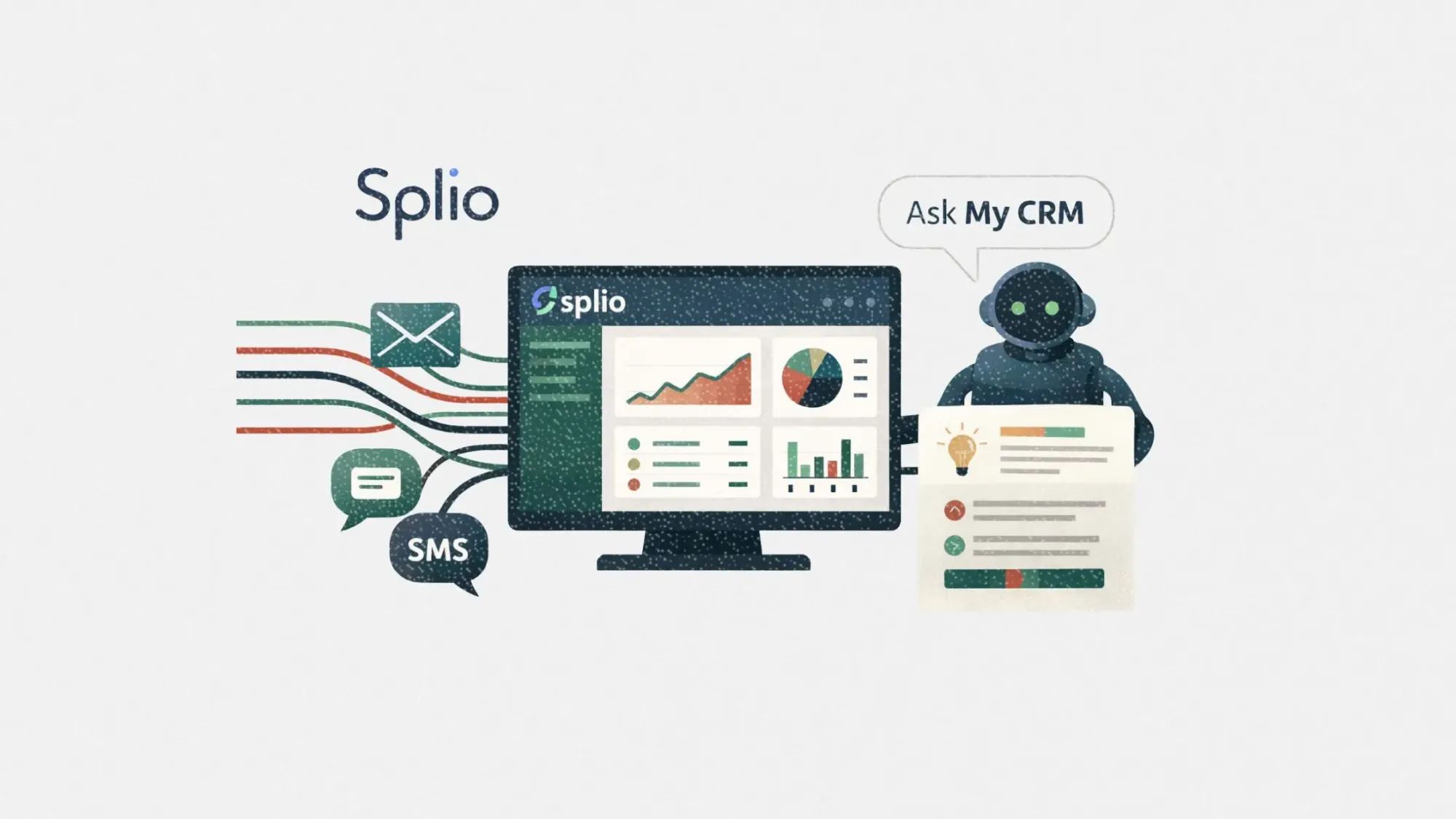
Why embedding AI inside the CRM changes adoption dynamics
Many SMB teams struggle less with “finding AI” and more with workflow fragmentation: one tool for CRM, another for dialing, another for sequencing, and additional integrations to keep data consistent. By putting a calling agent into the same system where pipelines, notes, and tasks already live, Close is effectively competing on time-to-value and governance, not only model quality.
Close’s beta numbers (818,000+ calls; 6,400+ hours of conversations) also imply an operational thesis: the ROI case for AI agents is strongest when the agent consistently executes high-volume work that humans often deprioritize, such as fast lead response and persistent re-engagement. The result is not necessarily “replacing” reps, but reshaping coverage so small teams can sustain activity levels that historically required more headcount.
How Close stacks up against HubSpot, Pipedrive, Salesforce, and Freshsales
Close operates in a crowded CRM and sales engagement arena that includes [HubSpot], [Pipedrive], [Salesforce], and [Freshsales]. In that landscape, differentiation often comes down to (1) which customer segment is prioritized, and (2) whether the CRM behaves like a system of record or a system that actively runs outreach.
Close’s positioning is communication-first for small sales teams, and Chloe extends that by making voice automation a native CRM workflow rather than a separate sales engagement layer. By contrast, larger platforms like Salesforce and HubSpot can offer broader suites and ecosystems, but SMB adoption can be constrained by setup complexity, admin overhead, and the need to assemble multiple components. Close’s bet is that tighter integration between calling, messaging, automation, and the CRM record will win teams that want fewer moving parts and faster execution.
The broader trend: AI-powered CRM and marketing-sales convergence
Chloe’s release maps to a wider shift toward AI-powered CRM, where the CRM is not just a database but an execution layer that triggers actions, generates follow-ups, and updates records automatically. As CRMs add AI agents, the competitive battlefield moves from “does it have AI features?” to “does the AI reliably run the workflow with clean data and minimal supervision?”
It also reflects marketing and sales convergence. Lead handling, qualification, and nurture are increasingly continuous across channels, and AI agents can become the connective tissue between inbound intent (often marketing-driven) and outbound conversion (sales-driven). For revenue teams, this pushes measurement toward lifecycle outcomes (speed-to-lead, meeting rate, show rate, pipeline conversion) rather than channel-siloed metrics.
Practical considerations for teams adopting AI calling agents
Teams evaluating an AI calling agent inside their CRM should pressure-test operations, not demos:
- Routing and handoff rules: Define when Chloe should book a meeting, when to escalate to a rep, and how to treat edge cases (pricing questions, objections, compliance requests).
- Data quality and CRM hygiene: If fields, stages, or contact ownership are inconsistent, the agent’s outputs can amplify messiness at scale.
- Conversation QA and brand risk controls: Establish review loops (call summaries, disposition accuracy, opt-out handling) so automation does not create silent failure modes.
- Experiment design: Track impact with clear baselines: lead response time, attempts per lead, meetings booked, and downstream conversion, not just call volume.
Close says Chloe is available on all plans in the U.S. and Canada, which reduces friction to trial. The harder work for most teams will be defining the operating model so the agent’s activity turns into qualified pipeline rather than more touches.