David Beckham’s post-feud interview is a PR case study in restraint
When family drama meets the global stage, Beckham’s media strategy keeps the brand intact

When David Beckham sat down with CNBC at the World Economic Forum this week, the football icon brought with him more than just global goodwill and brand sponsorships. He also walked into a storm of public scrutiny, triggered by his son Brooklyn Beckham’s claims that the family prioritised "Brand Beckham" over personal relationships.
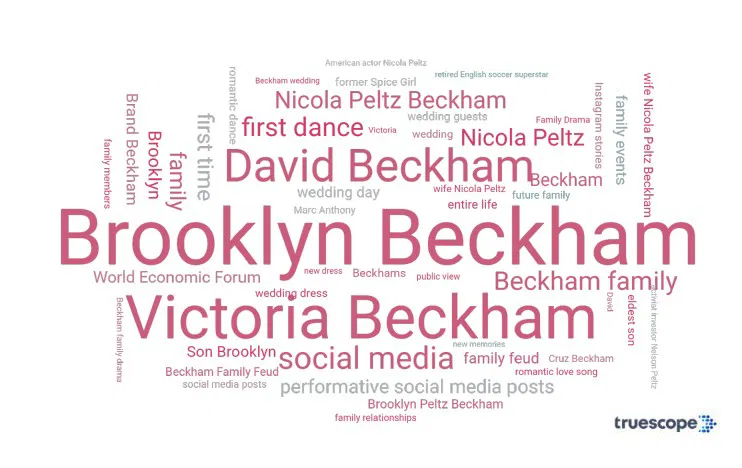
The scandal, ignited by Brooklyn’s comments just one day prior, sent media chatter into overdrive. Truescope data clocked 4,273 mentions of “Brand Beckham” across social and news platforms on January 21, fueled by a mix of curiosity, criticism, and nostalgia.
But rather than confront the issue directly, Beckham opted for composure over confrontation. This article explores how his measured response became a quiet masterclass in media handling and what marketing leaders can take away from it.
Short on time?
Here’s a table of contents for quick access:
- What triggered the controversy
- How Beckham handled the interview
- What PR experts are saying
- What marketers should learn from this moment
 Falencia Naoenz
What triggered the controversy
The backdrop was dramatic. Brooklyn Beckham publicly criticised his parents, alleging that their pursuit of “Brand Beckham” had sidelined family values. The media quickly resurfaced old tensions, including drama around Brooklyn’s 2022 wedding to Nicola Peltz and Victoria Beckham’s perceived control over the family image.
The public reaction was split. Some commentators sided with the younger Beckhams, while others praised David and Victoria for their long-standing efforts to manage intense fame and media pressure. Neutral reporting focused on the timeline and statements, but speculation filled in the rest.
How Beckham handled the interview
Despite the noise, Beckham didn’t take the bait. In the CNBC interview, conducted on the sidelines of a major economic forum, he addressed broader themes like the role of social media in shaping mental health, the importance of letting children make mistakes, and his ongoing work with UNICEF.
There were no direct mentions of Brooklyn. No denials, no clarifications, no defensiveness.
And that, according to PR pros, was the point.
What PR experts are saying
Meilin Wong, CEO and partner at Milk & Honey PR, described Beckham’s restraint as “deliberate and setting-appropriate.” Given that the interview took place on a global business platform, she said pivoting to personal family drama would have undermined his credibility as an ambassador for social causes and commercial partners.
“From a brand and sponsorship point of view, it’s a win,” Wong said. “He comes across professionally and on message.”
Lars Voedisch, Group CEO of PRecious Communications, agreed and called the interview “strong” and “deliberate.” Rather than being evasive, Beckham’s approach reflected a clear decision to stay above the fray.
“For celebrities, that almost always becomes a no-win situation,” Voedisch said. “He made a strategic choice.”
What marketers should learn from this moment
The Beckham moment illustrates a few timeless rules for anyone managing brand reputations under pressure. Here’s what stood out for PR and comms leaders.
1. Context matters more than crisis
Beckham wasn’t just another celebrity in a tabloid loop. He was at a global economic forum, speaking to a business channel, representing brands, causes, and audiences far beyond his family. Sometimes, staying silent is the smartest move when the setting doesn’t support the personal.
2. Restraint is a strategy
In a media landscape where overexposure is often mistaken for transparency, Beckham showed how powerful it can be to say less. Voedisch pointed out that tone, posture, and omission can communicate more than a reactive explanation ever could.
3. Preparation is everything
Wong emphasized the importance of preparing for uncomfortable questions. Her advice to clients is to never assume it won’t come up. Develop one calm, measured response that sets boundaries and steers the conversation back on track.
4. Stay anchored to your narrative
Charlotte Mceleny, former Senior Director of Marketing and PR at Monks, called the CNBC interview a “masterclass.” Beckham stayed focused on his UNICEF role, offered broad thoughts on parenting, and never lost his footing.
5. You don’t always need to fix the narrative
As Wong put it, “I don’t think this interview was ever going to restore anything, and I don’t think that was the point.” In some cases, the best PR move is to avoid making the story bigger than it already is.
Why it matters for marketers
Not every brand crisis requires a bold defense. Sometimes the best move is to hold the line, stay consistent, and ride out the storm.
Beckham’s handling of this situation offers a template for marketers and brand custodians dealing with public scrutiny:
- Know the room. Your setting determines the message.
- Define your lane. Not all criticism needs a direct response.
- Practice calm messaging. A single, composed line can defuse more than a press release.
- Lead with values, not ego. Focus on what your audience cares about, not what the tabloids want.
As Voedisch summed it up, “Too often you see owners or CEOs who would rather be right than get it right.”