
Duolingo brings free apples to Apple's iPhone Duo launch
Duolingo's New York apple giveaway extended its iPhone Duo joke into a street stunt, with lesson reminders and QR-coded fruit.


For Duolingo, Apple's new iPhone Duo came with a joke almost too obvious to ignore. The foldable phone shares a name with Duo, the green owl whose pushy reminders and mischievous social posts have become part of the learning app's identity.
That coincidence had already sparked online banter in September. But when the phone went on sale on October 23, the owl stepped into the real world. In photos shared by Duolingo on Instagram, Duo was near Apple's Fifth Avenue store in New York, giving away green apples rather than phones. The joke had moved from a screen to the pavement.
Table of contents
Jump to each section:
- From a phone-name joke to a sidewalk giveaway
- Why a free apple carried more than a punchline
- The second act made the brand joke physical
- What marketers should know about real-time brand stunts
From a phone-name joke to a sidewalk giveaway
Anyone waiting near an Apple Store that Friday could have encountered an unusual alternative to a new device: a cart offering what Duolingo called "Free Apple Duo." The cart held bright green apples, while the mascot appeared in a dark shirt reminiscent of Apple Store staff clothing.
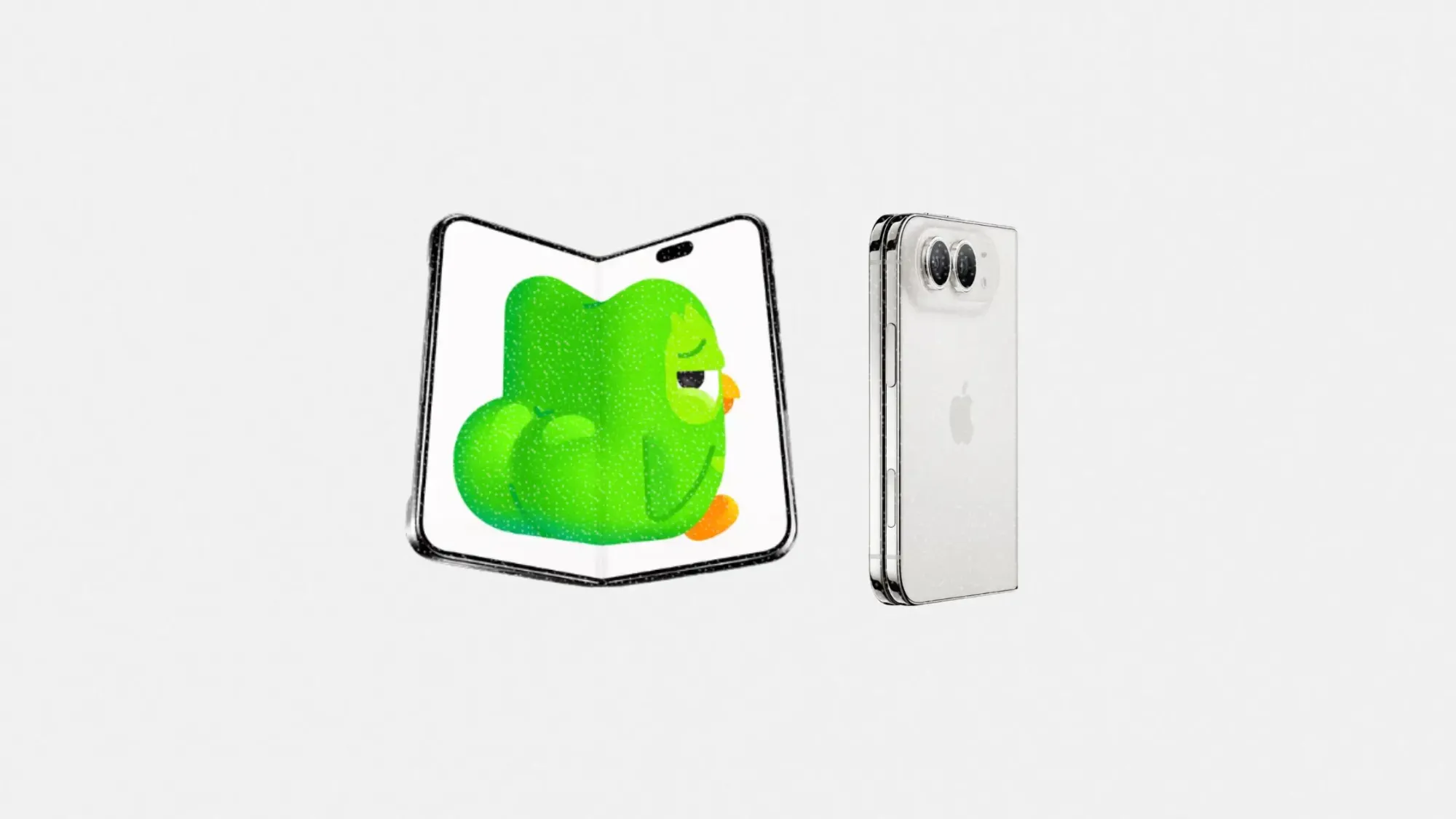
Each piece of fruit featured an apple-shaped Duo sticker, the reminder "Do your lesson" and a QR code that appeared to point people toward Duolingo. Nearby outdoor posters extended the joke with "This is Duo," featuring the owl across an image of Apple's folding device.
The campaign offered no phone, and there was no announced Apple partnership. Its premise was simply that a product name created an unexpected opening for another brand's best-known character.
Why a free apple carried more than a punchline
The apple cart was more than a visual pun. Apple's physical retail launch was already bringing people to a recognizable location. Duolingo could appear near that activity with something small, tangible and immediately understandable without a long explanation.
The fruit also gave the language app a route back to its everyday product. Duo's sticker did not ask people to admire a campaign; it reminded them to do a lesson. The QR code added a possible next action after the joke, although no public conversion or app-install figures establish whether people followed it.
That distinction matters. A funny social post can travel without ever connecting to the service behind it. A giveaway with a clear reminder gives passersby something they can hold, photograph or scan while keeping the free-learning message close to the surface.
The second act made the brand joke physical
This was not Duolingo's first response to the iPhone Duo. After Apple's September unveiling, the mascot appeared in a foldable-phone image under the same "This is Duo" line. Samsung also joined the wider conversation about Apple's move into foldables.
In September, the story was about brands replying to one another online. The October giveaway took the same name coincidence and placed it near a product launch, where the audience was already physically present. The creative idea stayed recognizable, but the setting and the participation changed.
That is a more interesting development than another round of brand-account teasing. Duolingo did not need to invent a new persona or campaign message. It found a second setting for an existing joke and used the mascot as the bridge between both moments.
What marketers should know about real-time brand stunts
Duolingo's apple giveaway illustrates how a reactive idea can gain another chapter when the cultural event has a clear calendar and physical location. It also exposes the limits of what campaign coverage alone can prove.
- A familiar character makes the joke faster to understand.Duo's name, color and persistent lesson reminders gave the giveaway a recognizable identity. Without that existing brand language, an unrelated company distributing fruit near a technology store would have required considerably more explanation.
- A second act can be more useful than another social reply.The September phone-name joke had already established the premise. The October stunt gave it a different form, creating a local experience rather than repeating the same joke in another caption.
- Make the connection to the product visible.The lesson sticker and QR code connected the fruit back to the language app. They offer an observable route toward product discovery, not evidence that the stunt produced installs or retention.
- Separate earned attention from business impact.The imagery and timing make the stunt easy to discuss, but publicly available coverage does not establish the number of apples handed out, the cost, or any downstream marketing return. Those outcomes should not be inferred from a clever visual.
The broader point is about continuity. The most recognizable brand characters are not confined to a single ad placement. They can turn a product name into a joke, then carry that joke into a different setting without losing their identity.
For marketers, the opportunity is not simply to appear near the next high-profile launch. It is to spot the rare cultural connection that genuinely belongs to their brand, and to find a way for the audience to experience that connection beyond scrolling past it.
