
Enterprises will spend more on AI in 2026, just not with everyone
Venture capitalists say the AI experimentation phase is ending. Here’s what enterprise marketers need to know

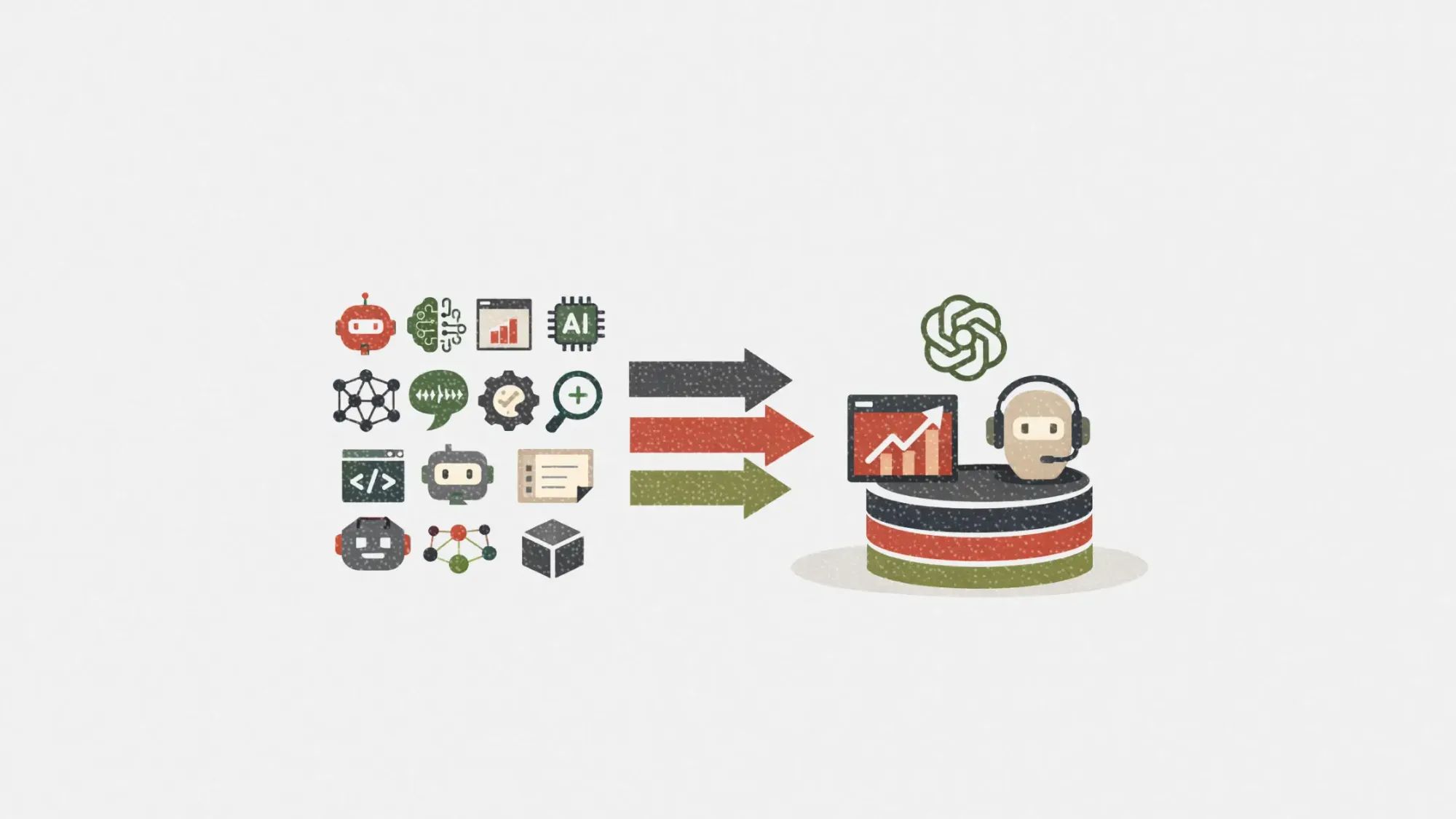
After years of pilot programs and proof-of-concept experiments, enterprises are finally getting serious about artificial intelligence. But if you’re selling AI tools, don’t start celebrating just yet.
A new TechCrunch survey of 24 venture capitalists focused on enterprise software reveals a clear prediction for 2026: enterprise AI budgets are set to increase, but spending will become highly concentrated. Rather than expanding vendor rosters, companies will double down on the platforms and products that prove their worth and cut loose everything else.
This article explores what’s behind this shift, why startup vendors may feel the squeeze, and what marketers should prepare for as enterprise buyers consolidate their AI stacks.
Short on time?
Here is a table of content for quick access:
- VCs agree: 2026 will be the year of AI budget concentration
- Not all AI investments will grow equally
- What marketers should know
 Patrecia Meliana
VCs agree: 2026 will be the year of AI budget concentration
The consensus among investors is clear. Companies are exiting the testing phase and moving into operational deployment. That means fewer proof-of-concept trials and more money directed toward a narrow group of winning tools.
Andrew Ferguson of Databricks Ventures summed it up: “Enterprises are testing multiple tools for a single-use case. As they see real proof points from AI, they’ll cut out experimentation budgets, rationalize overlapping tools, and deploy that savings into the AI technologies that have delivered.”
In other words, the buyer’s mindset is shifting from exploring to optimizing.
Rob Biederman of Asymmetric Capital Partners went even further, predicting industry-wide AI spending consolidation. “Budgets will increase for a narrow set of AI products that clearly deliver results and will decline sharply for everything else,” he said. “We expect a bifurcation where a small number of vendors capture a disproportionate share of enterprise AI budgets while many others see revenue flatten or contract.”
Not all AI investments will grow equally
While total AI spending is set to rise, not all product categories will see that money.
Scott Beechuk of Norwest Venture Partners believes the next wave of enterprise AI investment will go toward safeguards and oversight layers that make AI safe and reliable at scale. These are the tools that help enterprises confidently move from pilot to production.
Harsha Kapre of Snowflake Ventures added that spend will likely center around three areas:
- Strengthening data foundations
- Post-training optimization
- Tool consolidation to reduce SaaS sprawl
Kapre noted that CIOs are actively seeking unified, intelligent systems that lower integration costs and drive measurable ROI.
For enterprise marketers, this means internal buyers are increasingly skeptical of overlapping features and redundant point solutions. Tools that can clearly demonstrate ROI and integrate well with existing platforms stand a better chance of surviving budget scrutiny.
What marketers should know
If you're marketing AI products to the enterprise, 2026 might be a make-or-break year. Here’s how to get ahead of the curve:
1. Show proof, not potential
The experimentation era is over. Buyers want demonstrated value, not visionary roadmaps. Marketers should pivot their messaging toward case studies, customer success metrics, and measurable outcomes.
2. Position for consolidation, not novelty
Highlight how your product fits into existing stacks or replaces multiple tools. Vendors that simplify enterprise IT instead of complicating it will win more budget.
3. Build a real moat
VCs are aligned on what makes an AI startup defensible: proprietary data and hard-to-replicate value. If your product is similar to features offered by hyperscalers or LLM platforms, your go-to-market motion needs to address that directly.
4. Expect slower sales cycles, but bigger deals
Enterprises are getting more selective, which means longer sales processes. But for the few vendors that make the shortlist, the contract sizes could grow. Marketing needs to support longer nurturing paths and deeper decision-maker engagement.
The AI gold rush is not ending, but it is entering a new phase. Budget growth will favor the strong, not the speculative. If you’re selling into the enterprise, now is the time to sharpen your differentiation, streamline your message, and get serious about ROI storytelling.
Marketers who adapt to this consolidation wave will be better positioned to turn shrinking vendor lists into bigger opportunities.