Flowla raises US$2.5M to bring automation to B2B sales and customer success
The UK startup is building a new “customer layer” to automate sales execution, onboarding, and renewals.

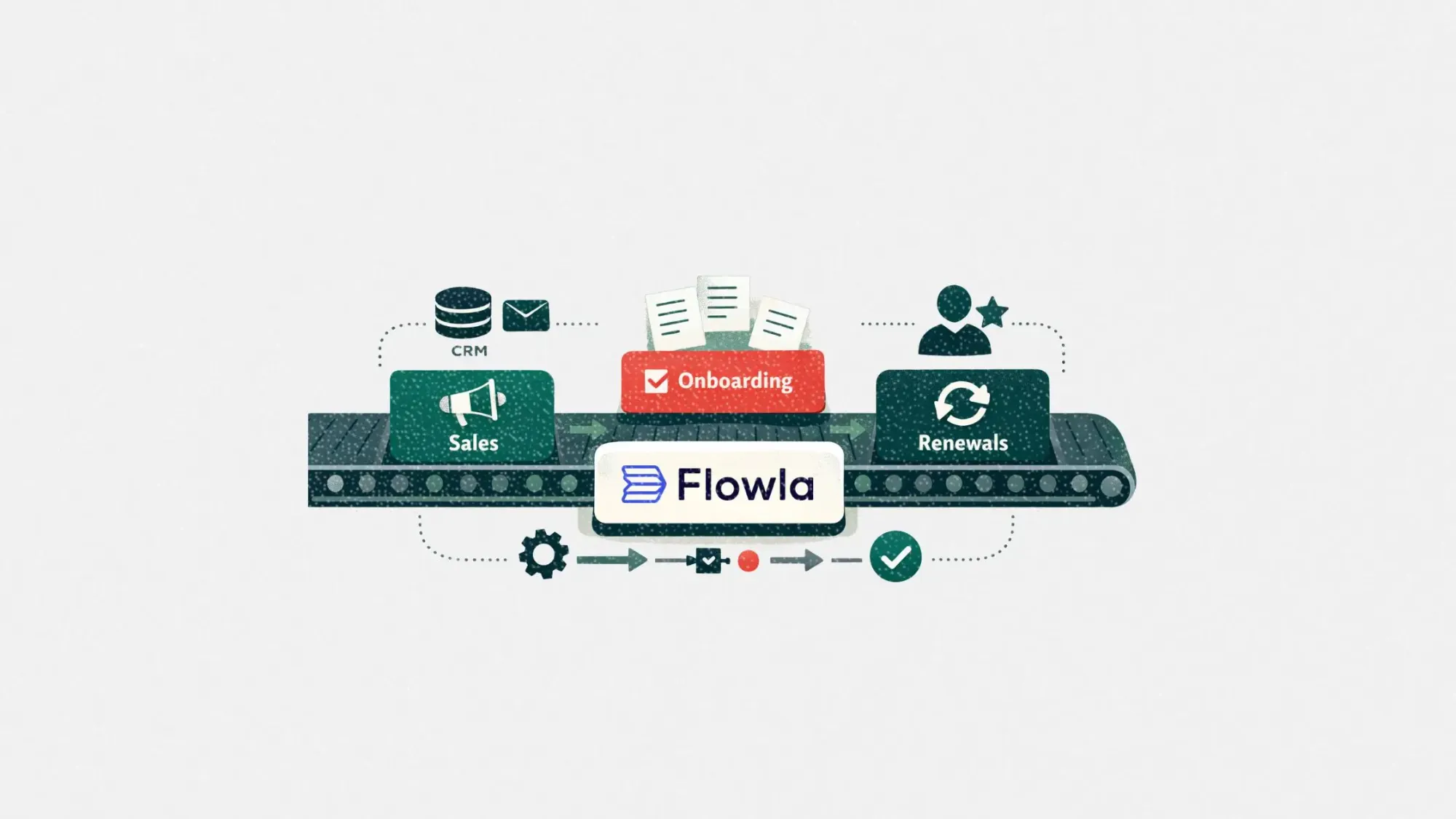
Flowla, a London-based startup, has secured US$2.5 million in seed funding to help B2B revenue teams automate the messy parts of selling and onboarding. While not a household name, the company is quietly building what it calls the “customer layer” of the revenue stack—essentially, a smart, shared digital workspace that guides buyers through the sales process without reps needing to babysit every step.
The funding round was led by Revo Capital and backed by AI Startup Factory, Türkiye Development Fund, APY Ventures, and Sharks & Partners. Angel investors also include Salesforce operators, pointing to early interest from enterprise go-to-market circles.
We look at what Flowla does, how marketers and sales teams can use it, and what this signals about where revenue operations is headed next.
Short on time?
Here’s a quick breakdown of the article:
- What’s the deal with Flowla?
- What does the platform actually do?
- Why this kind of tool matters now
- Key takeaways for marketers and commercial teams
What’s the deal with Flowla?
Flowla just raised US$2.5 million to scale its platform, which helps sales and success teams automate how they manage buyer interactions and customer onboarding. It’s built for companies that use CRM tools like Salesforce and are looking for a way to bring structure to deals without relying on reps to remember every next step.
Founded by Erdem Gelal and Oguz Gelal, Flowla is trying to reduce the friction between Sales, Marketing, and Customer Success. The startup is betting that revenue growth comes not from superstar sellers, but from systems that work the same way every time.
 Celi Anindia
What does the platform actually do?
In plain terms, Flowla replaces scattered email threads and static PDFs with one shared link where buyers can access proposals, timelines, onboarding docs, and more. But it’s not just a digital folder—it’s a smart system that reacts to buyer behavior and updates itself.
Here’s how marketers and sales teams can use it:
- As a digital sales room: Reps send one branded link that holds all materials for the buyer. If a stakeholder views pricing, the platform can auto-draft a follow-up email and alert the rep.
- To personalize journeys at scale: Teams can set rules like “If industry is Healthcare, show Case Study A.” Flowla handles the logic.
- To manage onboarding: After a deal closes, the same link becomes an onboarding hub. No need to switch platforms or start a new thread.
- To support renewals: Customer success teams can use the same space to guide users through renewals and upsell motions.
The tool is no-code, meaning revenue teams can set it up without engineering help.
Why this kind of tool matters now
Despite years of investment in CRM and coaching tools, many B2B sales teams still depend on reps to manually follow up, share content, and coordinate next steps. That leads to dropped balls, especially during handoffs between departments.
Flowla aims to fill this gap by making buyer engagement automatic. It doesn’t just store content—it activates it. That means fewer missed follow-ups, clearer next steps for customers, and better alignment across Sales and Customer Success.
It also reduces the guesswork for marketers. Instead of hoping reps use the right case study at the right time, Flowla can trigger content automatically based on buyer actions or funnel stage.
What marketers and commercial teams should take away
1. This isn't just for sales
Marketing teams often struggle to get their content used in real deals. Flowla provides a way to plug marketing assets directly into the sales flow—with rules and triggers that ensure they show up at the right time.
2. You don’t have to train reps on playbooks
Flowla lets teams “hard code” their sales logic. That means no more hoping your reps follow the ideal buyer journey—it just happens.
3. A single link replaces multiple tools
Marketers trying to align with Sales and Success will benefit from having one environment that supports the full customer lifecycle. It also improves the buyer experience by cutting down on back-and-forth.
4. It supports revenue ops without adding headcount
For RevOps teams, Flowla acts as a layer between CRM data and real-world execution. Instead of adding more tools, it helps you get more out of the ones you already use.
The bottom line: predictable sales execution is the new goal
Flowla might not be a category-defining giant yet, but its approach reflects a broader shift: B2B companies are getting serious about turning their GTM playbooks into actual systems. That means fewer manual steps, fewer dropped balls, and more consistency across the buyer journey.
For marketers and sales teams looking to scale without adding headcount, platforms like Flowla offer a glimpse into a future where execution isn’t left to chance—it’s built into the system from day one.