Holding statement: how PR teams should respond before facts are final
A practical holding statement guide for PR teams covering structure, templates, approval workflows, common mistakes, and crisis measurement.

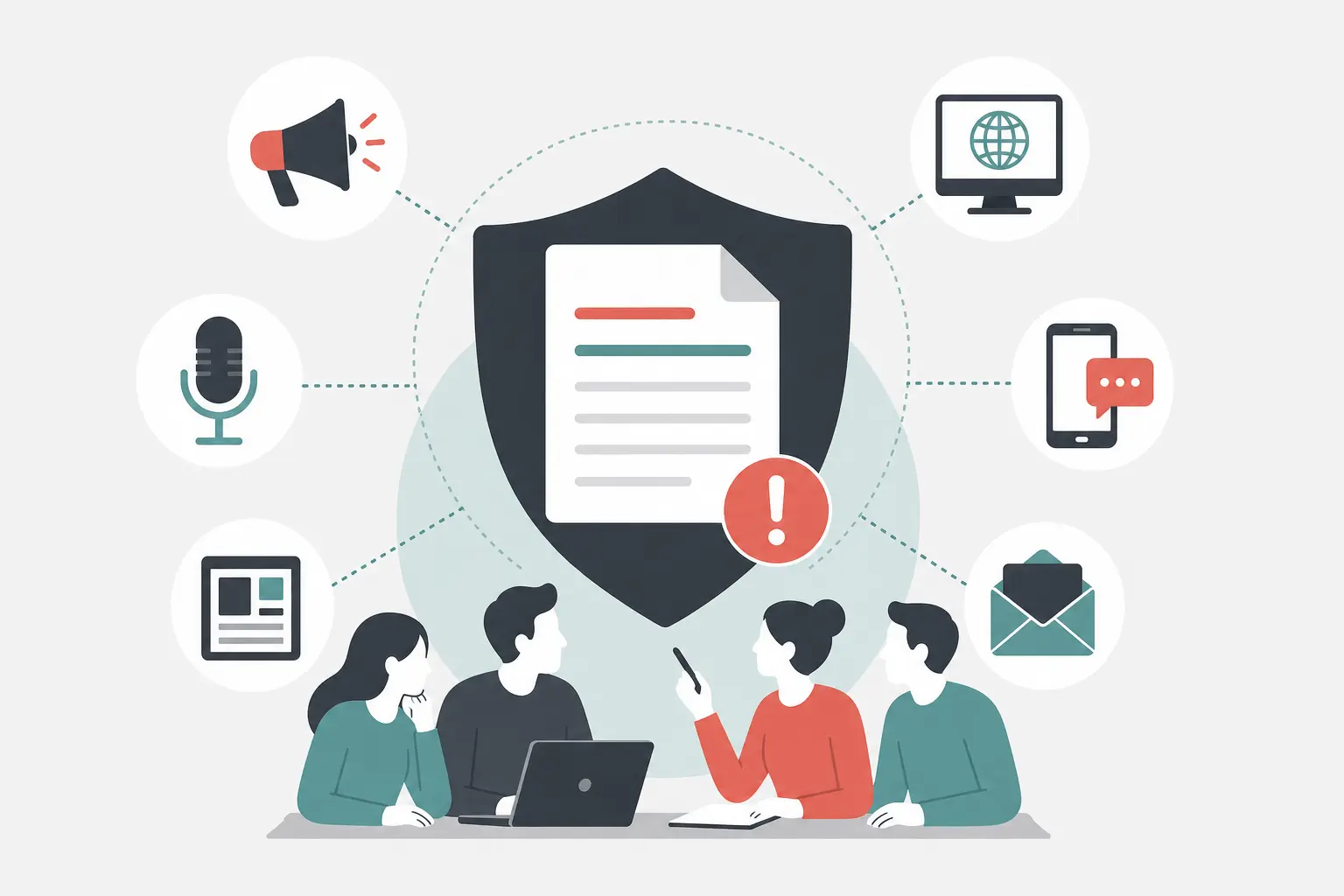
Holding statements are one of the few PR assets that matter most before anyone wants to write them. A holding statement is a short, pre-approved crisis message that acknowledges a situation, names what is known, explains what the organization is doing, and tells people where to expect updates while facts are still being confirmed.
For B2B marketers and PR teams, the value is not just speed. The real value is control under uncertainty. When a product outage, data issue, workplace incident, or executive controversy starts moving across media, search, social, and AI answers, silence creates room for speculation. A good holding statement gives your team a factual first response without locking the company into claims it may need to correct later.
Table of contents
Jump to each section:
- What is a holding statement?
- When should PR teams use a holding statement?
- What should a holding statement include?
- How do you write a holding statement under pressure?
- What are the most common holding statement mistakes?
- How should teams prepare holding statements before a crisis?
- How do you measure whether a holding statement worked?
Key Takeaways
- A holding statement gives PR teams a factual first response while a crisis is still being verified.
- The strongest holding statements acknowledge the issue, avoid speculation, show empathy, name next actions, and set an update path.
- Teams should prepare holding statements before a crisis so legal, leadership, comms, and customer-facing teams can move from the same facts.
If your team does not already have one, start with ContentGrip’s crisis communication plan guide so the holding statement sits inside a real approval and escalation system.
What is a holding statement?
A holding statement is a short crisis message issued before all facts are confirmed, so an organization can acknowledge the issue and explain next steps.
A holding statement is not a full apology, final investigation report, press release, or executive note. It is the first responsible public line your team can stand behind while the situation is still developing.
The goal is to say enough to reduce confusion without saying more than the organization knows. That makes the holding statement especially useful in the first hour of a crisis, when reporters may be asking for comment, employees may be seeing rumors, customers may be affected, and leadership may still be receiving incomplete information.
The strongest definition is practical: a holding statement buys time, but it should never sound like stalling. It should tell people the organization is aware, is checking facts, is taking the matter seriously, and will provide updates through a named channel.
That balance mirrors the CDC’s crisis and emergency risk communication principles, which emphasize being first, right, credible, empathetic, action-oriented, and respectful, according to the CDC. For companies, those principles translate into a simple rule: move quickly, but do not outrun your verified facts.
When should PR teams use a holding statement?
PR teams should use a holding statement when stakeholders need a response before the organization has enough verified information for a fuller statement.
Use a holding statement when waiting for perfect information would create more risk than speaking carefully. The trigger is usually a gap between public attention and internal certainty.
Common situations include service outages, cyber incidents, product safety issues, workplace accidents, executive misconduct allegations, customer data concerns, viral complaints, litigation, supply disruption, and public safety incidents. In each case, the team may know that something happened before it knows the full cause, scope, timeline, or remedy.
The holding statement should match the level of exposure. A private customer service issue may need a targeted customer note, while a widely visible outage may need newsroom, social, support, and employee versions. The message can vary by channel, but the verified facts should not.
| Asset | Best use case | Main risk if used wrongly |
|---|---|---|
| Holding statement | Early response while facts are still incomplete. | It can sound evasive if it lacks empathy, action, or update timing. |
| Press release | Formal announcement once the core facts are confirmed. | It can overstate certainty if issued before investigation is complete. |
| Apology statement | Clear responsibility, harm, and corrective action are established. | It can create legal or trust issues if responsibility is assumed too early. |
| Customer update | Affected users need operational guidance or service information. | It can conflict with public messaging if support teams are briefed separately. |
The UK Government Communication Service’s crisis planning guide includes developing and signing off a holding statement for immediate release as part of its early crisis actions, according to the GCS. That is useful guidance for companies too: the holding statement should be part of the first-response system, not a document someone improvises after the issue is already trending.
What should a holding statement include?
A holding statement should include what is known, what is not yet confirmed, who is affected, what the organization is doing, and when updates will follow.
A good holding statement is short, but it is not empty. It should answer the first questions a reasonable stakeholder would ask: Do you know this happened? Is anyone at risk? What are you doing now? Where should I look for updates?
For PR teams, the minimum useful structure is:
- Acknowledgement: state the issue in plain language.
- Verified facts: include only what has been confirmed.
- Empathy: recognize concern, disruption, harm, or uncertainty where appropriate.
- Current action: explain what the team is doing now.
- Update path: say where and when people can expect more information.
- Contact route: provide a media, customer, employee, or investor contact when relevant.
This is also where many weak holding statements fail. They say the company is “aware of the situation” and “taking it seriously,” but do not explain what happens next. That wording may be technically safe, but it often creates a trust problem because it gives stakeholders no useful action.
Here is a cleaner template:
We are aware of [issue] affecting [audience, product, location, or service]. We are working with [internal team, partner, authority, or expert group] to understand the cause and impact. Our priority is [safety, continuity, customer support, employee welfare, or data protection]. We will share the next update at [time] through [channel]. Media inquiries can be directed to [contact].
Use this as a starting point, not a script to paste into every situation. A cyber incident, workplace injury, offensive campaign, and regulatory investigation all require different legal review and stakeholder sensitivity.
How do you write a holding statement under pressure?
Write a holding statement under pressure by separating verified facts from unknowns, choosing one owner, and publishing only the claims your team can defend.
The fastest way to write a safer holding statement is to stop treating it like copywriting. Treat it like a decision record.
Start with a fact table. One column should list what is confirmed. Another should list what is unconfirmed. A third should list what the organization is doing now. This prevents the writing team from turning assumptions into polished sentences.
Then choose one message owner. In a crisis, too many editors can make the statement slower and less clear. PR should draft, legal should flag claims that create risk, leadership should approve the business posture, and the relevant operator should confirm facts. Everyone has a role, but not everyone should rewrite the message.
Use this order:
- Confirm the trigger: what happened, where, when, and who may be affected.
- List the verified facts and mark everything else as unconfirmed.
- Decide whether empathy, safety guidance, service guidance, or media direction must come first.
- Draft one short statement using plain language.
- Check every sentence against legal, operational, and customer-facing facts.
- Approve the channel plan, including newsroom, social, customer support, employee comms, and media replies.
- Set the next update time before publishing the first message.
This is where spokesperson preparation matters. If a journalist calls after the statement goes live, the spokesperson should not improvise a wider explanation. They should know the holding line, the approved facts, the questions they cannot yet answer, and the promised update channel.
ContentGrip’s media training guide is useful here because a holding statement rarely lives alone. It often becomes the opening line for interviews, customer calls, employee briefings, and executive replies.
Tommy Prayoga, Head of Agency at digital PR service provider Content Collision: “A holding statement should reduce confusion, not perform confidence. The safest line is usually the one that says exactly what you know, what you are checking, and when people will hear from you again. If your spokesperson cannot repeat it calmly under pressure, the statement is not ready.”
What are the most common holding statement mistakes?
The biggest holding statement mistakes are vague language, premature blame, missing empathy, no update timing, and messages that differ by channel.
The most common mistake is trying to sound certain when the team is not certain yet. Stakeholders can usually tell when a company is using broad language to hide missing facts. Journalists can tell even faster.
Avoid these mistakes:
- Speculating about the cause. Do not say the issue was caused by a vendor, employee, attacker, system error, or customer behavior unless that fact is confirmed.
- Minimizing the impact. Phrases like “minor issue” or “isolated incident” can age badly if the scope expands.
- Forgetting affected people. Even operational issues have human consequences, such as lost access, delayed service, safety concerns, or anxiety.
- Creating channel drift. The support team, social team, executives, and media contact should not be using different facts.
- Promising too much too early. Do not commit to timelines, refunds, fixes, or investigation outcomes that the business has not approved.
- Leaving out the next update. Without an update path, people will keep refreshing rumors instead of your official channel.
Channel drift is especially dangerous now because inconsistent statements can be picked up by search results, social screenshots, and AI-answer systems. A sloppy first line can become the version of the story that circulates longest.
For teams building their broader message discipline, ContentGrip’s message map guide can help connect the holding statement to approved proof points, audience concerns, and follow-up messaging.
How should teams prepare holding statements before a crisis?
Teams should prepare holding statements by mapping likely crisis scenarios, pre-approving templates, assigning reviewers, and storing channel-ready versions.
Holding statements work best when they are built before the crisis. That does not mean writing fake apologies for every possible disaster. It means preparing the structure, approval path, and decision rules so the team is not solving process problems while the story is moving.
Start with the top scenarios most likely to affect your organization. For a SaaS company, that may include outages, data access concerns, security incidents, product bugs, pricing errors, executive comments, and partner issues. For a marketplace, it may include seller fraud, safety complaints, fulfillment failures, or creator misconduct.
Then build a small statement library:
| Scenario type | Prepared material | Owner |
|---|---|---|
| Service outage | Status page copy, customer note, media line, support macro. | Comms with product operations. |
| Data or security issue | Initial acknowledgement, investigation language, regulator and customer pathways. | Comms with security, legal, and customer success. |
| Executive or employee issue | Values language, HR review boundaries, media response, internal note. | Comms with legal and people team. |
| Public safety or harm | Empathy-first statement, emergency guidance, authority coordination, family privacy rules. | Comms with leadership and relevant authorities. |
Store each version where the right people can find it quickly. The file should include the statement owner, backup approver, legal contact, spokesperson, publishing channels, and last review date. Review it at least twice a year, and after any real activation.
The National Cyber Security Centre advises organizations to link incident response with crisis management and define roles, responsibilities, and empowered decision makers, according to the NCSC. That applies beyond cybersecurity. A holding statement is only as useful as the authority behind it.
How do you measure whether a holding statement worked?
Measure a holding statement by whether it reduced confusion, kept facts consistent, protected trust, and created a clean path to the next update.
Do not measure a holding statement like a campaign asset. The goal is not applause, reach, or clever wording. The goal is to reduce avoidable damage while the organization moves from first response to fuller explanation.
Useful indicators include:
- Speed to approval and publication.
- Number of factual corrections needed after publication.
- Consistency across media replies, social posts, customer support, and employee comms.
- Journalist follow-up questions that show whether the first line answered the basics.
- Customer or stakeholder confusion in support channels.
- Whether the promised update arrived on time.
- Whether later coverage used the company’s verified framing instead of rumors.
Pair the holding statement review with your broader crisis debrief. Ask what slowed approval, which facts were missing, which channel created confusion, and whether spokespeople stayed inside the approved line.
ContentGrip’s PR crisis checklist is a useful companion for that first-response review because it covers the wider sequence around detection, team assembly, fact gathering, approval, publishing, and follow-up.
A good holding statement will not make a crisis disappear. It gives the organization a steadier first sentence when everyone else is rushing to define the story. Prepare it before you need it, keep it factual when pressure rises, and use every activation to make the next version clearer.