
Indeed launches "Jobs Need People" campaign as it shifts from job search to AI-powered matching
Indeed's new global campaign reframes AI as a tool for connection rather than automation alone.

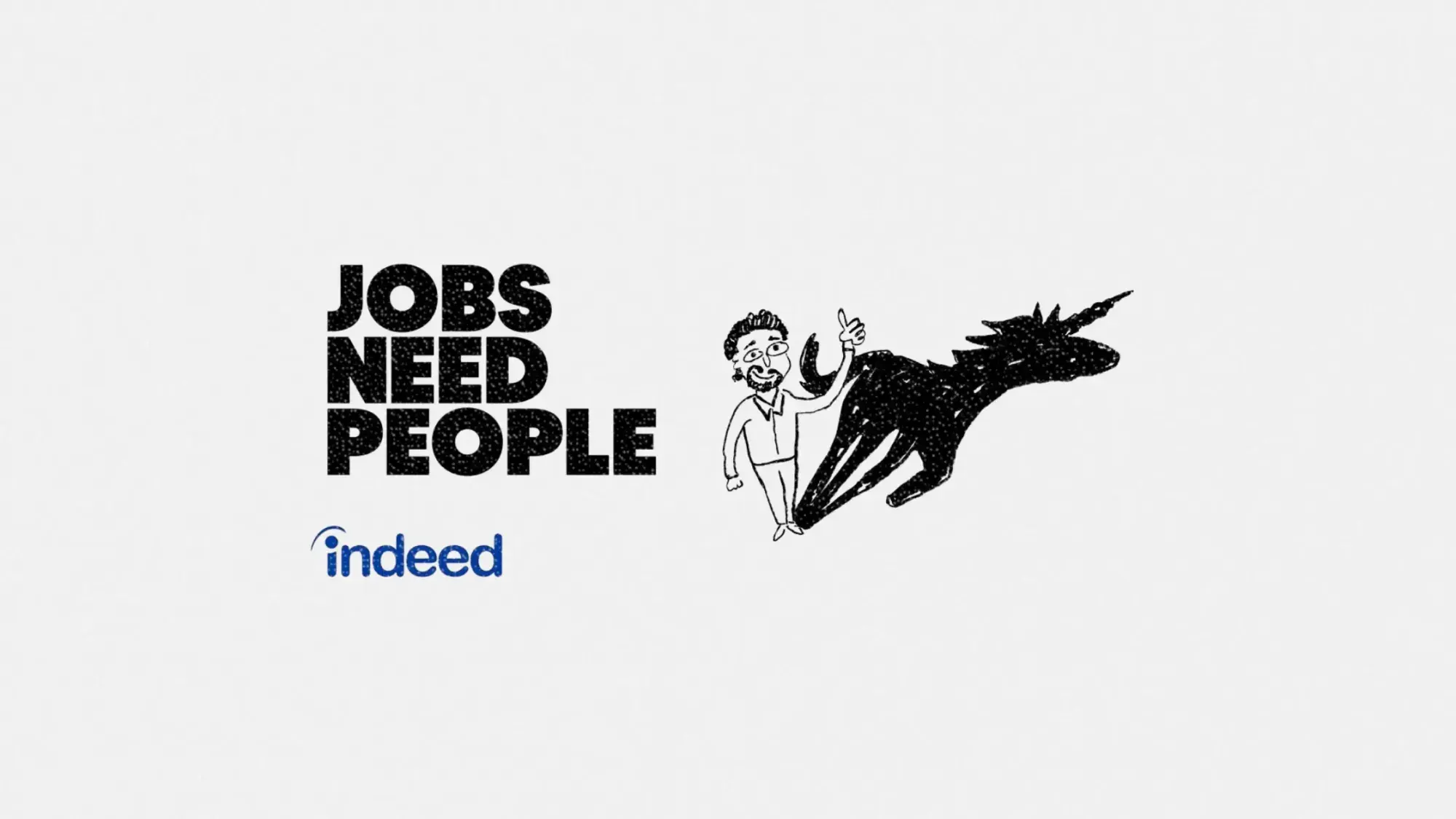
Indeed's latest brand campaign signals a major repositioning for one of the world's largest hiring platforms. The company is moving beyond its identity as a traditional job board and leaning into a future where AI-powered matching, rather than keyword-based searching, drives hiring outcomes.
The new global campaign, "Jobs Need People," arrives as both employers and job seekers grow increasingly frustrated with a hiring process that often feels inefficient, impersonal, and overwhelming.
Through the campaign, Indeed is attempting to redefine its role in the market while making a broader statement about the future of work: AI can accelerate hiring, but people remain at the center of every successful match.
Table of contents
Jump to each section:
- Why Indeed is repositioning around AI-powered matching
- What the Jobs need people campaign includes
- Why this shift matters in today’s hiring market
- What marketers should know about Indeed’s brand strategy
- The bigger trend behind AI and human-centered hiring
Why Indeed is repositioning around AI-powered matching
Indeed has announced a new global brand platform called "Jobs need people," marking what may be the company's most significant brand evolution since its launch more than two decades ago.
According to chief marketing officer James Whitemore, the company is moving away from a hiring model centered on job searching and toward one built around AI-powered matching. The goal is to help employers and job seekers discover each other more efficiently rather than relying on endless keyword searches and application volume.
The shift reflects how Indeed's platform has already evolved behind the scenes. The company says it now facilitates 31 hires every minute and increasingly relies on AI and behavioral data to match candidates and employers.
Indeed says its matching engine draws insights from more than 665 million job seeker profiles and evaluates factors such as salary expectations, certifications, scheduling preferences, and work patterns when surfacing opportunities.
The company also revealed that approximately 70% of sponsored applications now originate from products such as Smart Sourcing and Smart Screening, while traditional keyword-based search accounts for less than 30%.
 Patrecia Meliana
What the Jobs need people campaign includes
Created in partnership with creative agency 72andSunny, the campaign launches globally across television, streaming platforms, YouTube, and social media.
The creative centers on a simple message: employers do not hire resumes, they hire people.
Through a series of six-, 15-, and 30-second films, Indeed aims to highlight the skills, experiences, perspectives, and potential behind every application.
The campaign is supported by a full-funnel media strategy that includes:
- Television and streaming placements
- YouTube and social campaigns
- Sports partnerships
- Experiential marketing activations
- Out-of-home advertising
One early example was Indeed's collaboration with FOX Sports and FOX One on the search for a "Chief World Cup Watcher," supported by Times Square activations and event branding.
Rather than focusing on platform features, the campaign emphasizes emotional relevance and the human side of recruitment.
Why this shift matters in today's hiring market
The repositioning comes at a time when both sides of the hiring process are expressing growing dissatisfaction.
According to an April 2026 Harris Poll survey commissioned by Indeed:
- 81% of job seekers say they apply for jobs and never receive a response.
- 45% are unsure whether they are qualified for the positions they apply for.
- Job seekers spend an average of six hours researching and applying for jobs.
- 53% expect they will not hear back from employers.
These findings highlight a growing mismatch between application volume and meaningful hiring outcomes.
For employers, the challenge is sorting through increasingly large candidate pools. For job seekers, the challenge is standing out in a crowded and often automated process.
Indeed's answer is to use AI not simply to process more applications, but to improve the quality of matches between employers and candidates.
What marketers should know about Indeed's brand strategy
Indeed's campaign offers several lessons for B2B marketers and brand leaders navigating the AI era.
1. Lead with the human outcome, not the technology
Many AI campaigns focus heavily on technical capabilities. Indeed takes the opposite approach.
The company positions AI as the enabler rather than the hero, while keeping the emotional benefit front and center.
This approach makes the technology easier for audiences to understand and trust.
2. Turn a product transformation into a brand story
Indeed's platform shift from search to matching could have been communicated as a product announcement.
Instead, the company translated a technical evolution into a broader narrative about the future of hiring.
For marketers, this is a reminder that product innovation often becomes more powerful when framed through customer outcomes.
3. Address customer frustration directly
The campaign is built around pain points that both employers and job seekers already recognize.
By acknowledging common frustrations rather than ignoring them, Indeed positions itself as a company actively working to solve a real problem.
4. Balance AI messaging with trust
As AI adoption accelerates across industries, audiences increasingly want reassurance that technology will enhance rather than replace human decision-making.
Indeed's "Jobs need people" platform is effectively a trust-building message wrapped around an AI transformation story.
 Patrecia Meliana
The bigger trend behind AI and human-centered hiring
Indeed is not alone in rethinking how AI fits into professional relationships.
LinkedIn recently launched its own global brand campaign focused on helping professionals navigate workplace complexity rather than eliminating it altogether.
Both campaigns reflect a broader shift in technology marketing. Instead of presenting AI as a replacement for human judgment, companies are increasingly positioning it as a tool that helps people make better decisions.
For hiring platforms, that balance may become especially important. Employers want efficiency, but they also want confidence in their hiring decisions. Job seekers want faster processes, but they still want to feel seen as individuals.
Indeed's latest campaign suggests that the next chapter of hiring technology may be less about automation alone and more about making meaningful connections at scale.
 Patrecia Meliana
Indeed's "Jobs Need People" campaign is more than a brand refresh. It represents a strategic repositioning around AI-powered matching and a broader effort to redefine how hiring works.
For marketers, the campaign offers a useful case study in communicating AI innovation without losing sight of the people affected by it. As more companies integrate AI into customer experiences, the brands that win may be the ones that use technology to amplify human value rather than overshadow it.