
Insider One acquires Bluecore to expand retail identity and engagement tools
Insider One acquires Bluecore to add retail identity graph scale and shopper signals, supporting more automated cross-channel engagement.

Insider One has acquired Bluecore in a move aimed at strengthening its agentic customer engagement platform with deeper retail identity and behavioral data infrastructure. Financial terms were not disclosed.
The deal centers on combining Insider One’s cross-channel engagement and CDP capabilities with Bluecore’s retail-focused identity graph, which Bluecore says processes over 10 billion daily shopper events. For enterprise marketing teams, the practical question is how quickly the combined stack can translate identity resolution and product-aware signals into measurable lifecycle outcomes.
Table of contents
Jump to each section:
- What changes with Insider One’s platform after the Bluecore deal
- Why retail identity graphs matter for agentic marketing
- Competitive landscape: where Insider One and Bluecore fit
- Macro trend: first-party data infrastructure becomes the product
- Operational considerations for marketers integrating the stack
What changes with Insider One’s platform after the Bluecore deal
Insider One positions itself as a closed-loop system that combines a native CDP, identity resolution, contextual graphs, and orchestration across 12+ native channels, with AI agents intended to plan and execute customer engagement. Bluecore adds a retail-specific layer: shopper identification plus product and behavioral signals built for commerce workflows across email, SMS, onsite, mobile, and paid media.
If the integration is executed tightly, the combined value proposition is less about “more channels” and more about improving the underlying inputs that agentic systems depend on: persistent identity, clean event streams, and retail-grade product intent. Bluecore’s Transparent ID Network is the key asset here, especially for retailers trying to reduce reliance on third-party identifiers and walled-garden measurement.
Insider One also claims over 2,000 customers globally, while Bluecore says it serves more than 400 enterprise retailers. That customer mix suggests Insider One is using M&A to accelerate deeper vertical credibility in North American retail, not only general-purpose customer engagement.
 ContentGrip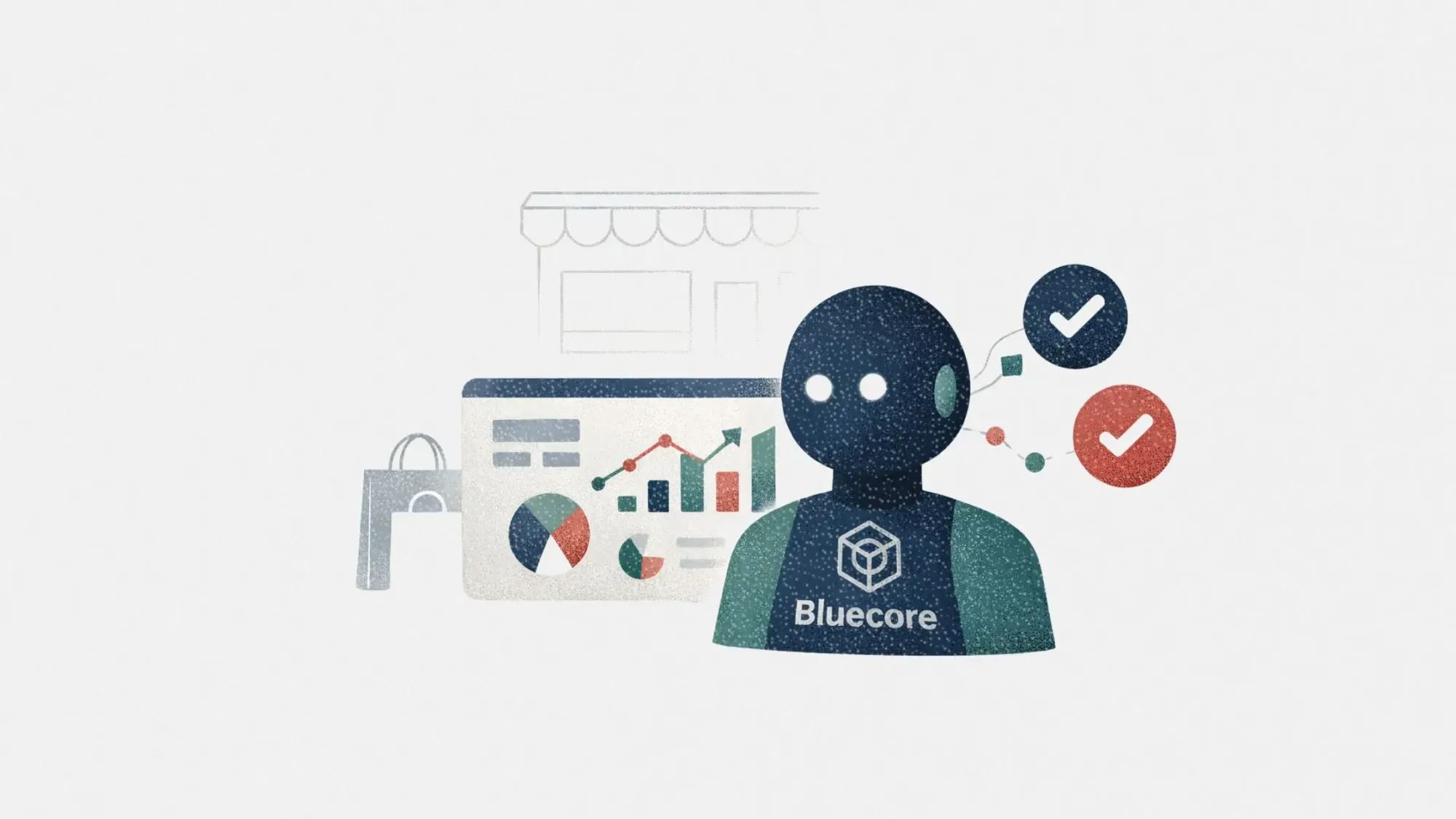
Why retail identity graphs matter for agentic marketing
Agentic engagement depends on the system being able to decide and act in real time. In retail, that breaks down when the user is anonymous, identity is fragmented across sessions and devices, or product context is missing. Identity graphs and shopper identification networks are designed to reduce those gaps by connecting behavioral events to a more durable profile.
For marketers, the implication is that “autonomous” orchestration is only as good as (1) coverage of identity, (2) event quality, and (3) feedback loops that can attribute outcomes back to decisions. Bluecore’s scale claims, including 10 billion daily shopper events processed, point to a focus on high-volume retail telemetry, which can improve model training and decisioning consistency, assuming governance and consent frameworks are handled correctly.
This also reinforces a broader shift in retail martech: personalization is moving from creative-level tweaks to infrastructure-led systems where identity resolution, product catalogs, and behavioral streaming determine how much automation is possible without losing control of brand and margin goals.
Competitive landscape: where Insider One and Bluecore fit
Insider One competes in the enterprise customer engagement and CDP category alongside platforms such as Braze, Klaviyo, Salesforce Marketing Cloud, and Bloomreach, where buyers evaluate data unification, orchestration depth, and time-to-value. Bluecore has been more specialized in retail and ecommerce marketing, where differentiation often comes from shopper identification, product-aware messaging, and merchant-specific workflows.
The acquisition can be read as an attempt to narrow two common competitive gaps in enterprise engagement platforms:
- Retail identity coverage and resolution depth: particularly important as retailers push first-party data strategies.
- Commerce-native intelligence: joining behavioral and product signals to activation, not just storing them in a profile.
At the same time, the category is crowded, and “agentic” positioning will be scrutinized against practical deliverables: how much can be automated, what guardrails exist, and whether teams can validate decisions and override actions when needed.
Macro trend: first-party data infrastructure becomes the product
The deal aligns with two macro trends highlighted in the market: AI marketing automation and first-party data infrastructure. As third-party signals become less reliable and buyers demand clearer measurement, vendors are competing on who owns the data pipeline, identity graph, and activation loop.
This is also where CDP debates are shifting. Instead of “composable vs. packaged,” the more relevant enterprise question is whether the engagement system can continuously learn from outcomes and improve decisioning without heavy manual analytics work. Insider One’s “closed-loop” framing is consistent with that shift, and Bluecore’s event-scale identity network is a direct bet on strengthening those feedback loops for retail use cases.
Operational considerations for marketers integrating the stack
For enterprise teams evaluating the combined platform, practical diligence will likely focus on:
- Identity and consent governance: how identity resolution works across regions and consent regimes, and how data is retained and used.
- Data model compatibility: how Bluecore identity and behavioral signals map into Insider One’s CDP profiles and segmentation logic.
- Measurement and incrementality: whether contact and identity improvements translate into measurable uplift, not just better reporting.
- Workflow change management: agentic execution can reduce manual work, but teams still need approval flows, brand controls, and clear exception handling.
The near-term outcome to watch is whether the combined product reduces time spent stitching together identity, audiences, and orchestration across tools, especially for retailers managing high SKU counts and fast-moving promotional cycles.